Fishing in Casamance, Senegal: estuarine wealth, fisheries crisis and marine protected areas
With its wide Atlantic frontage and a river reaching almost 300 kilometres inland, Casamance has one of the richest river systems in West Africa. Fishing here is not merely an economic activity: it is the foundation of local food security and profoundly shapes the social organisation of coastal and island communities. Yet this fishing eldorado is now showing worrying signs of depletion, pushing local stakeholders to rethink the management of these vital resources from top to bottom.
Understanding the significance of this traditional fishing practice and the reality of coastal communities allows you to experience the true authenticity of the Casamance region. While this delicate marine balance is fascinating, the area offers a wealth of other landscapes and traditions to explore. To help you plan your trip, feel free to consult our comprehensive guide to the Casamance, designed to help you travel responsibly and with insight.
 Plan your tripWhen to visit Casamance?Climate, sea and wind month by month in Cap Skirring: pick the season that suits youSee the monthly guide →
A twofold dynamic: coastal and estuarine fishing
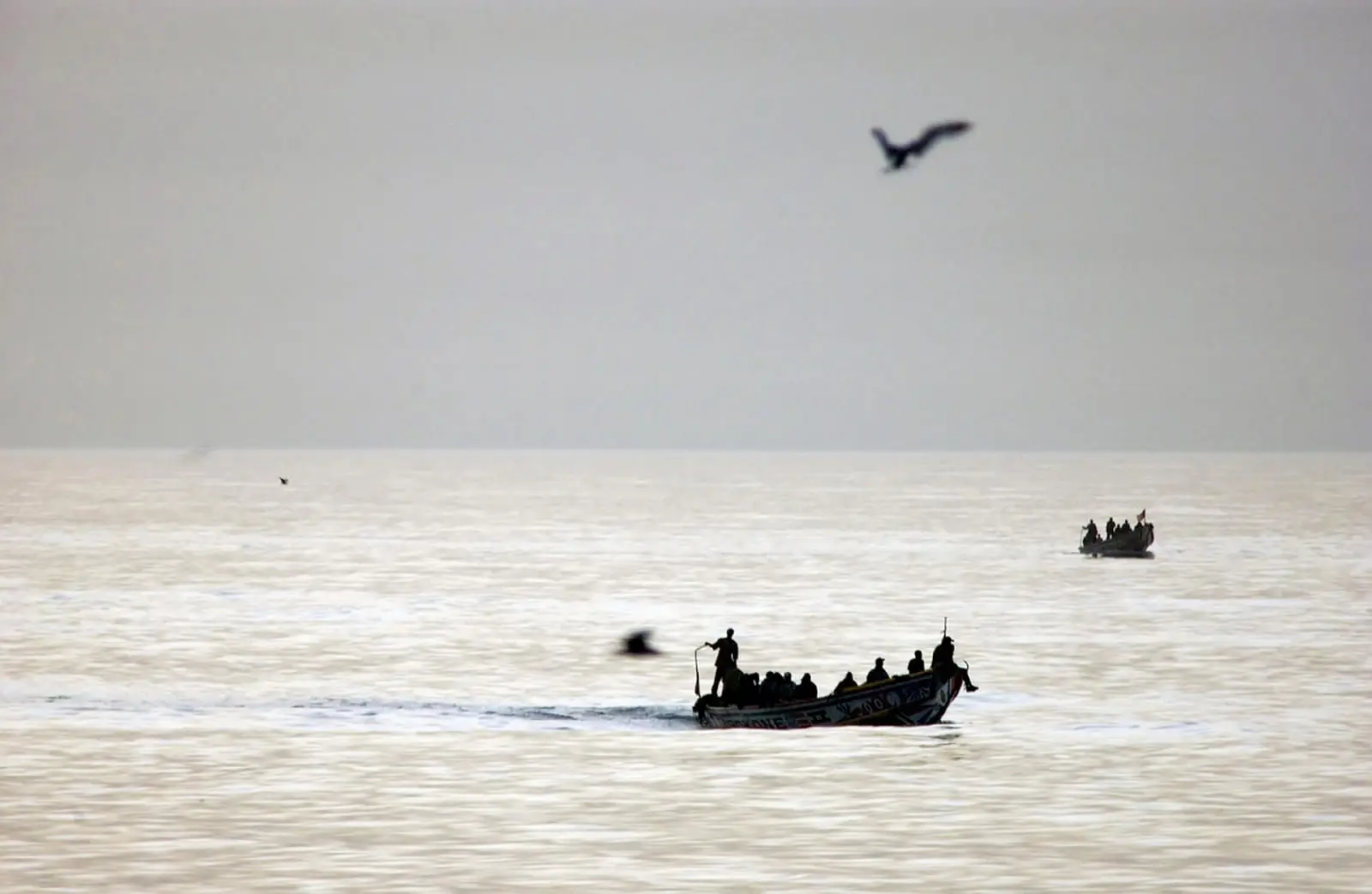
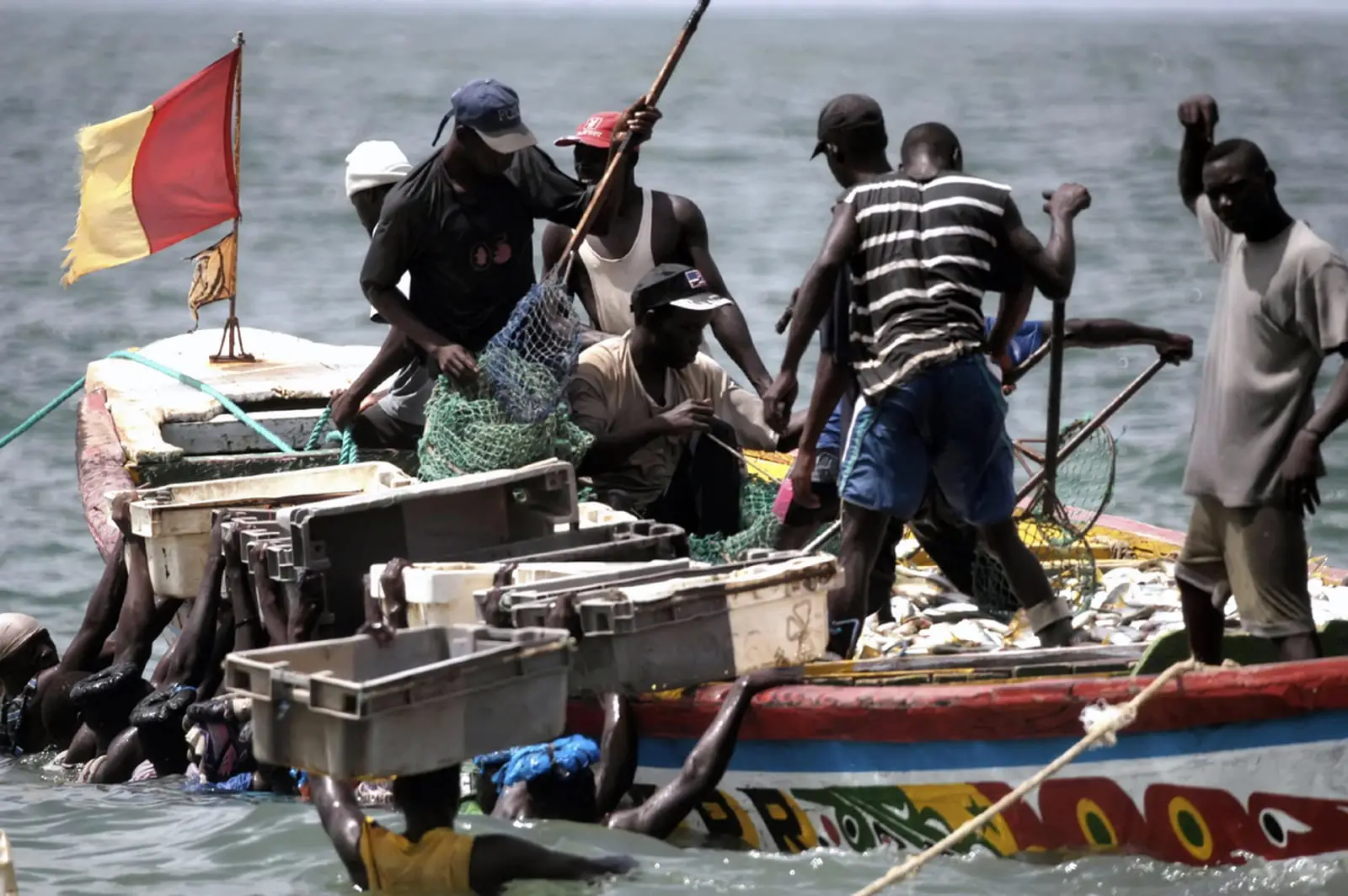
Fishing activity in Casamance is split between two distinct zones, worked almost exclusively on an artisanal basis by fleets of wooden pirogues.
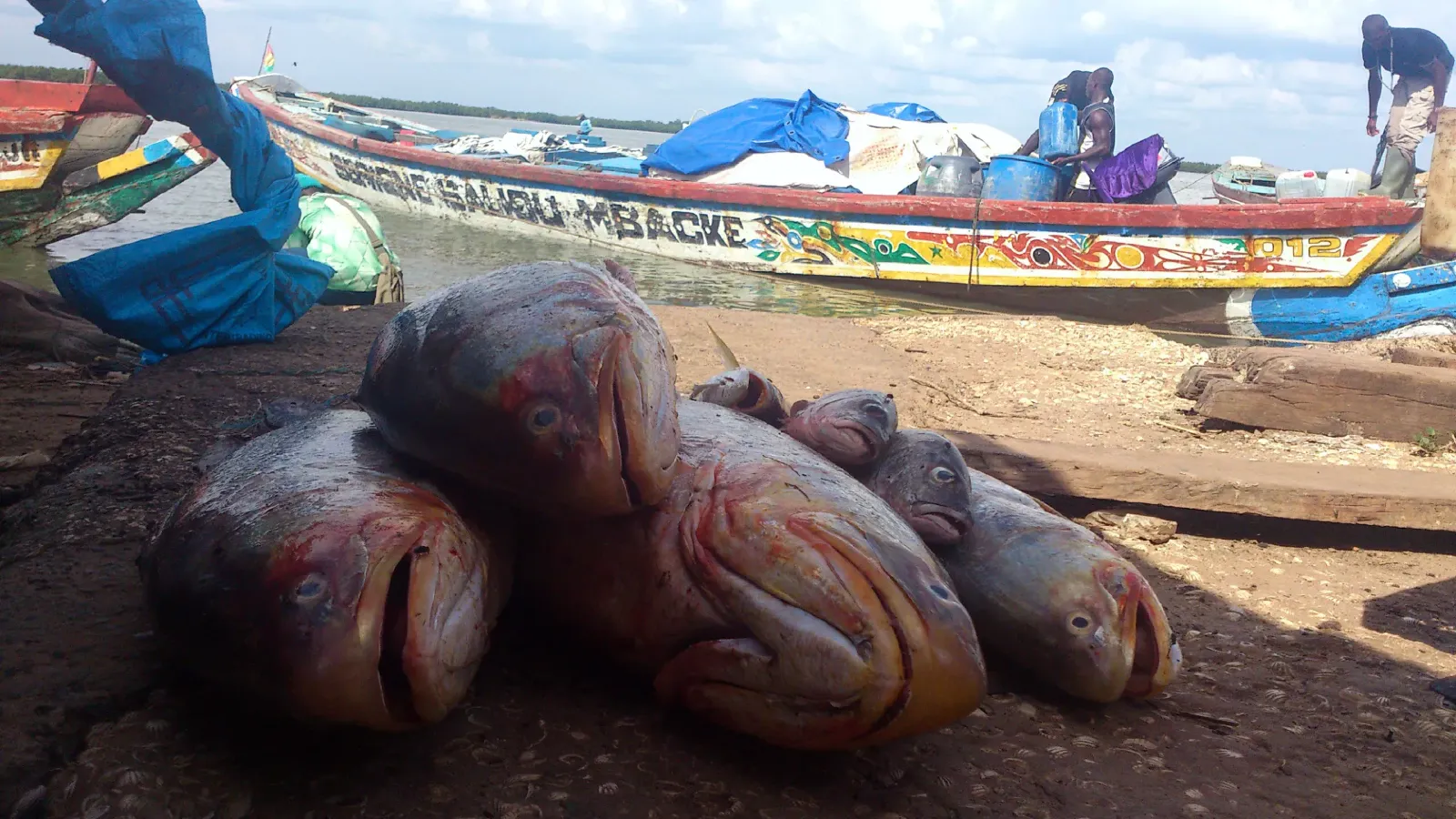
Coastal sea fishing, practised off the river mouth from major ports such as Kafountine or Cap Skirring, targets pelagic species (sardinella, bonga shad) and demersal species (captainfish, sole, white grouper). Estuarine and inland fishing takes place in the main river channel and in the maze of bolongs, those mangrove-lined tidal channels; here the catch consists of species adapted to changing salinity — mullet, red carp — along with crustaceans and oysters.
On the excursion to Carabane, the crossing through the wild bolongs lets you see fishermen at work, depending on the outing.
Jola and Lebou: the human geography of fishing
The Jola, rice growers before fishermen
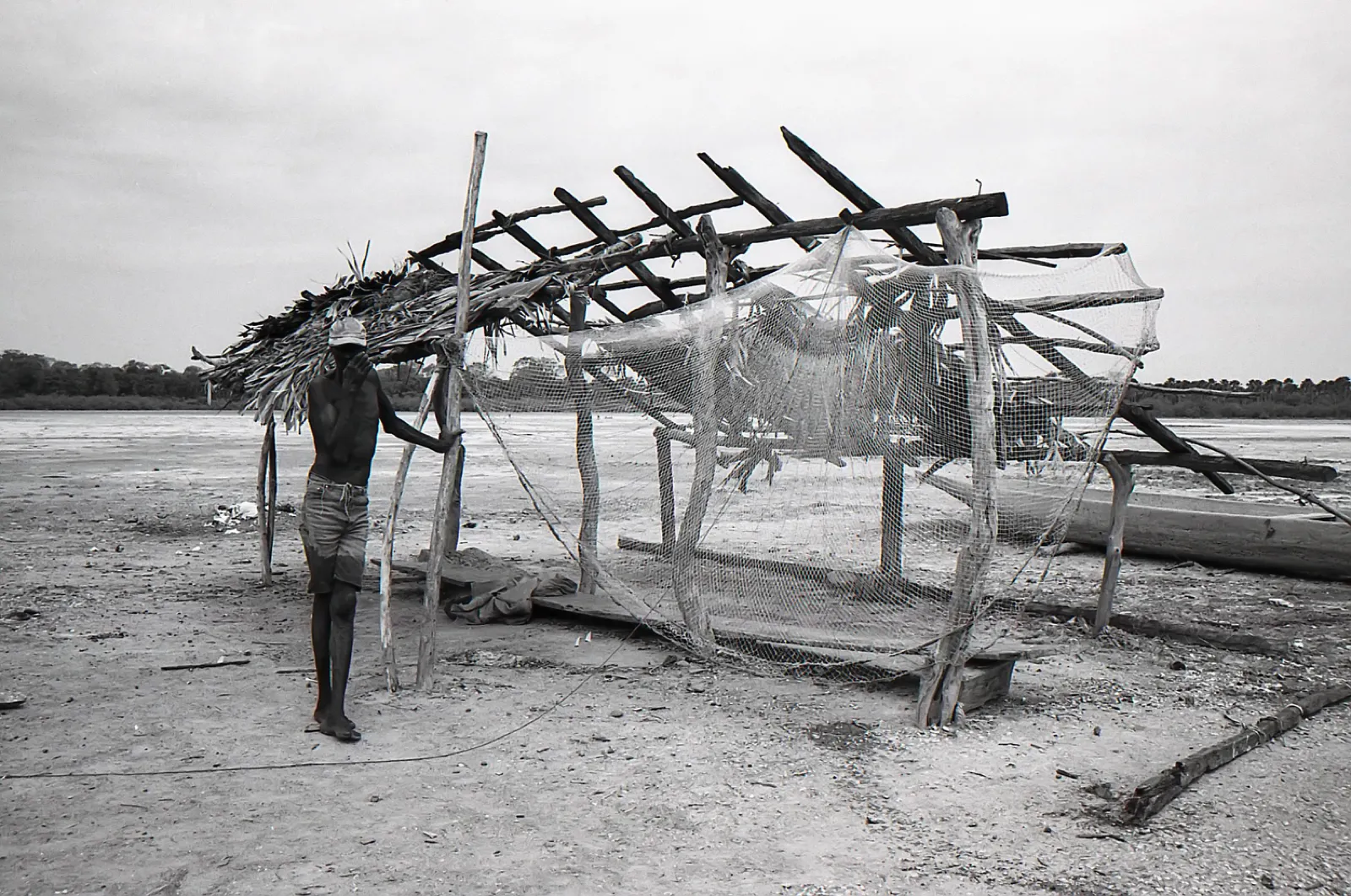
Artisanal subsistence fishing sets the rhythm of daily village life. Its emblematic tool is the cast net, a weighted circular net thrown by hand with a precise gesture from small pirogues driven by paddle or sail. But this practice belongs to a specific cultural reality: the Jola people, by far the majority in Lower Casamance and of animist and Christian tradition, are not originally a fishing people. Hunter-gatherers in the distant past, the Jola became above all remarkable rice growers: mastering rice cultivation in mangrove areas remains the heart of their identity. Cast-net fishing is therefore a complementary, subsistence activity woven into the farming cycle, not a maritime specialisation.
The Lebou and the major landing centres
The major fishing centres rest on an entirely different reality. Sea fishing has historically been the preserve of the Lebou, a people from the Dakar region and the northern coast, mostly Muslim — the Lebou of the Cap-Vert peninsula are known for having formed, as early as the 18th century, one of the country's first autonomous political entities. It was they who, through successive waves of settlement, developed the major landing centres along the Casamance coast.
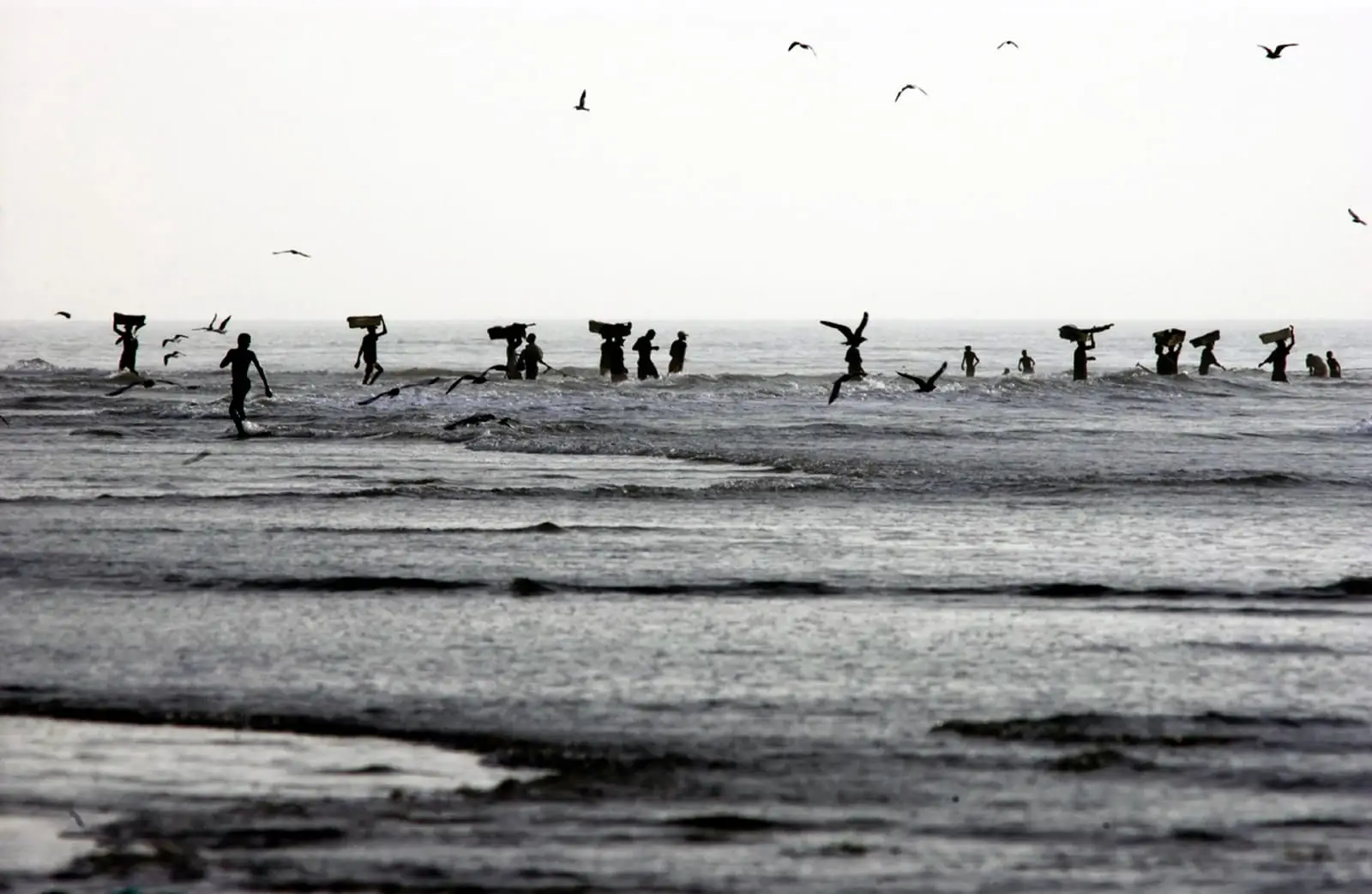
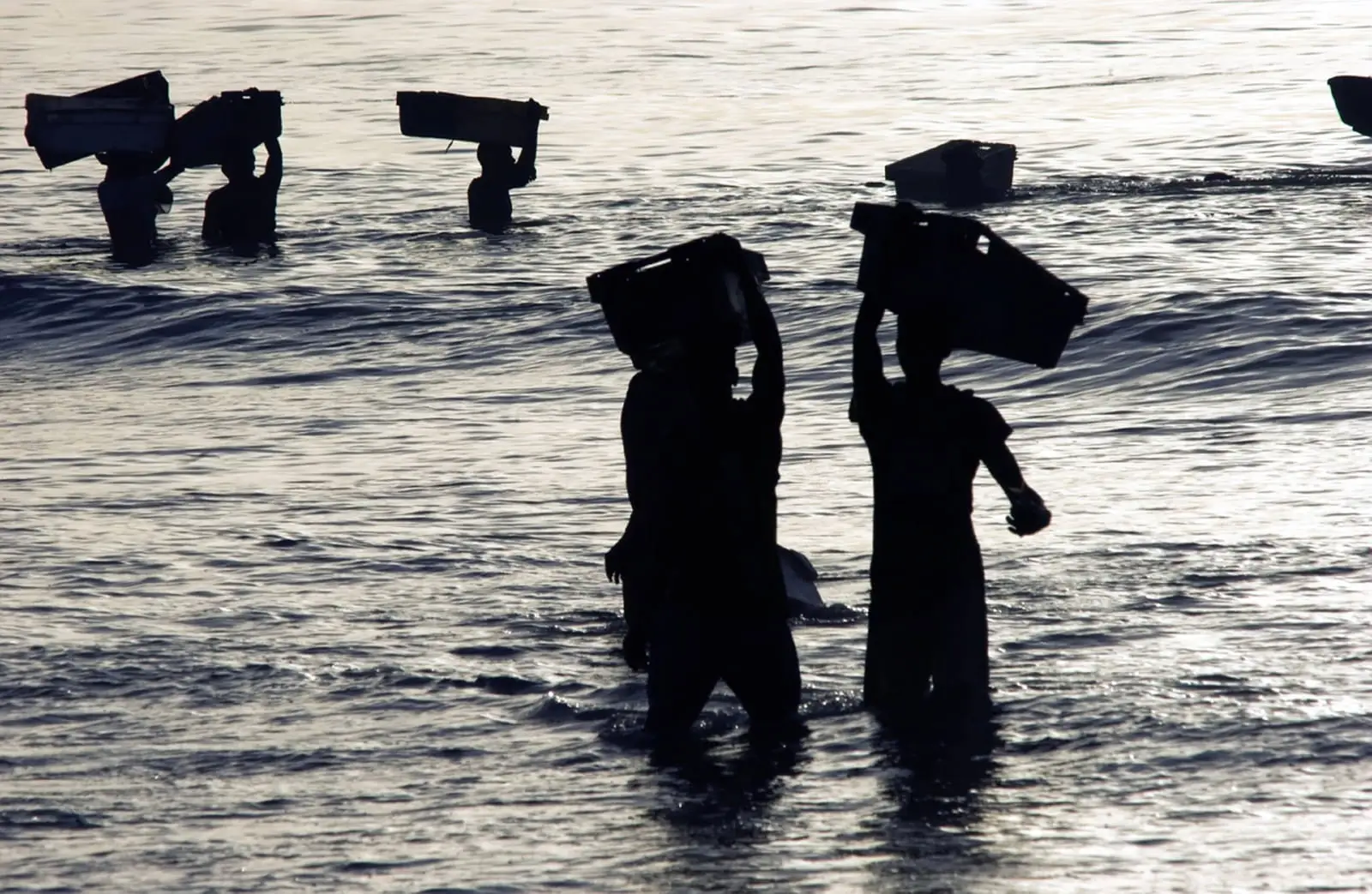
At sites such as Diogué, Kafountine or Cap Skirring, the activity reaches an almost industrial scale while remaining artisanal in its means. Fishing campaigns can last from a single day to several months: crews follow the fish along the West African coast, and it is not unusual for a pirogue to sell part of its catch on the way out, as far as Conakry, before returning fully loaded to its home port.
A coexistence shaped by history
The meeting of these two worlds — the Jola rice growers and the fishermen from the north — was not without friction. The establishment of many fishing camps, some of them informal, and the growing pressure on resources and land were among the many factors of tension that fed the Casamance conflict from the 1980s onwards. Some of these centres were destroyed and these episodes claimed lives. Recalling this history, without ever simplifying it or reducing it to a single cause, means understanding that today's Casamance fishing landscape is also the product of a complex human geography, made of sensitive memories.
The depletion of resources
Despite this historic abundance, local stakeholders are seeing a drastic fall in yields and an alarming decrease in the size of catches. This multi-factor crisis stems from several simultaneous pressures.
| Cause of depletion | Impact on the ecosystem and the resource |
|---|---|
| Industrial overfishing | Trawlers scrape the seabed offshore, take enormous volumes, destroy benthic habitats and cut off the fish migration route towards the estuary. |
| Increased artisanal fishing effort | Faced with falling catches, fishermen intensify their effort: larger pirogues and very fine-mesh nylon nets that catch juveniles before they can breed. |
| Mangrove degradation | The destruction of mangrove trees deprives fry of their nursery and breaks the breeding cycle of estuarine species — a mechanism explained in our feature on the mangrove and the bolongs. |
| Climate change | Falling rainfall causes hyper-salinisation of the river in the dry season, pushing freshwater species upstream and upsetting biological balances. |
The central role of women processors
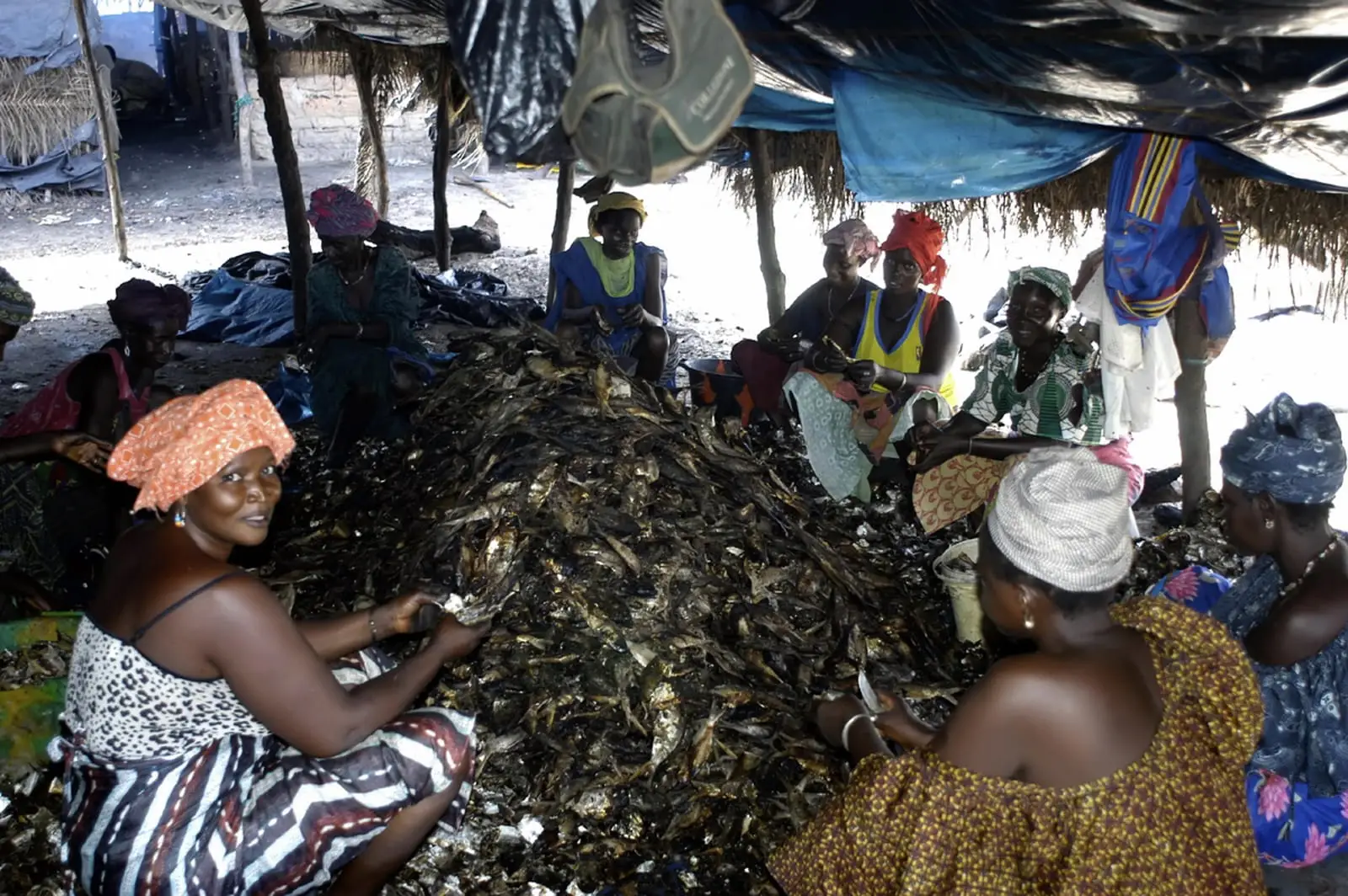
While the men go out to sea, women unquestionably dominate the post-catch chain. At major landing sites such as Kafountine or Cap Skirring, they are the essential players in adding value to the fish and distributing it.
Mastery of preservation techniques
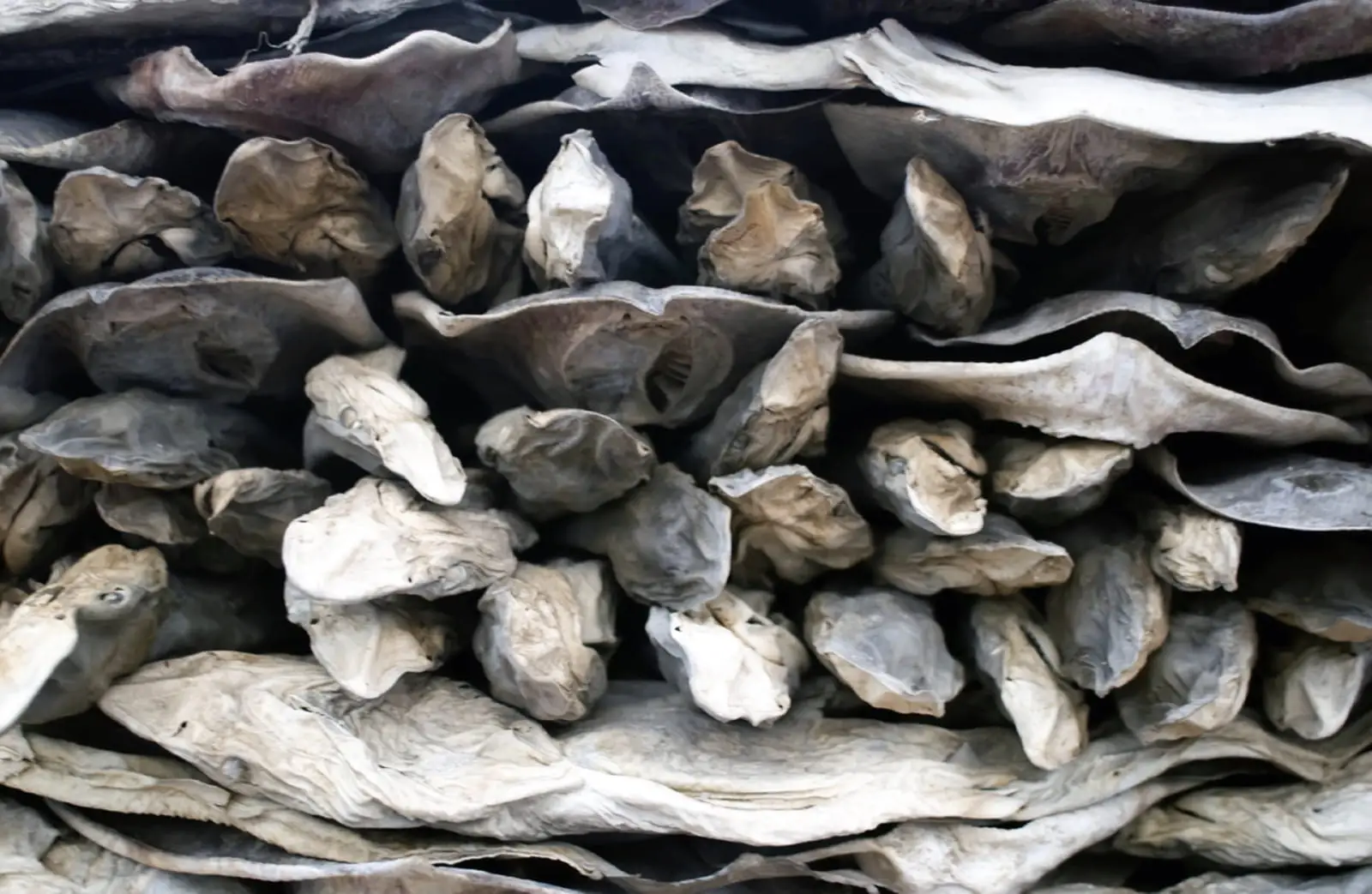
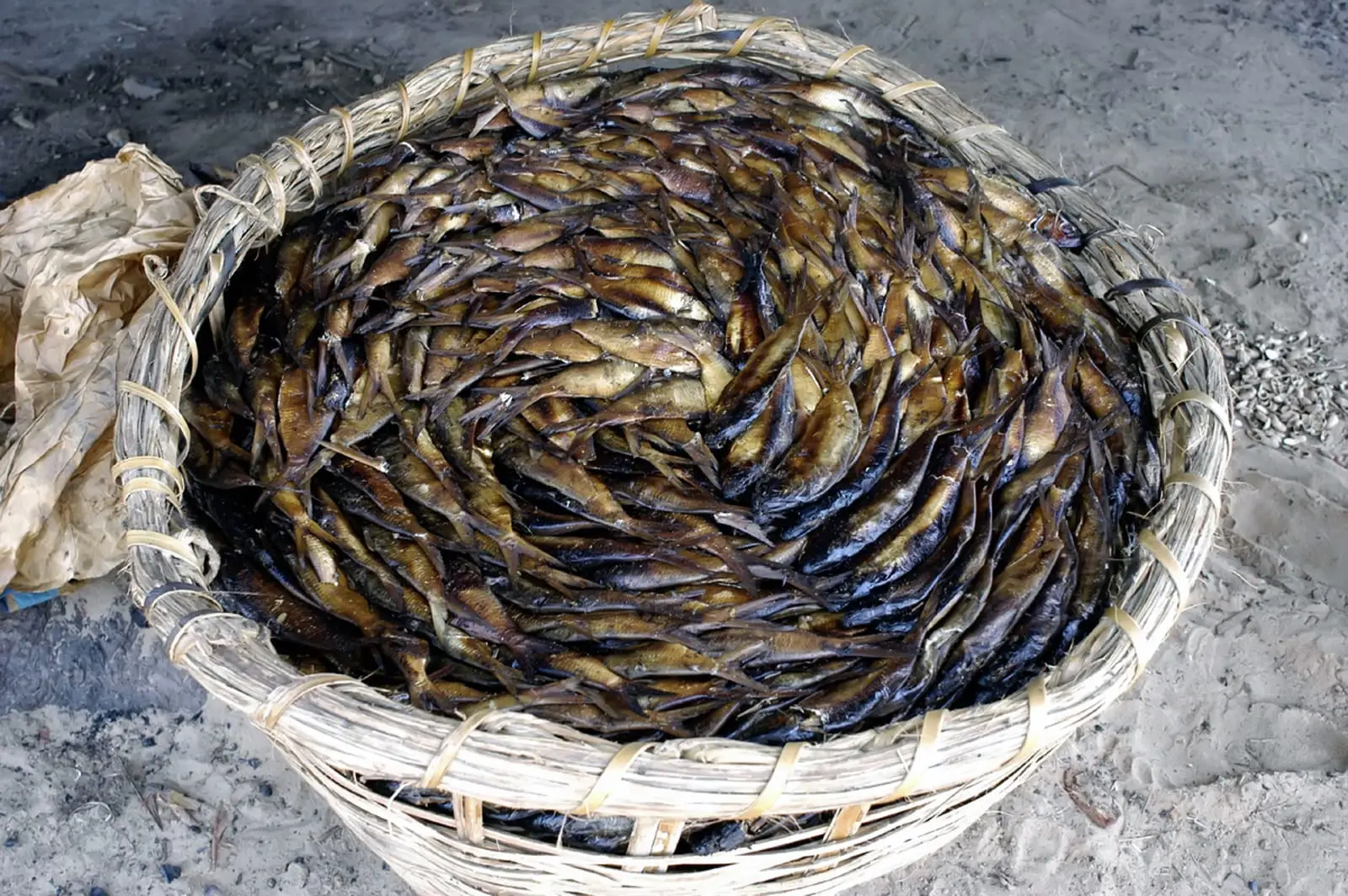
Without a developed cold chain, preserving surpluses rests entirely on women's know-how. Through smoking, drying, fermenting and salting, they produce kéthiakh (braised and dried fish) or gejj (fermented and dried fish), staple ingredients of Senegalese cuisine. This processing supplies the interior of the country, and a large share of the output feeds the West African sub-region for months on end.
Economic autonomy and vulnerability
Organised into Economic Interest Groups (GIEs), these women generate essential income that is reinvested directly in the local economy: children's education, household health, savings clubs. But they are hit hard by the scarcity of the resource: falling landings drive up purchase prices at the pirogue and squeeze their margins.
Above all, traditional smoking requires enormous quantities of wood — often from illegal mangrove cutting — and exposes women to serious respiratory illness. Moving to improved kilns (such as FTT ovens, which use less wood and pollute less) is now a major health and environmental challenge. This is where the fishing economy meets forest conservation directly.
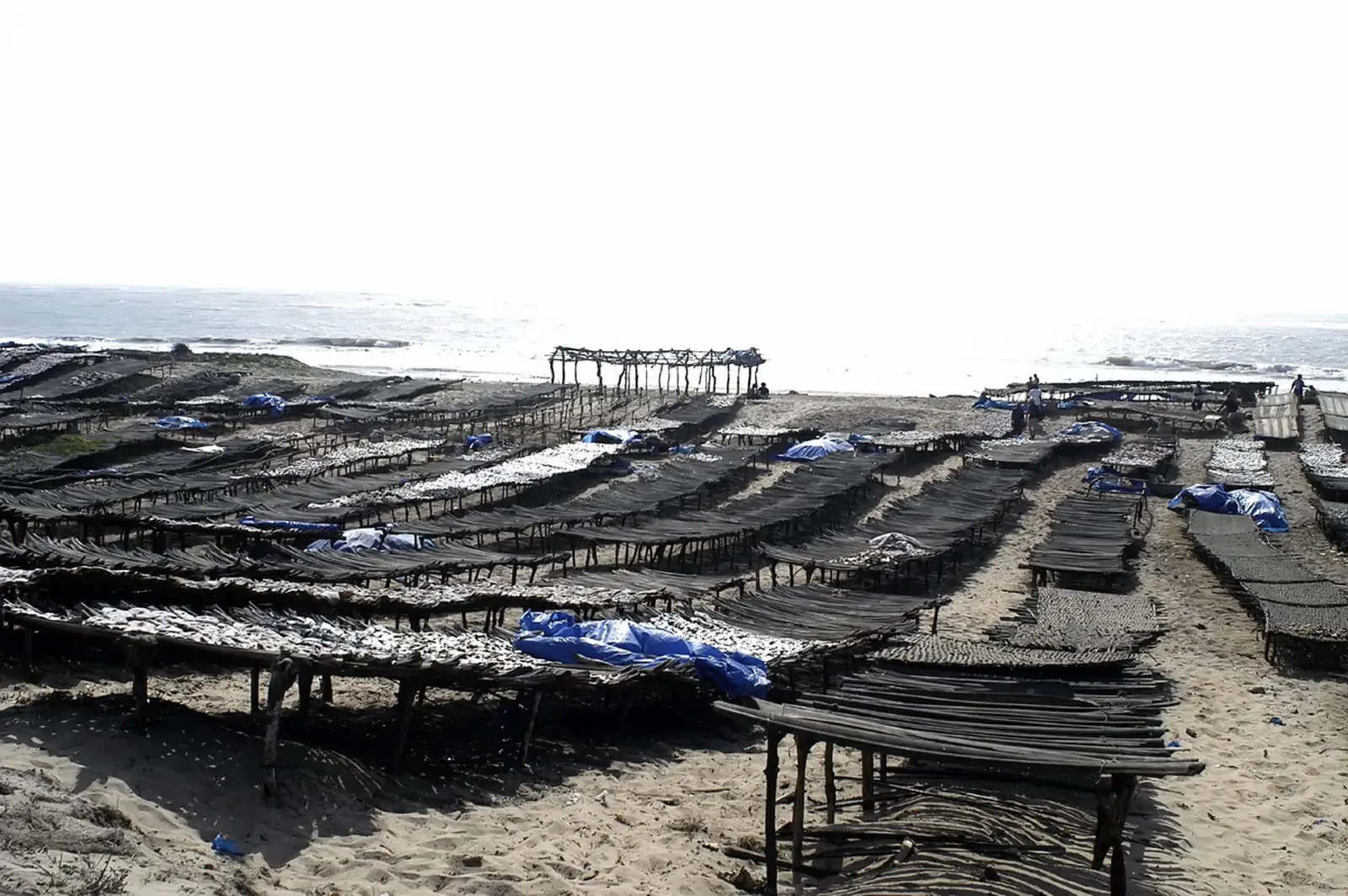
At the Cap Skirring fishing camp, which we visit on our excursion to Cap Skirring, you see the pirogues lined up on the beach and the women smoking and drying fish.
Marine Protected Areas: the ecological response
To reverse this destructive trend, conservation strategy is turning towards spatial management: Marine Protected Areas (MPAs). In Casamance, areas such as the Abéné MPA or Kassa-Balantacounda have become the spearheads of fisheries conservation. Their success rests on a precise way of working that combines ecological science and local governance.
Spatial zoning
An MPA does not ban fishing everywhere. Its fully protected zone — the core of the area — is strictly closed to all extraction and serves as a breeding sanctuary. Around it, a buffer zone allows strictly regulated fishing (types of gear, net mesh size, biological rest periods).
The spillover effect
By turning the core zone into a sanctuary, fish are left to breed there in large numbers and grow. They eventually spill over naturally into the adjacent fishing grounds: this is the spillover effect, which raises overall yields around the MPA.
Community co-management
MPAs are managed participatively. Management committees bring together state officials, village chiefs, representatives of the fishermen and, increasingly, representatives of the women processors. Together they set the rules and sometimes carry out surveillance through village patrols.
Towards resilient fishing — and discovering it with respect
The survival of the sector now depends on its capacity to regulate itself. While Marine Protected Areas show that biodiversity and the local economy can be reconciled, these initiatives remain fragile: their durability will depend on the state's firmness against illegal industrial fishing, on supporting women processors towards sustainable practices, and on the continued buy-in of coastal communities.
These challenges are part of the wider picture of ecological protection in Casamance. For the visitor, encountering these different faces of fishing — from the cast of a net to the bustle of a landing centre, by way of a sport trolling trip — offers a unique reading of the region. We have documented several Casamance discovery itineraries that make it possible to observe these realities with the respect and guidance they demand, far from the standards of mass tourism.
To fish by trolling or with a set line in a bolong, see our excursions to Affiniam and Essaout; at Boudédiète, you fish from the beach with surf casting. As always, catches are never guaranteed.
🌊 The Sea and Fishing Calendar of Casamance
Fishery resources, fish, crustaceans and shellfish in Casamance
From November to January in Casamance
With the return of the dry season, the coastal and estuarine waters offer fine opportunities for artisanal fishing. The bonga shad or cobo (Ethmalosa fimbriata / Eman) is particularly present in the estuary, with significant catches from January to August. The cooler waters also favour the mullets, notably Liza falcipinnis and Mugil bananensis, as well as the giant African threadfin (Polydactylus quadrifilis), the sea catfish (Arius spp.) and the tonguesole (Cynoglossus canariensis).
Offshore, the round sardinella (Sardinella aurita) is particularly abundant during the cold season, while the Atlantic bonito (Sarda sarda) is reported from December to June. The muddy bottoms may also shelter the bearded brotula (Brotula barbata), the John Dory (Zeus faber mauritanicus) and the cuttlefish (Sepia officinalis hierreda).
In the mangrove, the harvesting season for mangrove oysters (Crassostrea gasar, also referenced as Crassostrea tulipa) traditionally begins during this period. The shellfish gathered also include the bloody cockle (Senilia senilis), the cymbium (Cymbium spp.) and several gastropods such as the murex.
From February to April in Casamance
The end of the cool season and the beginning of the hot season correspond to a very rich period for fishery resources. The white shrimp or pink shrimp (Penaeus notialis / Ejip) has a second fishing period around February-March, then another important window in March-April. Catches are closely linked to variations in salinity and to the seasonal movements of the species between the mangrove and the sea.
In the bolongs and the estuary, the blackchin tilapia or wass (Sarotherodon melanotheron / Eñil) remains a major resource, alongside the mullets, the bastard grunts (Pomadasys jubelini), the croakers (Pseudotolithus spp.), the jacks (Caranx spp.), the bonga shad (Ethmalosa fimbriata), the sea catfish (Carlarius spp.) and the guachanche barracuda (Sphyraena afra).
The surveys of the Niamone-Kalounayes MPA show a strong presence in March-April of the giant African threadfin (Polydactylus quadrifilis), the largescale mullet (Parachelon grandisquamis), the guachanche barracuda (Sphyraena afra) and Hemichromis fasciatus.
The harvesting of mangrove oysters (Crassostrea gasar / Crassostrea tulipa) and bloody cockles (Senilia senilis) continues throughout this period, traditionally very active for the women who harvest the mangrove's resources at low tide.
From May to June in Casamance
The hot season sets in and the coastal waters become particularly active. The bonga shad (Ethmalosa fimbriata / Eman) is among the most abundant species, with a particularly marked presence in the months of May and June. The mangrove surveys also show a strong presence of the mullet (Chelon dumerili), the Elops lacerta, the yellowfin mullet (Neonchelon falcipinnis), the sole (Citharichthys stampflii), the Monodactylus sebae, the stingray (Fontitrygon margarita) and the croaker (Pseudotolithus elongatus).
It is also an important period for certain sea resources. The Atlantic bonito (Sarda sarda) is still reported until June, while the large pelagics begin to appear more offshore: yellowfin tuna (Thunnus albacares), bigeye tuna (Thunnus obesus) and skipjack tuna (Katsuwonus pelamis) are mainly concentrated off the Senegalese coasts from May to October.
The giant tiger prawn (Penaeus monodon) is a particular resource of the Casamance estuary. Recent work shows an abundance mainly located between April and June. Its presence in the estuary is nonetheless atypical and its catches vary from year to year.
The harvesting of mangrove oysters (Crassostrea gasar / Crassostrea tulipa) and other mangrove shellfish continues into the early hot season, before the full onset of the rainy season.
From July to October in Casamance
The rainy season profoundly transforms the estuary. The freshwater inflows change the salinity of the bolongs and the mangrove becomes a genuine nursery area for many species. In the Niamone-Kalounayes MPA, September is the month with the highest abundance and the highest fish biomass, while July, September and October are among the months with the greatest species richness.
The assemblages of this period include in particular the bonga shad (Ethmalosa fimbriata / Eman), the mullets, the Elops lacerta, the Monodactylus sebae, the stingray (Fontitrygon margarita) and various croakers (Pseudotolithus spp.). From August to February, the mangrove surveys particularly highlight the banana mullet (Mugil bananensis), the Elops senegalensis, the Coptodon guineensis, the blackchin tilapia (Sarotherodon melanotheron / Eñil), the sea catfish (Carlarius latiscutatus and Carlarius parkii) and the Senegalese tonguesole (Cynoglossus senegalensis).
Off the Casamance coasts, the hot season and the rainy season also correspond to the period of presence of the large pelagics: yellowfin tuna (Thunnus albacares), bigeye tuna (Thunnus obesus) and skipjack tuna (Katsuwonus pelamis) are reported mainly from May to October, with yellowfin and skipjack particularly well represented off Casamance.
The white shrimp (Penaeus notialis / Ejip) has its main landing period after the rainy season, with a peak generally observed between September and November. The mangrove and the bolongs then play an essential role in the growth cycle of this species.
On the mudflats, the fiddler crabs (Uca tangeri / Ekalal) are characteristic of the intertidal zones of the mangrove. They are of interest here mainly as indicators of mudflat life rather than as a food resource: the species is widely present in the Casamance estuary.
🐟 The fish threatened by overfishing in Casamance, Senegal
The pressure on the fishery resources of Casamance, Senegal affects many species of fish exploited by artisanal and maritime fishing. Overfishing, the capture of fish that are too young, certain non-selective fishing practices and the degradation of coastal and estuarine habitats weaken the natural renewal of the populations. Among the species particularly exposed to fishing pressure are notably:
- The white grouper or thiof (Epinephelus aeneus), a large fish emblematic of Senegalese fishing and particularly vulnerable to overexploitation.
- The giant African threadfin or capitaine (Polydactylus quadrifilis), a large coastal predator much sought after by fishing.
- The lesser African threadfin (Galeoides decadactylus), a demersal species subject to strong exploitation pressure.
- The croakers (Pseudotolithus spp.), demersal fish important in coastal fisheries, several stocks of which have experienced overexploitation.
- The bluespotted seabream (Pagrus caeruleostictus), a fish sought after by artisanal and commercial fishing.
- The red pandora (Pagellus bellottii), a demersal species whose stock has regularly been identified as overexploited in the available assessments.
- The sea catfish (Arius spp.), fish associated with coastal and estuarine environments, also subject to significant fishing pressure.
- The sardinellas (Sardinella aurita and Sardinella maderensis), pelagic resources essential to Senegalese fisheries and particularly sensitive to the intensification of fishing effort.
- The jacks (Caranx hippos and other Caranx spp.), large predatory fish of coastal waters, whose preservation also depends on maintaining functional marine ecosystems.
Preserving these species also means protecting their habitats. The mangroves and bolongs of Casamance are essential areas for the reproduction, growth and feeding of many fish and crustaceans. Protecting the mangrove trees, the mudflats and the nursery areas, combined with more selective fishing and better protection of juveniles, is thus inseparable from the conservation of marine biodiversity and fishery resources in Casamance, Senegal.
Discover fishing on our excursions
Pirogue fishing in the bolongs, surf casting from the beach, the Cap Skirring fishing camp: fishing is discovered on our 11 excursions from Cap Skirring, reserved for guests of Le Papayer Ecolodge.
 Carabane, the car-free island
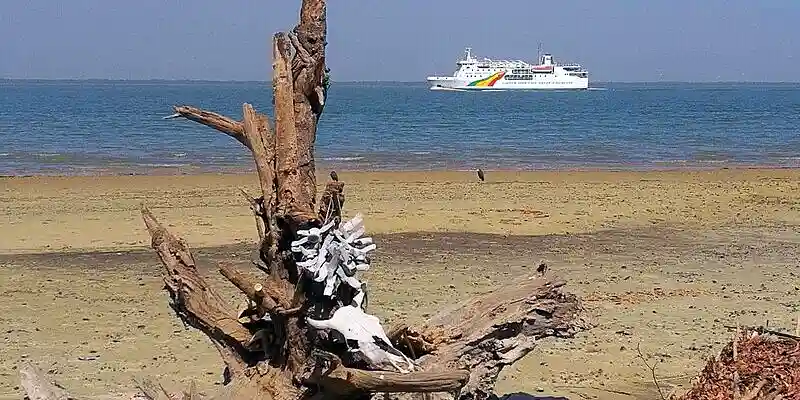 The manatees of Pointe Saint-Georges
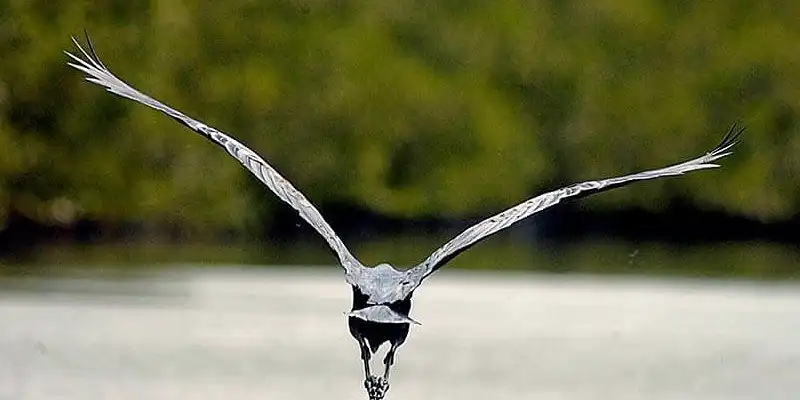 Boudédiète, a wild Guinea-Bissau beach
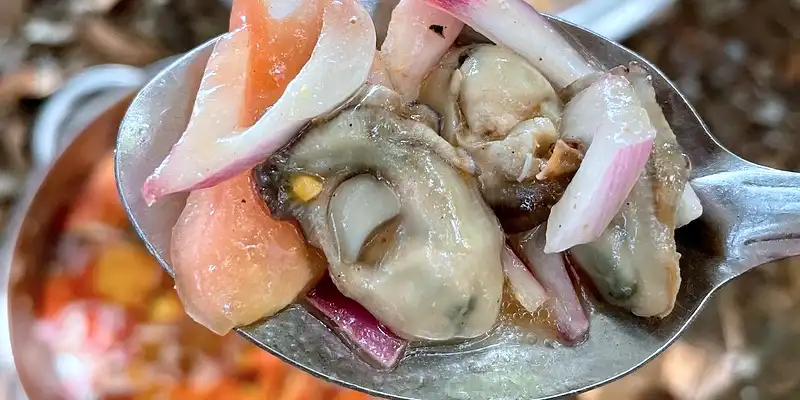 Essaout, the oyster village
 An audience with the King of Oussouye
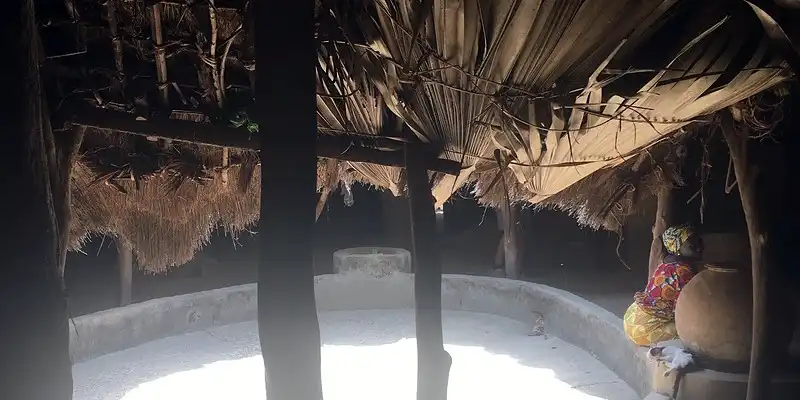 Enampore, Jola architecture
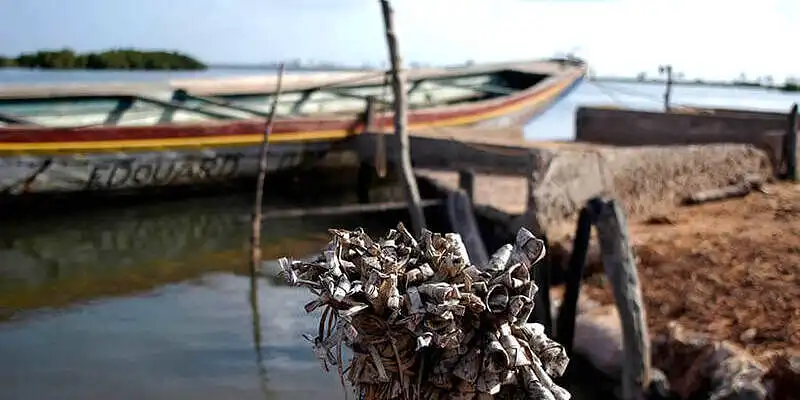 Affiniam and its bolong
 Ziguinchor, capital of the South
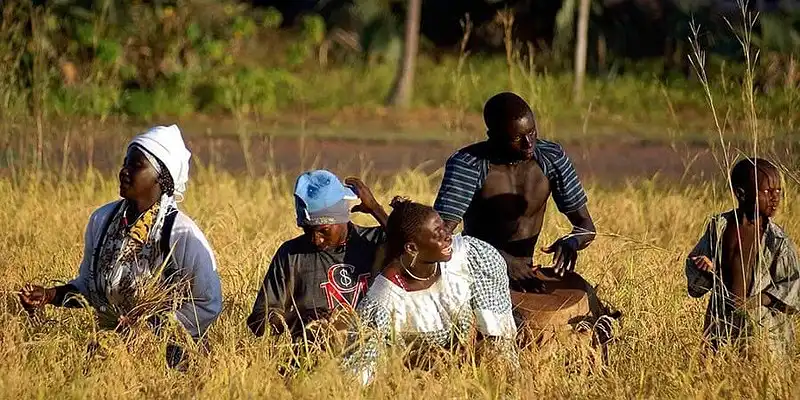 Niomoune and the Karone Islands
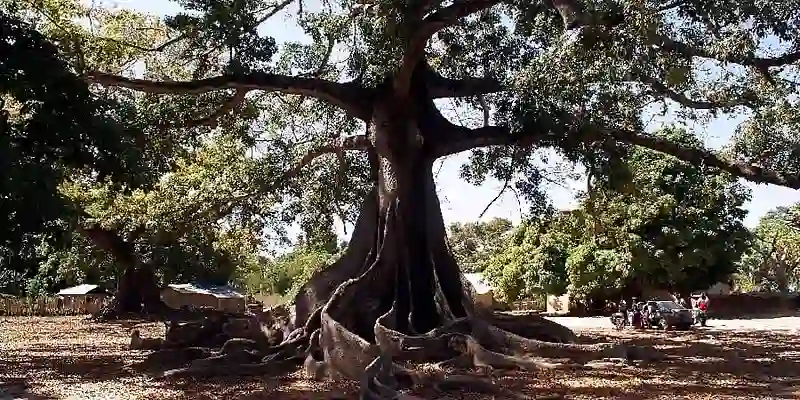 Diembéring and the giant of the savannah
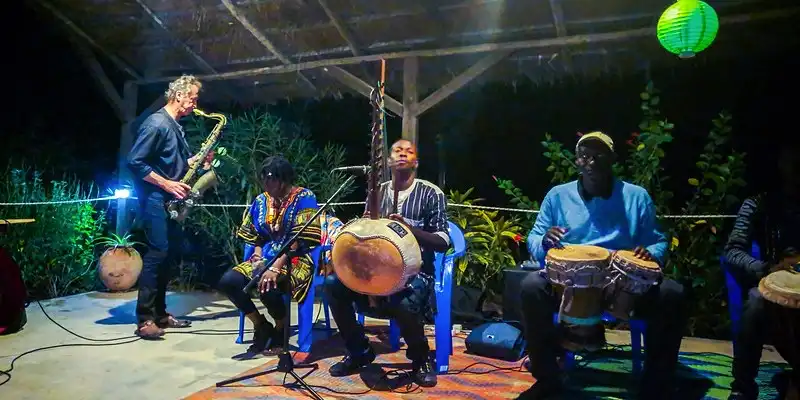 Cap Skirring, from market to nightfall
Going further: our features on Casamance
Understanding the region beyond the excursion — ecology, forests and mangrove.
The mangrove & the bolongs
Mangrove trees, fish nursery, threats and replanting of this vital ecosystem.
Forests & wood species
Exceptional flora, protected forests and sustainable management of forest resources.
Ecological protection & biodiversity
Ecosystems, protected areas and conservation strategies for a biodiversity unique to Casamance.
When to visit Casamance?
Climate, sea and wind month by month in Cap Skirring: pick the season that suits you