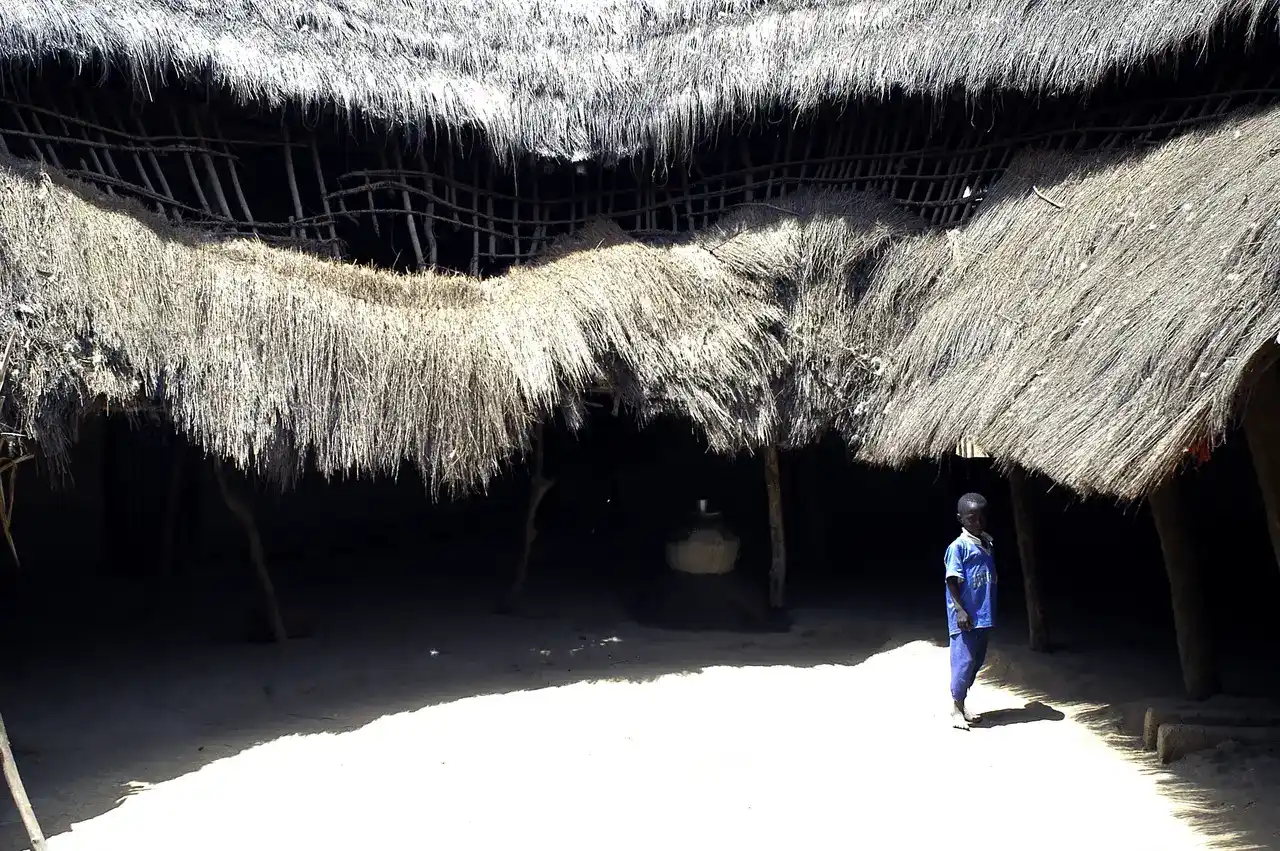
Enampore Excursion from Cap Skirring: the Oldest Impluvium House and the Duck Festival
Between Oussouye and Ziguinchor, at the end of a bush track, Enampore (also spelled Enampor) is a Jola village lost in the forest, in the heart of the former kingdom of Mof Awi. People come for its impluvium house, said to be the oldest in Casamance, and for its forest, home to many monkeys. Our day takes you there by 4x4 from Cap Skirring, in about an hour and a half. The idea is to come during the duck festival (also called the ducks' festival), in early February: you have an all-you-can-eat lunch and watch a show of mask and fetish dances.
This page presents the excursion, the route, the village, the impluvium house, the duck festival, the forest and its monkeys, as well as our practical advice. It is part of our excursions in Casamance; if you are planning a longer trip, our complete guide to Casamance will help you put your stops together.
The excursion at a glance
- Format
- 4x4 excursion, from the lodge to the village and back, with a guide found on the spot
- Route
- Ziguinchor road from Cap Skirring, then a track from the village of Brin: 1 h 30 in all
- Best time
- The duck festival, in early February: you have lunch there and watch a show of mask and fetish dances
- Lunch
- On the spot, during the duck festival: all-you-can-eat meal
- Village
- Enampore, former kingdom of Mof Awi: about 350 inhabitants, Jola who speak Bandial
- Sights
- The impluvium house, said to be the oldest in Casamance, and the monkey forest
- Visiting the house
- Voluntary contribution, with a minimum of 5,000 FCFA
- Guide
- You can find one on the spot, and it is always preferable
- Option
- Pirogue to the island of Eloubaline, which also has impluvium houses
- Reserved for our guests
- For guests staying at Le Papayer Ecolodge
Like all our excursions in Casamance, this one is reserved for our guests, that is, people staying at Le Papayer Ecolodge: we do not run excursions for outside visitors. To prepare the day, request a call back or request your quote online.
The route: from Oussouye to Enampore, along the bush track
The day starts by 4x4 from Le Papayer Ecolodge. You take the Ziguinchor road, passing through Oussouye, the capital of the Jola country of Lower Casamance. At the village of Brin, you leave the tarmac for a laterite track that winds into the bush: allow 30 to 45 minutes by 4x4, and about 1 h 30 in all from the lodge. Enampore is about 25 kilometres from Ziguinchor.
It is precisely this remoteness that gives the day its charm: no big hotel, no crowds, a village where you truly arrive as a visitor. On the spot, you can find a guide: it is always better when possible, because he introduces you to the impluvium house, the village and the forest.
Indicative map: landmarks and a simplified outline that does not show the exact route.
What you discover in Enampore
A day of bush and architecture, far from the usual circuits. These are its highlights:
- The bush track From Brin, 30 to 45 minutes by 4x4 through the forest, its palms and its kapok trees.
- The village of Enampore A Jola village of the Bandial, in the heart of the former kingdom of Mof Awi.
- The impluvium house A large round earth house, said to be the oldest in Casamance.
- The forest and its monkeys Many monkeys live in the forest surrounding the village.
- The duck festival Early February: all-you-can-eat meal, wrestling, pirogue races and mask and fetish dances.
- Eloubaline Optional: the neighbouring island, by pirogue, and its impluvium houses.
Enampore: a Jola bush village in the heart of the kingdom of Mof Awi
Enampore is the main village of its rural community, in the department of Ziguinchor. The village has about 350 inhabitants, spread over some fifty households, according to 2003 figures. Its people are Jola and belong to the few communities that still speak Bandial. The village lies in the heart of Mof Awi, the former Bandial kingdom.
Its tourism history is unusual: it was here, in 1973, that one of the very first integrated rural camps in Casamance was created, a village-run tourism model that later spread across the whole region. The village is twinned with Pornichet, in the Loire-Atlantique region of France.
Life here follows the seasons: rice growing, often entrusted to women, millet, vegetables, palm wine, fishing and oyster harvesting. Tourism has also revived crafts: basketry, wood carving, pottery and weaving.
The Enampore impluvium house, the oldest in Casamance
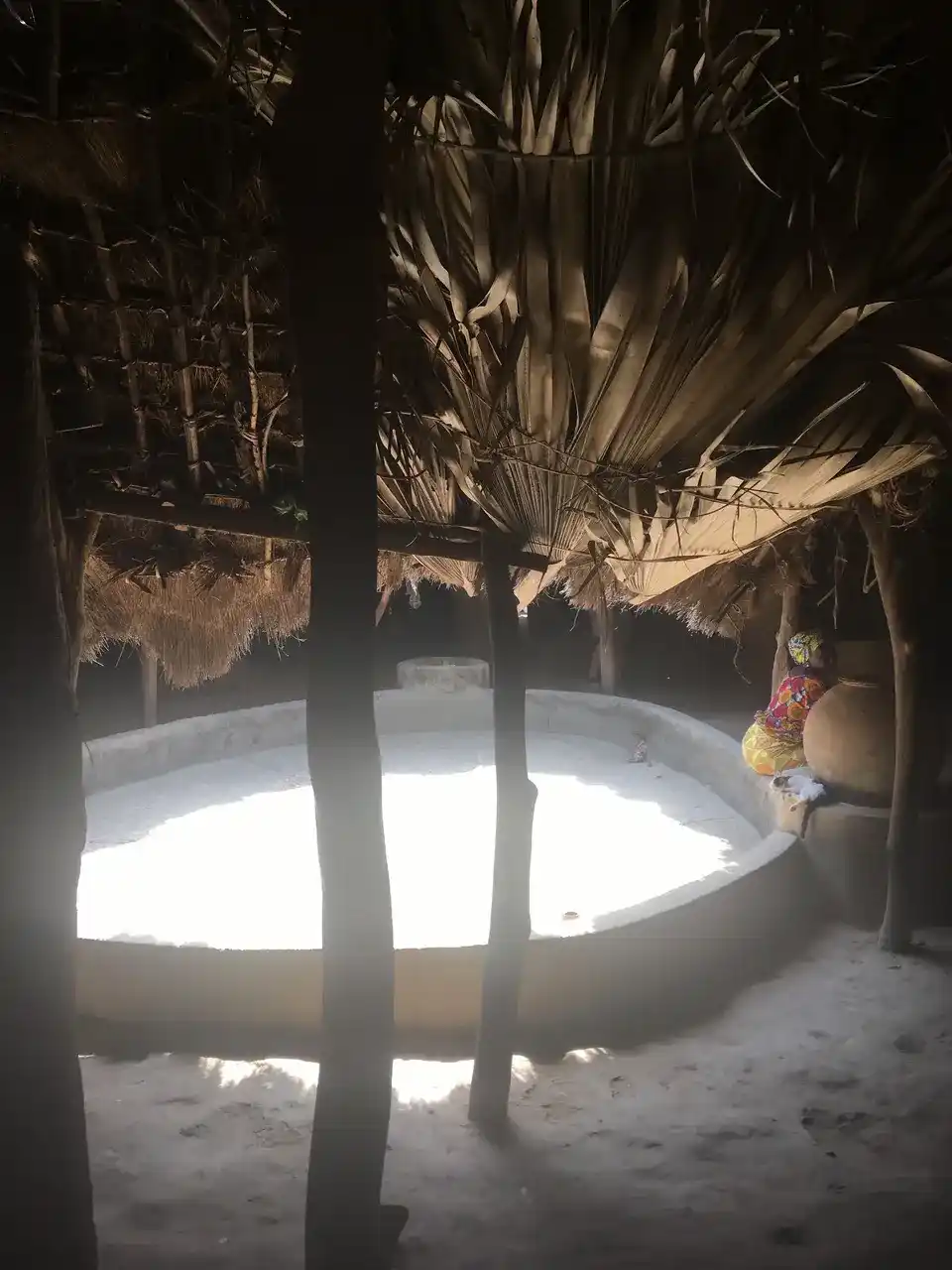
The impluvium house is the traditional home of the Jola of Lower Casamance: a large round building of earth and thatch, whose roof, sloping inwards, converges on a central courtyard. Rainwater is collected there in a trench, then channelled to a well. The rooms open onto the courtyard from a gallery, and several families could live there together. Originally, this layout could also protect the inhabitants, their children and their livestock during conflicts between villages.
In Enampore, the best-known impluvium house is said to be the oldest in Casamance. The Senegalese press credits it with about two and a half centuries of existence and attributes it to a self-taught builder, Akhoufa Manga. It is lived in by the Manga family, who welcome visitors from all over the world every year. The visit is voluntary: you give what you wish to give, with a minimum of 5,000 FCFA, which helps maintain this house. These great ages remain estimates, however: what matters is that the house is alive, and that you visit it in the home of its inhabitants.
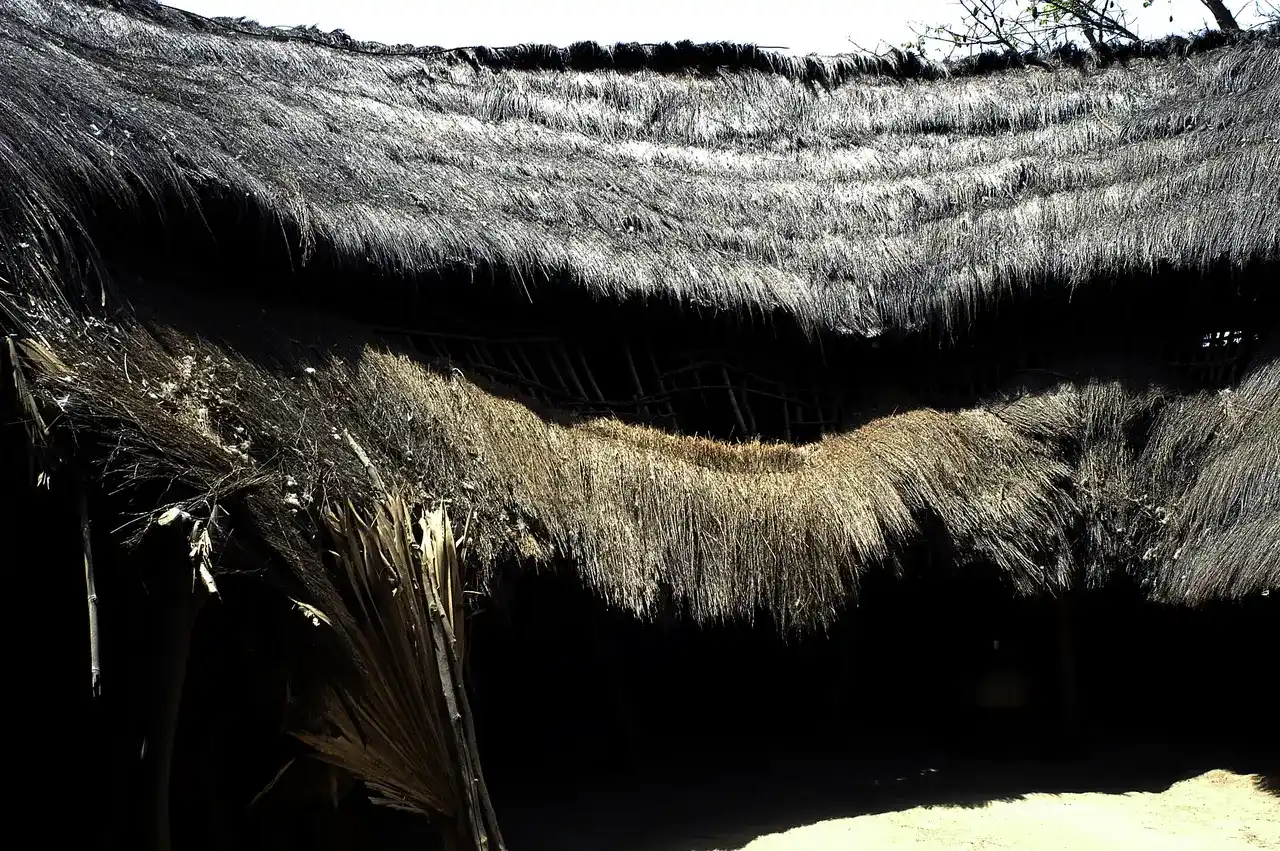
The village has three impluvium houses, two of which now serve as a village camp for travellers. Built in 1974, one of them was destroyed by fire in 1987, then rebuilt. For comparison, our Affiniam excursion takes you to another great impluvium house, in a completely different setting.
The duck festival: the best time to come
If you can choose your dates, come to Enampore at the time of the duck festival: the excursion is designed so that you have lunch there and watch the show. It takes place every year on the first weekend of February, over three days, as part of the festival of the kingdom of Enampore. The programme combines an all-you-can-eat meal, traditional wrestling, pirogue races, stories and traditions, and a great show of mask and fetish dances, including the kumpo.
The kumpo is a costume of strips of palmyra palm leaves, worn by a dancer who spins, stops on his knees and starts moving again, to the delight of the spectators. The word is of Mandinka origin; this mask, borrowed by the Jola from the Bainouk, contributes to the education of children and to social cohesion. The festival also has a practical purpose: it supports the education of the village children.
The exact dates vary from year to year: ask us about the next edition before booking your stay.
The Enampore forest and its monkeys
Around Enampore stretches a dense forest, dominated by kapok trees, palms and baobabs, and bordering the mangrove of the river. This is where many monkeys live, which you watch for from the track and the edges of the village.
To see them in good conditions, it is best to walk slowly, speak softly and rely on the guide, who knows where they pass. Do not feed them, and keep your belongings well closed: a monkey used to food quickly becomes insistent. To understand the environment, read our feature on the trees of Casamance.
Option: the pirogue to the island of Eloubaline
From Enampore, you can reach the island of Eloubaline by pirogue; it also has impluvium houses. The crossing takes about an hour and a half, followed by a quarter of an hour on foot. It is a way to extend the day along the water, depending on the time, the tide and what you feel like doing: talk about it when preparing the excursion.
A typical day in Enampore
Times are indicative: they adjust to your pace and to the condition of the track.
- Departure: by 4x4 from Le Papayer Ecolodge, after breakfast.
- Road: Ziguinchor road via Oussouye, then a track from Brin: 1 h 30 in all.
- Village: welcome, finding a guide on the spot, a stroll and meeting the inhabitants.
- Impluvium house: visit of the oldest house in Casamance (voluntary contribution, minimum 5,000 FCFA).
- Lunch: on the spot, during the duck festival, with an all-you-can-eat meal.
- Show: mask and fetish dances, including the kumpo.
- Forest: a gentle walk in search of the monkeys.
- Return: 4x4 to the lodge, with the pirogue to Eloubaline as an option.
Practical advice for your excursion
- Plan for a full day: 1 h 30 of road each way, including a bumpy bush track, especially in the rainy season.
- Aim for the first weekend of February, for the duck festival, but let us know early: this period is the most in demand.
- Take a guide on the spot: it is always preferable for the impluvium house, the village and the forest.
- Bring a hat, sunscreen, water and mosquito repellent.
- Wear closed shoes and light clothing that covers your arms and legs.
- Bring a camera with a zoom lens, for the monkeys, and binoculars if you have them.
- Do not feed the monkeys and keep your bags closed.
- Always ask permission before photographing local people, and plan on at least 5,000 FCFA for visiting the impluvium house.
- Keep cash in small notes for buying crafts.
- In the bush, do not pick fruit, do not lean on trees and do not touch flowers: bush wasps and bees live there, and the slightest vibration can provoke stings.
- The dry season (November to May) is the most comfortable for the track.
Frequently asked questions about the Enampore excursion
Where is Enampore?
In Lower Casamance, between Oussouye and Ziguinchor, about 25 kilometres from Ziguinchor, at the end of a track that starts from the village of Brin. The village is the main settlement of its rural community, in the former Bandial kingdom of Mof Awi. It is also spelled Enampor.
How do you get to Enampore from Cap Skirring?
By 4x4, along the Ziguinchor road, then a laterite track from the village of Brin for 30 to 45 minutes. Allow 1 h 30 in all from Cap Skirring.
What is the best time to go?
The first weekend of February, during the duck festival: all-you-can-eat meal, wrestling, pirogue races and a show of mask and fetish dances. The dates vary, so ask us about the next edition.
What is the duck festival?
It is an annual festival in Enampore, lasting three days, which celebrates Jola heritage and funds the education of the village children: communal meal, traditional wrestling, pirogue races, stories and dances.
What is the kumpo?
It is a mask made of strips of palmyra palm leaves, worn by a dancer who spins and stops on his knees. The word is of Mandinka origin; the Jola borrowed it from the Bainouk. It contributes to the education of children.
How much should you give to visit the impluvium house?
The visit is voluntary: you give what you wish, with a minimum of 5,000 FCFA.
Where do you have lunch?
On the spot, in Enampore, during the duck festival: the meal is generous, all-you-can-eat. Let us know early, as it is the most in-demand period.
Do you need a guide?
You can find one on the spot, and it is always better when possible: he explains the impluvium house, the village and the forest.
Why is its impluvium house said to be the oldest in Casamance?
Because guides and the Senegalese press present it as the oldest in the region, with about two and a half centuries of existence. These ages remain estimates; the house is still lived in by the Manga family.
What is an impluvium house?
It is a large round house of earth and thatch, whose roof slopes towards a central courtyard: rainwater is collected in a trench, then channelled to a well. The rooms open onto the courtyard.
Do you really see monkeys in Enampore?
The village is surrounded by a forest where many monkeys live, but sightings are never guaranteed. Move slowly, speak softly and let yourself be guided.
Can you sleep in Enampore?
Yes: two of the village's three impluvium houses serve as a village camp. Our excursion is a day trip, from Le Papayer Ecolodge.
What else can you do in Enampore?
You can stroll through the village, meet the craftspeople (basketry, carving, pottery) and taste Jola rural life, shaped by rice growing and palm wine.
Can you go to the island of Eloubaline?
Yes, as an option: you go by pirogue from Enampore, about an hour and a half of sailing then a quarter of an hour on foot. The island also has impluvium houses.
What is the difference from the Affiniam excursion?
Enampore is done by 4x4 and on foot, and focuses on the village, the impluvium house and the monkey forest. In Affiniam, the pirogue, the bolongs and the fishing are at the heart of the day.
What are the risks in the bush?
Nothing serious if you follow a few rules: do not pick fruit, do not lean on trees, do not touch flowers. Bush wasps and bees live in the trees, and the slightest vibration can provoke stings.
Is the excursion open to people who are not staying at the lodge?
No. All our excursions in Casamance are reserved for guests staying at Le Papayer Ecolodge: we do not run excursions for outside visitors.
Going further: other excursions and features
Our other excursions from Cap Skirring: islands, bolongs, Jola villages and markets.
Carabane, the car-free island
A former colonial trading post at the mouth of the river: sandy lanes, a Breton-style church and lunch with your feet in the water.
The manatees of Pointe Saint-Georges
We go up the river to meet the manatees, and sometimes dolphins, before climbing a giant kapok tree.
The wild bolongs of Boudédiète
By pirogue, through the best-preserved arms of mangrove in the region.
Essaout, the oyster village
Trolling for fish, then a picnic of mangrove oysters picked from the roots.
An audience with the King of Oussouye
A rare meeting with the King of Oussouye, guardian of Jola traditions, then a small cashew nut workshop.
Affiniam and its bolong
Sailing and fishing in the bolong, then lunch in the village's great impluvium house.
Ziguinchor, capital of the South
The big city of Casamance: markets bursting with colour, crafts and the calm of the Alliance Française.
Niomoune and the Karone Islands
An island immersion by pirogue, far from everything, in the Karone archipelago.
Djembering and the giant of the savannah
The biggest kapok tree in Senegal, a place of gathering and stories, close to the lodge.
Cap Skirring, from market to nightfall
The village, its craft market, its colourful pirogues; and in the evening, dinner show and live music.
Our immersive excursions in Casamance on video
Come aboard in pictures: pirogues, bolongs, Jola villages and encounters, filmed during our excursions.
See all our excursions in Casamance
Understanding the region: our features on Casamance.
Fishing in Casamance
Artisanal fishing and major centres, the fisheries crisis and marine protected areas.
The mangrove & the bolongs
Mangrove trees, fish nursery, threats and replanting of this vital ecosystem.
Ecological protection & biodiversity
Ecosystems, protected areas and conservation strategies for a biodiversity unique to Casamance.
Forests & wood species
Exceptional flora, protected forests and sustainable management of forest resources.
Discover the Papayer Ecolodge Forest in Casamance
In Cap Skirring, discover the Papayer Ecolodge Forest, its one-hectare seaside grounds and its planting area. Plant a virtual tree or flower and explore our approach to protecting nature and biodiversity in Casamance.
DISCOVER THE PAPAYER ECOLODGE FOREST