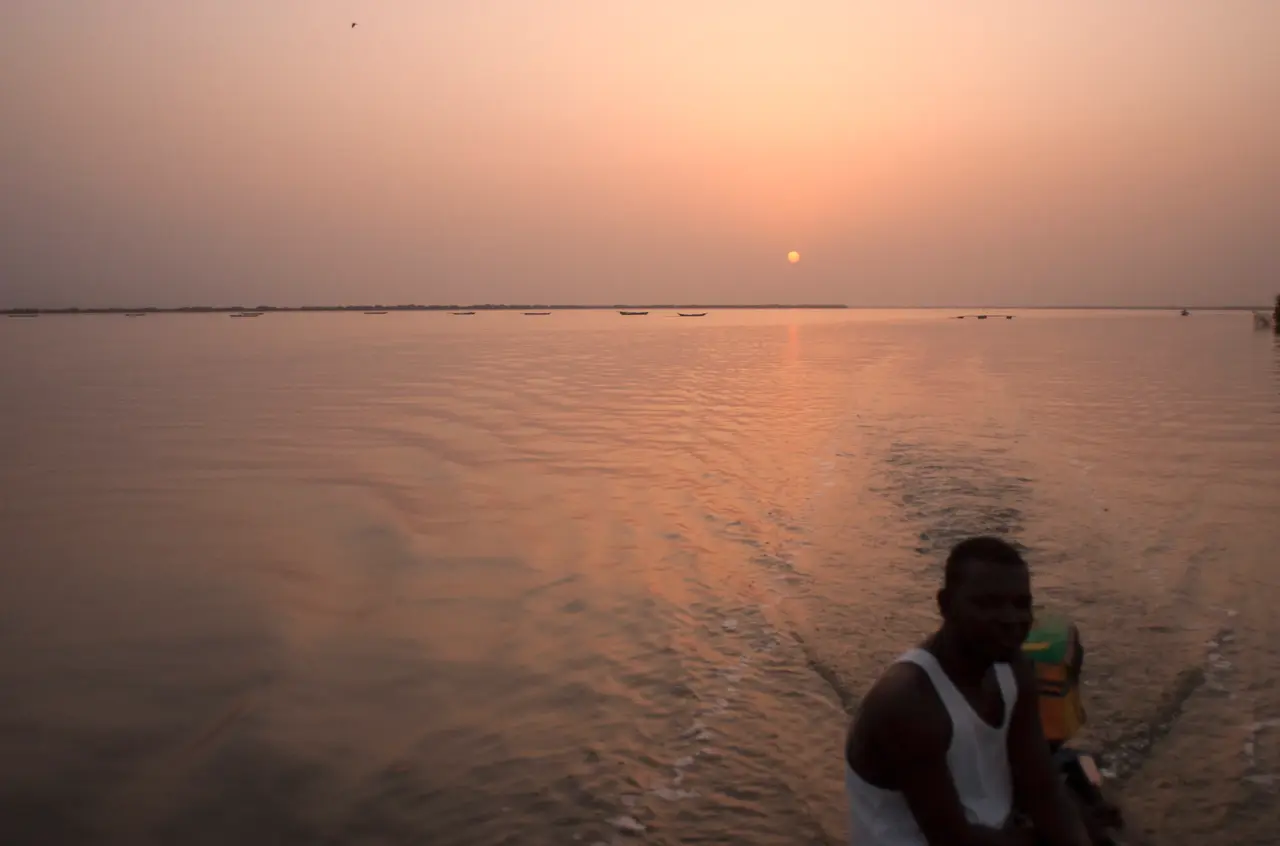
Carabane Excursion from Cap Skirring: Casamance's Car-Free Island
At the mouth of the Casamance River, Carabane is one of the most singular places in southern Senegal: no cars, sandy lanes lined with coconut palms, a Breton-style church slowly being reclaimed by vegetation, and the remains of a trading post that was, in the 19th century, the first administrative capital of Casamance. Our excursion takes you there from Cap Skirring, by 4x4 and then by pirogue through wild bolongs, with a return via Pointe de Nikine that takes you right around the island.
This page presents the excursion, the route, what you will discover, how a typical day unfolds and our practical advice. It is part of our excursions in Casamance; if you are planning a longer trip, our complete guide to Casamance will help you put your stops together.
The excursion at a glance
- Format
- Full day, departure after breakfast
- Route
- Le Papayer Ecolodge, then 4x4 (about 20 minutes) to the Bouyouye landing stage
- Pirogue
- With “Original”, our boatman: about 1 hour from Bouyouye to Carabane, through the wild bolongs and Kachouane
- Return
- Full tour of the island by pirogue, via Pointe de Nikine
- Lunch
- At the Barracuda, at Amat's: 5,000 FCFA, drinks not included
- Reserved for our guests
- For guests staying at Le Papayer Ecolodge
- Don't forget
- Passport required: the island has a military base
- Best season
- Dry season, November to May
Like all our excursions in Casamance, this one is reserved for our guests, that is, people staying at Le Papayer Ecolodge: we do not run excursions for outside visitors. During your stay, the day is put together with you: the exact programme depends on the season, the tide and what you feel like doing. To prepare it, request a call back or request your quote online.
The route: from Bouyouye to Carabane, back via Pointe de Nikine
The day starts at Le Papayer Ecolodge. A 4x4 takes you in about 20 minutes to the landing stage at Bouyouye, a beautiful Jola village known as the “solar village”. There you board the pirogue of “Original”, our boatman: it threads its way through the winding wild bolongs towards Kachouane before reaching the island. Allow a good hour for the crossing from Bouyouye to Carabane, a little longer if we meet dolphins.
What sets our excursion apart is the return: instead of going back the way we came, we pass Pointe de Nikine, which takes us right around the island by pirogue.
Indicative map: landmarks and a simplified outline of the route.
Carabane, first capital of Casamance
Ceded to France in 1836, Carabane became the first French trading post in Lower Casamance. In the mid-19th century the administrator Emmanuel Bertrand-Bocandé gave it a decisive boost: an urban plan, trading houses, and exchanges of groundnuts, rice and rubber. The island was then a strategic crossroads at the entrance to the river. It also carries the memory of the slave trade, for which it was one of the regional footholds.
In 1880 the Catholic mission of the Holy Ghost Fathers was established, and the Breton-style church was built around 1885. At the end of the 19th century a penitentiary, the “école spéciale”, completed the colonial landscape. Then the decline began: the shallow draught, too limited for large ships, and the growth of roads and land infrastructure led the administration to move the capital to Ziguinchor, in 1904 according to most sources.
Until 2002, Carabane was also a stop for the ferry Le Joola, whose sinking deeply marked the island as it did the whole country (we come back to this in our guide to Casamance). Today the island is on Senegal's tentative list for UNESCO World Heritage, with a file submitted in 2005.
What you discover on the island
The visit is on foot, with a guide, at the pace of the island. These are the stops that make it up:
- The Breton-style church Built around 1885 by the missionaries, it has become the emblem of Carabane, now surrounded by greenery.
- The former penitentiary Built at the end of the 19th century, it evokes the darkest side of the colonial period.
- The ruins of the trading posts Warehouses and trading houses, gradually reclaimed by vegetation, recall the golden age of trade.
- The colonial cemetery Here you can see the grave of Captain Protêt, a naval officer whose name remains linked to the founding of Dakar: oral tradition says he was buried standing up.
- The sandy lanes With no cars or tarmac roads, the island is explored among coconut palms, rice fields and huts, at the pace of its inhabitants.
- The beach Quiet beaches where swimming is part of the day.
- A real Senegalese tea On request, the islanders welcome you for tea at Cheikh Thior's, a fisherman and respected figure on the island, who tells the story of Carabane as its inhabitants live it.
- Lunch at the Barracuda At Amat's, in a former sport-fishing camp, for a local meal at 5,000 FCFA, drinks not included.
Many visitors describe Carabane as an open-air museum: here the colonial remains are not behind glass, they are part of the daily life of a Jola village.
The crossing: wild bolongs, fishermen and dolphins
With Original, the motorised pirogue threads through the winding wild bolongs, between mangrove and channels, then via Kachouane to the island: allow a good hour from Bouyouye to Carabane, longer if we meet dolphins, which we take the time to watch. Depending on the trip, you may see fishermen at work, water birds (herons, egrets, pelicans) and, near the mouth, sometimes dolphins. On the way back, the tour of the island via Pointe de Nikine offers a completely different view of Carabane and the estuary.
This is already a first immersion in the ecosystem that defines the region: to understand how it works, read our feature on the mangrove and the bolongs of Casamance.
The island today: rice, fishing and Jola hospitality
Carabane has a few hundred inhabitants, a figure that varies with the seasons. The population, mostly Jola, lives from rice growing, artisanal fishing and gathering shellfish. Life is set by the river, the tides and the rainy season. A secondary school serves the island's children.
The welcome is simple and warm. A few camps and hotels let you stay overnight; for our part, we offer the excursion as a day trip from the lodge. Before photographing someone, always ask permission: your guide will help you start a conversation.
Arriving or leaving on the Aline Sitoé Diatta ferry
Carabane is also a stop for the Aline Sitoé Diatta ferry, which links Dakar and Ziguinchor, as Le Joola did before 2002. If you travel aboard, we can arrange the pirogue trip between the island and Bouyouye to pick you up, without going through Ziguinchor, and then take you to the lodge. One requirement: keep your luggage with you in the cabin so you can get off directly at Carabane. As the ferry's schedule may change, contact us with your dates: we check and arrange the trip with you.
Who was Aline Sitoé Diatta?
Born in 1920 in Kabrousse, a village next to Cap Skirring, Aline Sitoé Diatta is one of the great figures of Casamance, often called the “queen” or the “lady of Kabrousse”. A Jola spiritual leader, in 1943-1944 she led a movement of civil disobedience against the French colonial administration, in a region known to be hostile to any outside authority. Arrested in 1943, she was deported to Timbuktu, in Mali, where she died in 1944, aged about 24, from the effects of ill-treatment. She has become a symbol of the resistance and dignity of Senegalese women: her name is given to a university residence in Dakar, a stadium in Ziguinchor and the ferry that serves Carabane.
A typical day on Carabane
Times are indicative: they adjust to the tide and to your pace.
- Morning: departure from Le Papayer Ecolodge after breakfast.
- Road: about 20 minutes by 4x4 to the Bouyouye landing stage, a solar village and Jola village.
- Boarding: with Original, by pirogue through the wild bolongs, via Kachouane, to Carabane (about 1 hour, longer if dolphins join us). Passports are checked on arrival by the military.
- Guided visit: church, penitentiary, ruins of the trading posts and cemetery, then a stroll along the sandy lanes. On request, Senegalese tea at Cheikh Thior's.
- Lunch: at the Barracuda, at Amat's.
- Swimming: free time on the beach, a walk or a rest in the shade of the coconut palms.
- Return: full tour of the island by pirogue via Pointe de Nikine, then back by 4x4 from Bouyouye to the lodge in the afternoon, depending on the tide.
Practical advice for your Carabane excursion
- Passport required: there is a military base on the island and all arrivals are checked. Without a passport, you cannot land.
- Bring a hat, sunscreen and water: the sun is strong on the river.
- Wear sandals or light shoes suited to sand and walking.
- Bring swimwear, a towel for swimming and a camera.
- Keep some cash for lunch (5,000 FCFA, drinks not included), drinks and local crafts.
- To thank the islanders, the simplest thing is to bring pens (such as Bic). Absolutely avoid sweets and candy.
- A school serves the island's children: donations of educational materials are possible, talk to us before you leave.
- Always ask permission before photographing the inhabitants.
- The dry season (November to May) is the most comfortable; in the rainy season, we adapt the programme to the weather and the tide.
Frequently asked questions about Carabane
How do you get to Carabane from Cap Skirring?
From Le Papayer Ecolodge, a 4x4 takes you (about 20 minutes) to the Bouyouye landing stage, a solar village and Jola village. You then board with our boatman through the wild bolongs, via Kachouane, to the island.
Is the excursion open to people who are not staying at the lodge?
No. All our excursions in Casamance are reserved for guests staying at Le Papayer Ecolodge: we do not organise excursions for outside visitors.
How long does the pirogue crossing take?
Allow a good hour from Bouyouye to Carabane, through the wild bolongs. It can take longer if we meet dolphins: we then take the time to watch them.
Do you need a passport to go to Carabane?
Yes, a passport is required: there is a military base on the island and all arrivals are checked by the military.
How much does lunch on the island cost?
Lunch is at the Barracuda, at Amat's, a former sport-fishing camp. The meal costs 5,000 FCFA, drinks not included.
What is the best time to visit Carabane?
The dry season, from November to May, offers the mildest temperatures and the least rain. The programme is adapted to the weather and the tide all year round.
Can you swim at Carabane?
Yes. The island has quiet beaches and swimming is part of the day. The guide advises you on the safest spots depending on the tide.
Can you stay overnight on Carabane Island?
Yes, a few camps and hotels welcome travellers on the island. Our excursion is a day trip from Le Papayer Ecolodge in Cap Skirring.
Can you join or leave Carabane on the Aline Sitoé Diatta ferry?
Yes, this ferry linking Dakar and Ziguinchor stops at Carabane. We can arrange the pirogue trip between the island and Bouyouye to collect our guests, without going through Ziguinchor. You simply need to keep your luggage in the cabin.
Is Carabane a UNESCO World Heritage Site?
Not yet: the island is on Senegal's tentative list for UNESCO World Heritage, a preliminary step towards a possible inscription.
Going further: other excursions and features
Our other excursions from Cap Skirring: islands, bolongs, Jola villages and markets.
The manatees of Pointe Saint-Georges
We go up the river to meet the manatees, and sometimes dolphins, before climbing a giant kapok tree.
The wild bolongs of Boudédiète
By pirogue, through the best-preserved arms of mangrove in the region.
Essaout, the oyster village
Trolling for fish, then a picnic of mangrove oysters picked from the roots.
An audience with the King of Oussouye
A rare meeting with the King of Oussouye, guardian of Jola traditions, then a small cashew nut workshop.
Énampor, Jola architecture
The famous impluvium house: a huge round house of clay and thatch, designed to collect rainwater.
Affiniam and its bolong
Sailing and fishing in the bolong, then lunch in the village's great impluvium house.
Ziguinchor, capital of the South
The big city of Casamance: markets bursting with colour, crafts and the calm of the Alliance Française.
Niomoune and the Karone Islands
An island immersion by pirogue, far from everything, in the Karone archipelago.
Djembering and the giant of the savannah
The biggest kapok tree in Senegal, a place of gathering and stories, close to the lodge.
Cap Skirring, from market to nightfall
The village, its craft market, its colourful pirogues; and in the evening, dinner show and live music.
Our immersive excursions in Casamance on video
Come aboard in pictures: pirogues, bolongs, Jola villages and encounters, filmed during our excursions.
See all our excursions in Casamance
Understanding the region: our features on Casamance.
Fishing in Casamance
Artisanal fishing and major centres, the fisheries crisis and marine protected areas.
The mangrove & the bolongs
Mangrove trees, fish nursery, threats and replanting of this vital ecosystem.
Ecological protection & biodiversity
Ecosystems, protected areas and conservation strategies for a biodiversity unique to Casamance.
Forests & wood species
Exceptional flora, protected forests and sustainable management of forest resources.
Discover the Papayer Ecolodge Forest in Casamance
In Cap Skirring, discover the Papayer Ecolodge Forest, its one-hectare seaside grounds and its planting area. Plant a virtual tree or flower and explore our approach to protecting nature and biodiversity in Casamance.
DISCOVER THE PAPAYER ECOLODGE FOREST