Affiniam Excursion from Cap Skirring: Pirogue in the Bolongs, Fishing and an Impluvium House
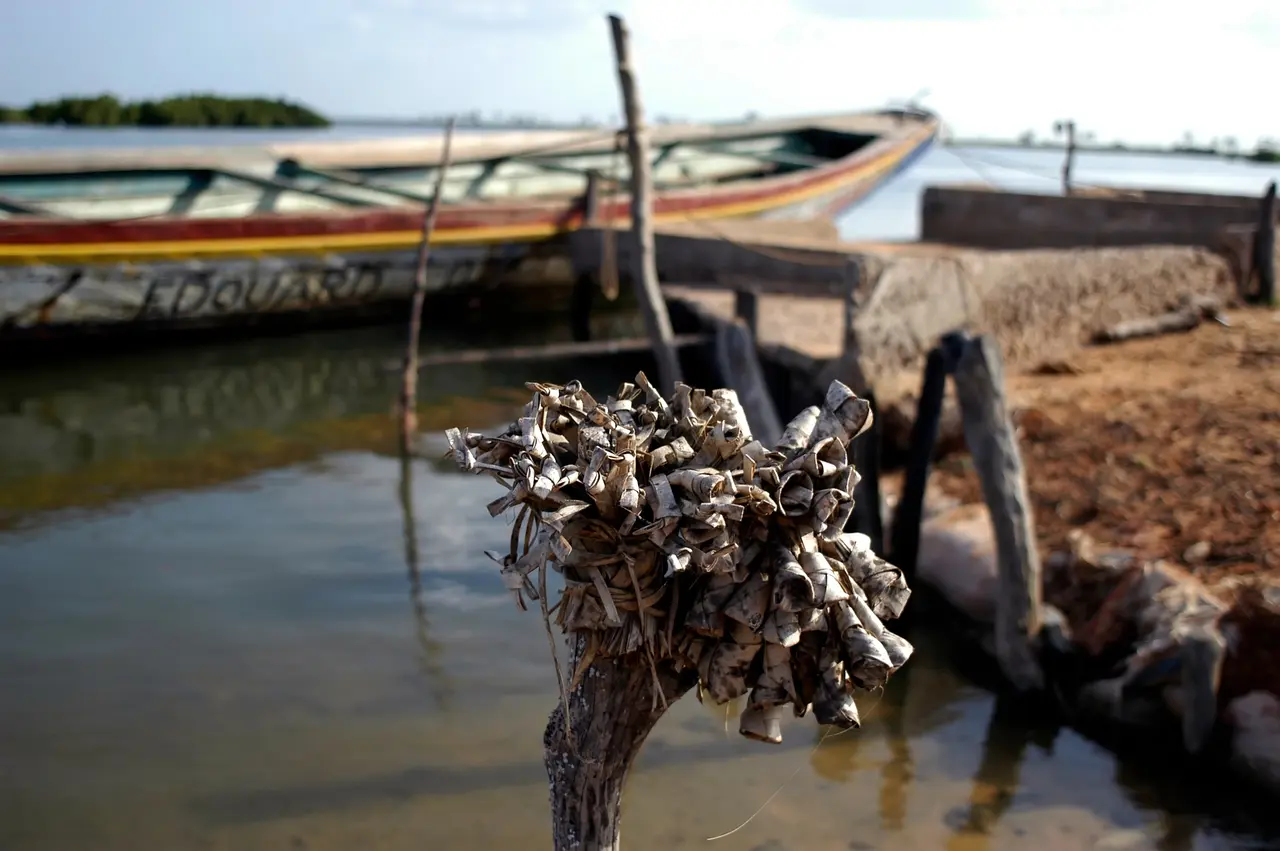
North of the Casamance River, the village of Affiniam (sometimes spelled Afiniam) can only really be reached by pirogue. Our day takes you there from Cap Skirring: 4x4 to Ziguinchor, then an hour by pirogue with a guide through the bolongs, between mangrove and rice paddies. Once there, you fish in the bolong and have lunch in the village's big impluvium house, a masterpiece of Jola architecture. On the way back, two stops are possible: Djilapao and the bird island.
This page presents the excursion, the route, what you will discover, the fishing, lunch, the options and our practical advice. It is part of our excursions in Casamance; if you are planning a longer trip, our complete guide to Casamance will help you put your stops together.
The excursion at a glance
- Format
- Full day: 4x4, then pirogue with a guide
- Route
- Cap Skirring to Ziguinchor (72 km, 1 h 30 at most by 4x4)
- Boarding
- At the old ferry landing, between Hotel Le Perroquet and Hotel Kadiandoumagne
- Pirogue
- About 1 h from Ziguinchor to Affiniam, through the bolongs, with a carefully selected guide
- Fishing
- Trolling and bottom (set-line) fishing, in the Affiniam bolong; fishing gear provided by the guide
- Lunch
- In Affiniam's big impluvium house: between 5,000 and 7,000 FCFA, to be booked a few days ahead
- Price
- Depends on the guide: we only work with the best, to avoid unpleasant surprises
- Return
- Early in the evening, to avoid the very dangerous night road
- Options
- Stop at Djilapao; return via the bird island
- Reserved for our guests
- For guests staying at Le Papayer Ecolodge
Like all our excursions in Casamance, this one is reserved for our guests, that is, people staying at Le Papayer Ecolodge: we do not run excursions for outside visitors. Lunch in the impluvium house is prepared a few days in advance, so book early. To prepare the day, request a call back or request your quote online.
The route: Ziguinchor, the bolongs and Affiniam
The day starts by 4x4 from Le Papayer Ecolodge. The road runs along Lower Casamance to Ziguinchor, 72 kilometres away: allow 1 h 30 at most. In Ziguinchor you board a pirogue with a guide, at the old ferry landing between Hotel Le Perroquet and Hotel Kadiandoumagne, for about an hour on the water through the bolongs to Affiniam, a village on the north bank of the river. If you have a little time to spare, you can have a good coffee on the jetty of the Kadiandoumagne, one of the finest hotels in Ziguinchor.
The pirogue is the most pleasant way to get there: the road is long and bumpy, and shows nothing of the mangrove. Once there, you fish in the Affiniam bolong, then have lunch in the big impluvium house. On the way back, depending on the time and what you feel like doing, you can stop at Djilapao or pass by the bird island, before getting back into the 4x4 at Ziguinchor, to be back at the lodge in the early evening: we avoid the night road, which is very dangerous.
Indicative map: landmarks and a simplified outline that does not show the exact route.
What you discover during the day
A day spent on the water, with pirogue, fishing and architecture. These are its highlights:
- The bolongs by pirogue An hour on the water between mangrove, rice paddies and water birds.
- Fishing in the bolong Trolling and bottom fishing, with good-sized fish.
- The village of Affiniam A Jola village of the Bandial, where Christian faith and animist traditions live side by side.
- The big impluvium house An immense round house of clay and thatch, where you have lunch in the cool.
- Djilapao Optional: a village known for its artistic multi-storey house, nestled among the mangroves.
- The bird island Optional, on the way back: sacred ibises, spoonbills, pelicans and storks.
The crossing: an hour by pirogue through the bolongs
From Ziguinchor to Affiniam, the trip takes about an hour, with a guide. Only the best guides are chosen for this excursion, to avoid unpleasant surprises; the price depends on the guide. The route winds through the bolongs, those mangrove-lined arms of the sea that reach far inland, between mangrove and rice paddies. At high tide and at low tide alike, the landscape changes, and water birds follow one another along the banks. To understand this ecosystem, read our feature on the mangrove and the bolongs of Casamance.
It is a very beautiful ride: no road and no noise, just the pirogue's engine, the wind and the lapping of the water. Bring a hat and sunscreen, because the light is bright on the water.
Affiniam: a Jola village beside the bolong
Affiniam is a village on the north bank of the Casamance River, in the department of Bignona. It had about 1,600 inhabitants at the 2002 census and stretches for several kilometres along the bolong. Its people are Jola, of the Bandial subgroup, who are described as the inventors of impluvium houses. Life revolves around rice growing, fishing and palm wine.
Affiniam is also a place where Christian faith and animist traditions coexist peacefully. The village has mobilised for its own development: local fruit jams, honey, a community rice mill, an agricultural project, and a village camp that welcomes travellers as part of a solidarity-tourism approach. The village is twinned with Allonnes, in Maine-et-Loire.
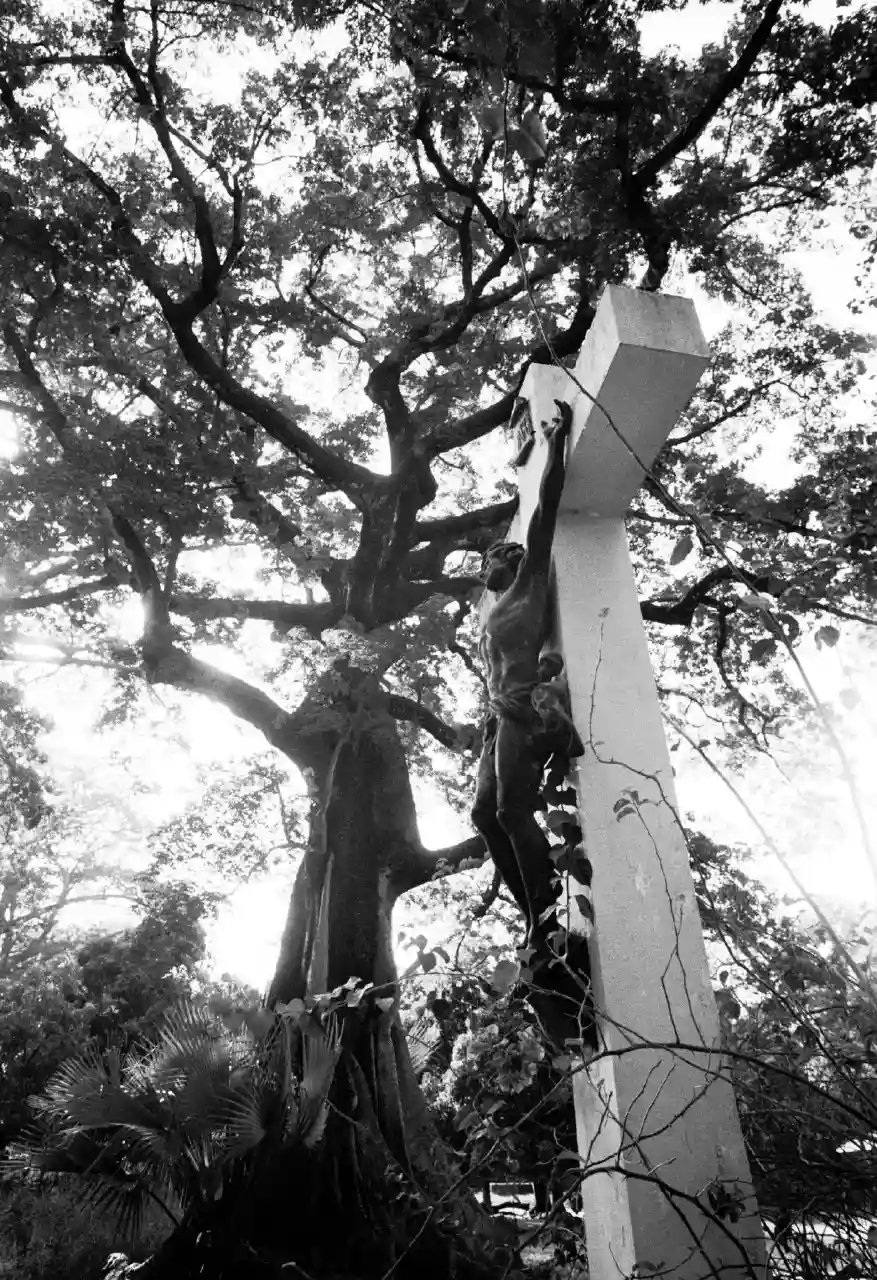
In the heart of the village stands a great sacred kapok tree, next to a Christian calvary: the elders' tree and the cross live side by side, just like the village itself.
Affiniam's big impluvium house, and lunch
Affiniam's big impluvium house is an immense round house of clay and thatch, a masterpiece of Jola architecture. Its roof slopes inwards towards a wide central opening: rainwater is collected in a basin in the middle of the courtyard, which supplies the house, protects the clay walls from erosion and keeps it naturally cool. The house today shelters the village camp, with 22 rooms, so you can also spend the night there.
This is where you have lunch, for between 5,000 and 7,000 FCFA. Meals are prepared for visitors using fresh local produce, so you need to give notice a few days ahead. For another visit to an impluvium house, closer to the lodge, see our excursion to Énampor.
Trolling and bottom fishing in the bolong
The Affiniam bolong is a fine fishing ground. You troll, letting the line trail behind the pirogue, and you fish with a set line on the bottom. Fishing gear is provided by the guide. The trophy fish of these waters are the threadfin (“capitaine”, Polydactylus quadrifilis), the grunt (“sompatte”, Pomadasys jubelini) and the barracuda (genus Sphyraena): fine catches that make the day as sporting as it is peaceful. As always, catches are never guaranteed: fishing depends on the tide, the season and luck.
Artisanal fishing feeds the people of these villages; to find out more, read our feature on fishing in Casamance.
Option: a stop at Djilapao and its artistic multi-storey house
On the way back, you can stop at Djilapao, a village in the commune of Mangagoulack, in the department of Bignona, beside the river. It is known for its curious artistic multi-storey house, also called the artists' house, nestled among the mangroves.
Option: returning via the bird island
On the way back, depending on the time and the tide, you can pass by the bird island, a refuge for a fine diversity of species: sacred ibises, spoonbills, pelicans and storks. The bolongs of Casamance also host egrets, herons and, in season, many migratory birds. Remember your binoculars.
A typical day in Affiniam
Times are indicative: they adjust to the tide and to the options you choose.
- Departure: by 4x4 from Le Papayer Ecolodge, after breakfast.
- Road: 72 km to Ziguinchor, 1 h 30 at most.
- Boarding: at the old ferry landing, between Hotel Le Perroquet and Hotel Kadiandoumagne; a coffee on the Kadiandoumagne jetty is possible before setting off.
- Bolongs: about 1 h on the water to Affiniam.
- Fishing: trolling and bottom fishing in the Affiniam bolong.
- Lunch: in Affiniam's big impluvium house.
- Return: by pirogue, with an optional stop at Djilapao and a pass by the bird island, then 4x4 to the lodge in the early evening, to avoid the night road.
Practical advice for your excursion
- Give notice in advance: lunch in the impluvium house is prepared a few days beforehand.
- Return in the early evening: we avoid the night road, which is very dangerous; do not plan anything for late afternoon.
- Plan for a full day: 1 h 30 by road and about 1 h by pirogue each way.
- Fishing gear is provided by the guide; the price depends on the guide, whom we select to avoid unpleasant surprises.
- Bring a hat, sunscreen, water and sunglasses.
- Bring binoculars and a camera, especially if you pass by the bird island.
- Wear light clothing and shoes that can get wet.
- Keep cash in small notes for lunch (5,000 to 7,000 FCFA) and for purchases in the village.
- Do not throw any rubbish into the water, and ask permission before photographing local people.
- In the bush, do not pick fruit or touch the trees: wild wasps and bees live there.
- The dry season (November to May) is the most comfortable; in the rainy season, we adapt the programme to the weather and the tide.
Frequently asked questions about the Affiniam excursion
How do you get to Affiniam from Cap Skirring?
By 4x4 to Ziguinchor (72 km, 1 h 30 at most), then by pirogue with a guide for about an hour through the bolongs.
Where do you board the pirogue in Ziguinchor?
At the old ferry landing, between Hotel Le Perroquet and Hotel Kadiandoumagne. If you have a little time, you can have a good coffee on the Kadiandoumagne jetty, one of the finest hotels in the city.
How long does the day last?
It is a full day: about 1 h 30 by 4x4 and 1 h by pirogue on the way out, time for fishing and lunch, then the return by the same route. The stops at Djilapao and the bird island make the day longer. You are back at the lodge in the early evening, to avoid the very dangerous night road.
Why do you come back in the early evening?
To avoid the night road, which is very dangerous in Casamance. We therefore time the day so that you are back at the lodge before dark.
Where do you have lunch and how much does it cost?
In Affiniam's big impluvium house, for between 5,000 and 7,000 FCFA. You need to give notice a few days ahead so that the meals can be prepared.
How much does the excursion cost, and is fishing gear provided?
Fishing gear is provided by the guide. The price depends on the guide: we only work with the best for this excursion, to avoid unpleasant surprises. Lunch in the impluvium house costs between 5,000 and 7,000 FCFA.
What fish do you catch in the Affiniam bolong?
You fish by trolling and with a set line on the bottom, with gear provided by the guide. The trophy fish are the threadfin (Polydactylus quadrifilis), the grunt (Pomadasys jubelini) and the barracuda (genus Sphyraena). Catches are never guaranteed.
What is an impluvium house?
It is a large round house of clay and thatch, whose roof slopes towards a central opening: rainwater is collected in a basin in the middle of the courtyard. It protects the walls and keeps the house cool.
Can you sleep in Affiniam?
Yes: the big impluvium house shelters the village camp, with 22 rooms. Our excursion is a day trip, from Le Papayer Ecolodge.
What is Djilapao?
It is a village in the department of Bignona, beside the river, known for its artistic multi-storey house, nestled among the mangroves. You can stop there on the way back.
What birds do you see on the bird island?
You see sacred ibises, spoonbills, pelicans and storks in particular, as well as egrets and herons. Bring binoculars.
Why go by pirogue rather than by car?
Because the road is long and bumpy, and the pirogue lets you discover the bolongs and their birds: it is the best part of the excursion.
What is the difference from the Énampor excursion?
Énampor is done entirely by 4x4 and focuses on Jola architecture and the impluvium house. In Affiniam, the pirogue, the bolongs and the fishing are at the heart of the day.
Is the excursion open to people who are not staying at the lodge?
No. All our excursions in Casamance are reserved for guests staying at Le Papayer Ecolodge: we do not run excursions for outside visitors.
Going further: other excursions and features
Our other excursions from Cap Skirring: islands, bolongs, Jola villages and markets.
Carabane, the car-free island
A former colonial trading post at the mouth of the river: sandy lanes, a Breton-style church and lunch with your feet in the water.
The manatees of Pointe Saint-Georges
We go up the river to meet the manatees, and sometimes dolphins, before climbing a giant kapok tree.
The wild bolongs of Boudédiète
By pirogue, through the best-preserved arms of mangrove in the region.
Essaout, the oyster village
Trolling for fish, then a picnic of mangrove oysters picked from the roots.
An audience with the King of Oussouye
A rare meeting with the King of Oussouye, guardian of Jola traditions, then a small cashew nut workshop.
Énampor, Jola architecture
The famous impluvium house: a huge round house of clay and thatch, designed to collect rainwater.
Ziguinchor, capital of the South
The big city of Casamance: markets bursting with colour, crafts and the calm of the Alliance Française.
Niomoune and the Karone Islands
An island immersion by pirogue, far from everything, in the Karone archipelago.
Djembering and the giant of the savannah
The biggest kapok tree in Senegal, a place of gathering and stories, close to the lodge.
Cap Skirring, from market to nightfall
The village, its craft market, its colourful pirogues; and in the evening, dinner show and live music.
Our immersive excursions in Casamance on video
Come aboard in pictures: pirogues, bolongs, Jola villages and encounters, filmed during our excursions.
See all our excursions in Casamance
Understanding the region: our features on Casamance.
Fishing in Casamance
Artisanal fishing and major centres, the fisheries crisis and marine protected areas.
The mangrove & the bolongs
Mangrove trees, fish nursery, threats and replanting of this vital ecosystem.
Ecological protection & biodiversity
Ecosystems, protected areas and conservation strategies for a biodiversity unique to Casamance.
Forests & wood species
Exceptional flora, protected forests and sustainable management of forest resources.
Discover the Papayer Ecolodge Forest in Casamance
In Cap Skirring, discover the Papayer Ecolodge Forest, its one-hectare seaside grounds and its planting area. Plant a virtual tree or flower and explore our approach to protecting nature and biodiversity in Casamance.
DISCOVER THE PAPAYER ECOLODGE FOREST