Ecological protection and biodiversity in Casamance: challenges and conservation
A true green lung of Senegal, Casamance stands out for a singular ecosystem at the meeting point of the Sudanian and Guinean zones. Far from the Sahelian landscapes of the north, this southern region offers a mosaic of habitats ranging from dense estuarine mangroves to the last remnants of primary forest, by way of vast wooded savannahs. This abundant biodiversity is the pillar of the local economy, of food security and of the culture of its people. Faced with accelerating human and climatic pressures, protecting it has become a regional and national emergency.
Recognizing this environmental fragility is the first step toward more responsible travel. If you wish to explore this lush natural landscape while understanding the delicate balance that sustains it, we invite you to browse our comprehensive guide to Casamance. It is a valuable resource for planning your stay at Le Papayer Ecolodge and experiencing an immersion in perfect harmony with these ecosystems.
 Plan your tripWhen to visit Casamance?Climate, sea and wind month by month in Cap Skirring: pick the season that suits youSee the monthly guide →
Rich but highly vulnerable ecosystems
The ecological wealth of Casamance is built around three fundamental environments, now threatened by intersecting dynamics.
Lower Casamance, a mosaic of mangroves, forests and savannahs.
The estuary complex and the mangrove
Formed of a dense mesh of mangrove trees (Rhizophora and Avicennia), the mangrove acts as a buffer against coastal erosion and as a carbon sink; above all it is the main nursery for fish resources. But hyper-salinisation linked to rainfall deficits and the overexploitation of mangrove wood have led to the appearance of tannes (dead, over-salted land), threatening marine ecosystems and traditional rice growing. We devote a full feature to the mangrove and bolongs of Casamance.
This ecosystem can be explored by pirogue on our excursions to Affiniam, Niomoune and Boudédiète, along the bolongs.
The African manatee, a protected species, can sometimes be spotted at low tide from the viewpoint on our excursion to Pointe Saint-Georges; sightings are never guaranteed.
Protected and primary forests
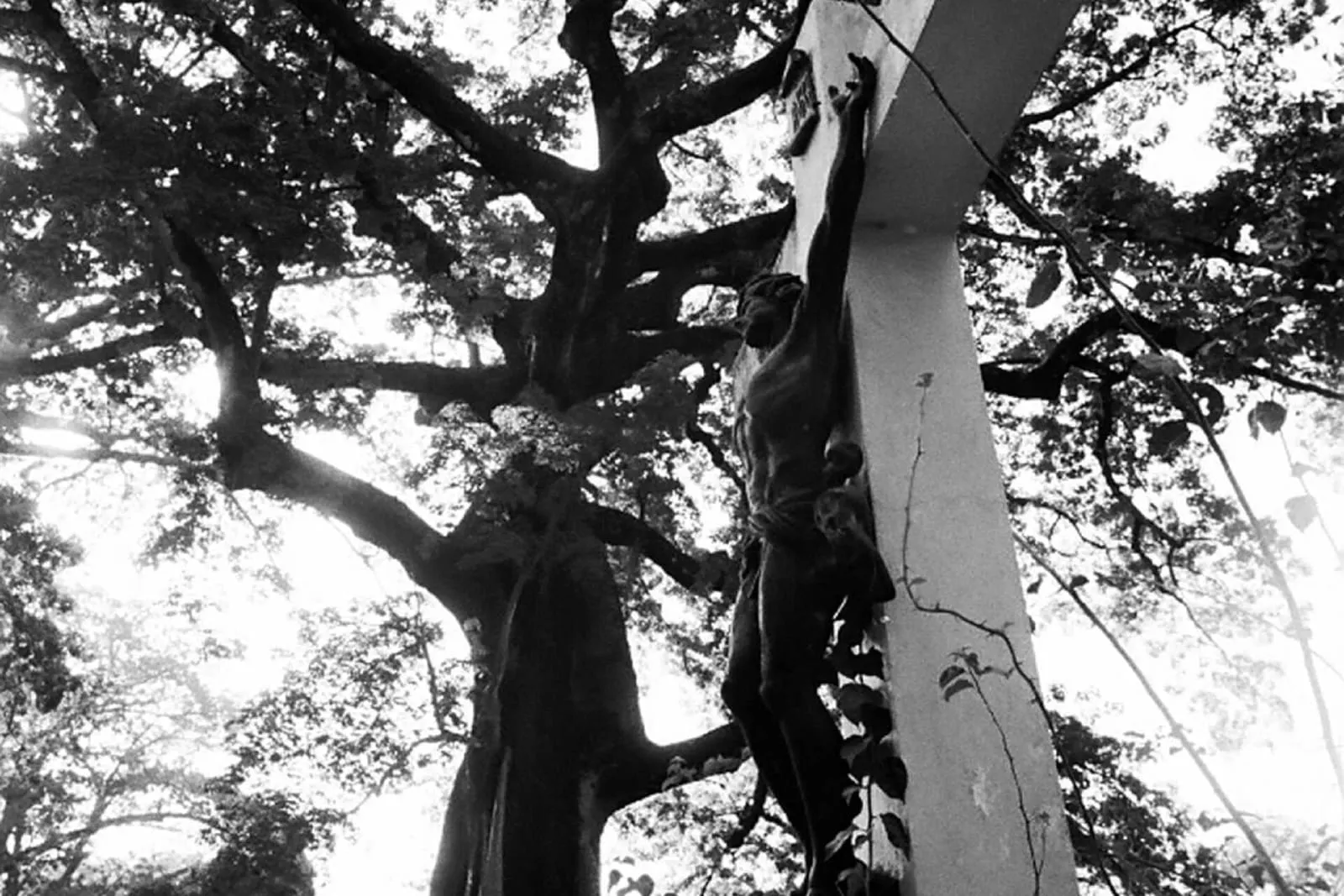
These massifs — such as the Kalounayes or Diantène forests — are home to noble species such as the kapok tree, the Kaïcédrat (African mahogany) and the Vène. Illegal deforestation, driven by international trafficking in precious timber, and the spread of agricultural clearing are fragmenting these habitats, isolating threatened species and impoverishing the soils. The Lower Casamance National Park, created in 1970 near Oussouye, remains its emblematic sanctuary. We set out these issues in our feature on the forests and wood species of Casamance.
Our excursion to Pointe Saint-Georges includes an optional, secured climb to the platform of the sacred Kanoufa silk-cotton tree, over 25 metres up.
The coastal and marine zone
Under pressure from foreign industrial fishing and from an intensified artisanal effort — which often targets juveniles — the waters of Casamance are seeing their fish stocks collapse. This disrupts the food chain and leaves coastal communities, particularly the women processors, in a position of severe economic vulnerability. This is the subject of our feature on fishing in Casamance.
Realities on the ground: safety and the legacy of the conflict
Understanding Lower Casamance calls for a clear-eyed reading of its recent history. The region still bears the scars of the armed conflict begun in the 1980s by the MFDC rebellion. While peace processes and major demining campaigns have made the great majority of roads and inhabited areas safe, the presence of mines in some remote forest areas remains a tragic legacy. Paradoxically, this freezing of human activity has turned some of those areas into de facto nature reserves, where biodiversity has reclaimed its rights. This reality imposes an absolute principle: exploring the habitats of Casamance tolerates no improvisation and makes the guidance of local experts indispensable.
Protection strategies: restoration and participatory management
Faced with the scale of the threats, conservation policy has had to evolve. The model of strict state-led sanctuarisation has shown its limits; effectiveness now rests on strategies that combine community dynamics and scientific innovation.
| Conservation strategy | Implementation and objectives |
|---|---|
| Marine Protected Areas (MPAs) | Areas such as the Abéné or Kassa-Balantacounda MPAs combine sanctuary cores with buffer zones. They encourage the spillover effect: replenished stocks migrate towards the authorised fishing grounds. |
| Community restoration of the mangrove | Large-scale replanting campaigns by direct sowing of mangrove propagules. Led by local communities with guidance from NGOs, they stabilise the banks, recreate spawning grounds and rehabilitate neighbouring farmland. |
| Co-management of protected forests | Partial delegation of the management of the massifs to Village Committees. In exchange for fighting bush fires and illegal cutting, communities sustainably harvest non-timber forest products (honey, fruit). |
The Diembéring Ecoparc is a concrete illustration of this approach: a protected forest managed on a community model, where setting areas aside allows wildlife and flora to thrive, sheltered from degradation.
The Casamance Ecopark, 400 hectares of primary forest created in 2010, is visited on foot or by bike with a guide on our excursion to Diembéring.
Ecotourism, an economic lever for biodiversity
Preserving this environment means demonstrating that living biodiversity has a greater economic value than its extractive exploitation. This is where ecotourism asserts itself as a strategic lever, particularly around Cap Skirring. By giving financial value to preservation — birdwatching circuits in the bolongs, discovery of old-growth forests, support for sustainable crafts — initiatives such as ecolodges take their place in a regenerative economy.
This is precisely the philosophy of Le Papayer Ecolodge, conceived and defined as a genuine ecological conservation site rather than as a primarily tourist destination. Complete energy autonomy, scrupulous preservation of the natural relief, a neutral footprint on the habitat: the aim is to prove that a place to live can fit into its environment without constraining it.
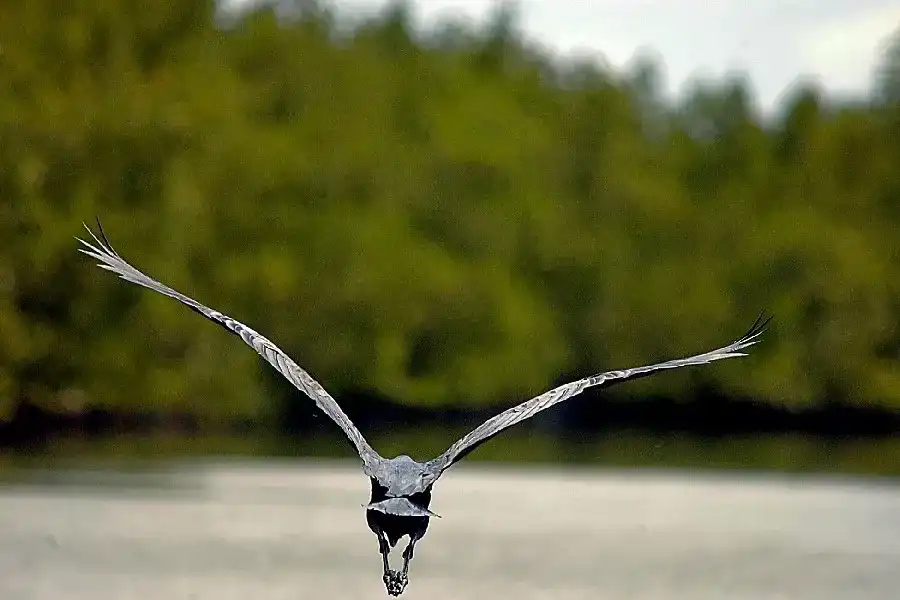
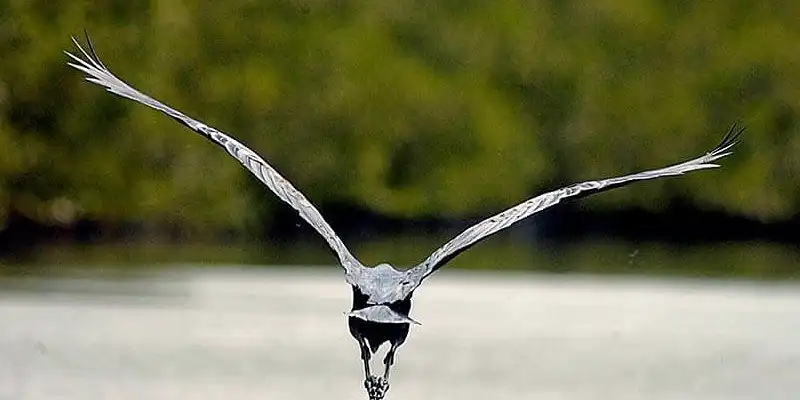
On our excursions to Affiniam, with the optional bird island, and to Carabane, you may see water birds (herons, egrets, pelicans) from the pirogue, depending on the outing.
Exploring Casamance responsibly
Ecological protection in Casamance is no longer a matter of aesthetic or romantic preservation: it is a question of vital resilience. The future of the region rests on a delicate balance between restoring ecosystems, strictly regulating resources and involving local communities. Given the fragility of these environments and the realities on the ground, discovering them calls for silent, strictly supervised observation. To that end we have documented several Casamance discovery itineraries, designed for an immersion in perfect harmony with the principles of preservation set out in this feature.
🌱 The Ecological Action Calendar of Casamance
Preserving the mangrove, the forests, the coastline and the natural resources of Casamance
From November to January in Casamance
With the end of the rainy season, the dry season makes it possible to better observe the state of the ecosystems and to continue the monitoring of the mangrove, the bolongs and the forest areas. Discovery outings favour the observation of biodiversity without disturbing the natural habitats.
In the mangroves, protecting the mangrove trees (Rhizophora and Avicennia) is a priority: these plant formations protect the banks from erosion, store carbon and serve as a nursery for many aquatic species. Awareness-raising focuses in particular on the fragility of the breeding areas and on the need to limit the harvesting of mangrove wood.
In the forests, this period is well suited to raising awareness of the protection of mature trees and local species. Kapok trees, African mahoganies, African rosewoods, palms and other forest trees contribute to the structure of the habitats and to the preservation of biodiversity.
On the coastline, priority is also given to reducing waste, protecting the beaches and making visitors aware of the effects of plastics and other waste on marine ecosystems.
From February to April in Casamance
At the height of the dry season, the pressure on water resources and ecosystems becomes particularly visible. Prevention focuses on the preservation of the wetlands, the bolongs and the last remaining areas of mangrove, notably in the sectors subject to hyper-salinisation.
The ecological restoration of the mangroves relies on protecting the natural regeneration of the mangrove trees and, where necessary, on restoration actions adapted to local conditions. The aim is not only to plant trees, but to restore the hydrological conditions that allow the mangrove to regenerate sustainably.
In the forest massifs, awareness-raising focuses on combating deforestation, illegal logging and habitat fragmentation. Making the most of local species and non-timber forest resources can help to reduce the pressure on the most precious trees.
On the coastline and in the fishing areas, protecting the fishery resources means respecting the biological rest periods and zones, limiting the capture of juveniles and raising awareness of responsible fishing practices.
From May to June in Casamance
As the rainy season approaches, ecological actions focus on preparing the renewal of the ecosystems. The first rains will gradually change the salinity of the soils and the bolongs and allow the vegetation to resume its growth.
In the mangrove areas, monitoring the degraded sectors makes it possible to identify the zones where natural regeneration can resume. Restoration actions should favour local mangrove species and respect the natural circulation of water between the bolongs and the mudflats.
This period is also favourable to awareness-raising actions with visitors, residents and local stakeholders about the role of the mangrove as a carbon sink, a natural protection of the coastline and a nursery for fish, shrimp and other aquatic organisms.
In the forests, protecting seed-bearing trees and young plants contributes to the natural renewal of the stands. Preserving the forest corridors also helps to limit habitat fragmentation and to maintain the movements of the fauna.
On the coastline, prevention actions concern in particular the protection of the dunes, the coastal vegetation and the nesting areas, as well as the reduction of waste before the rainy season.
From July to October in Casamance
The rainy season is a decisive period for the ecosystems of Casamance. The return of the rains gradually changes the salinity of the soils and waters, favouring the regeneration of the vegetation and the renewal of the aquatic habitats.
In the mangroves, priority is given to protecting the young mangrove trees and the regeneration areas. The restoration of the bolongs must be part of an overall approach combining vegetation, water circulation, soil quality and the protection of the mudflats. A functional mangrove is also an essential area for the reproduction and growth of many fishery species.
The rains also favour the recovery of the forest vegetation. This is an important period for the monitoring of plantations, natural regeneration and young trees, as well as for watching over forest areas weakened by clearing.
In the coastal and estuarine areas, protecting fishery resources remains essential. The mangrove plays its role as a natural nursery for fish, crustaceans and other aquatic organisms: preserving these habitats contributes directly to maintaining the resources on which the fishing communities depend.
Finally, the rainy season is a prime time to observe and document the evolution of biodiversity: vegetation, birds, fish, crustaceans and other species can be monitored in order to better understand the effects of climate change, salinity and human pressures on the ecosystems of Casamance.
Discover biodiversity on our excursions
Mangrove by pirogue, primary forest and sacred silk-cotton tree, water birds, manatees: biodiversity is discovered on our 11 excursions from Cap Skirring, reserved for guests of Le Papayer Ecolodge.
 Carabane, the car-free island
 The manatees of Pointe Saint-Georges
 Boudédiète, a wild Guinea-Bissau beach
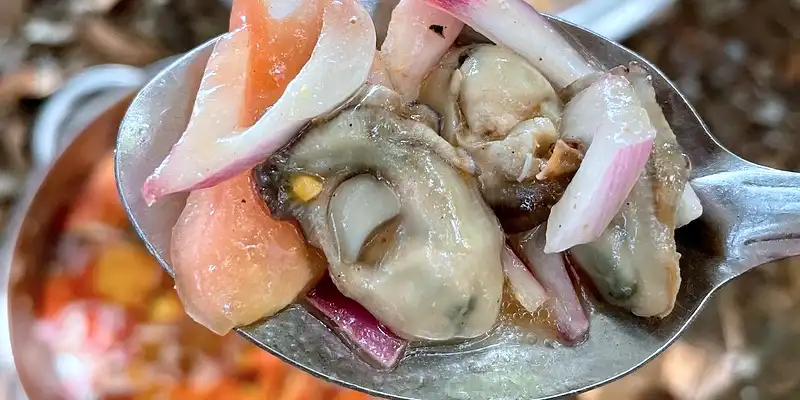 Essaout, the oyster village
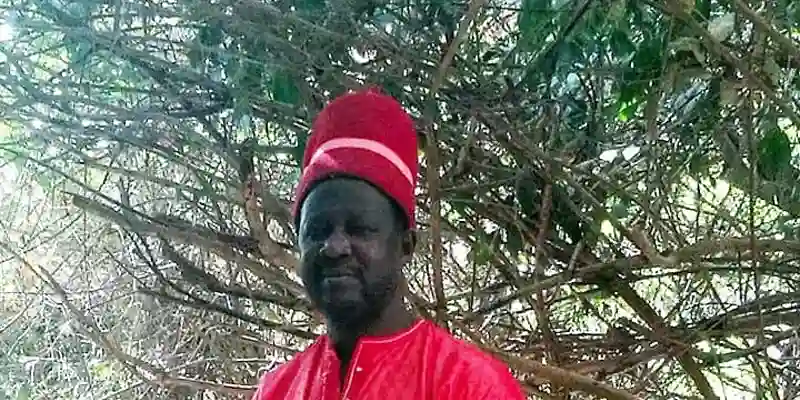 An audience with the King of Oussouye
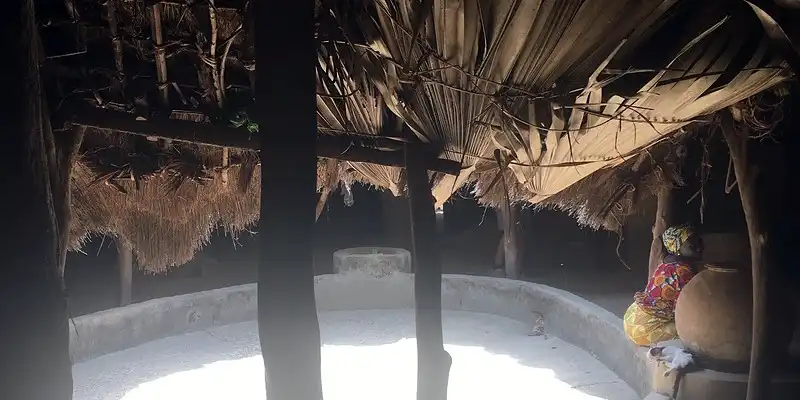 Enampore, Jola architecture
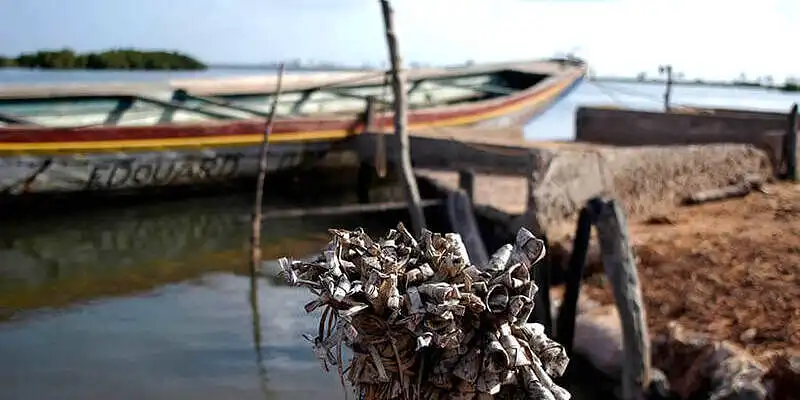 Affiniam and its bolong
 Ziguinchor, capital of the South
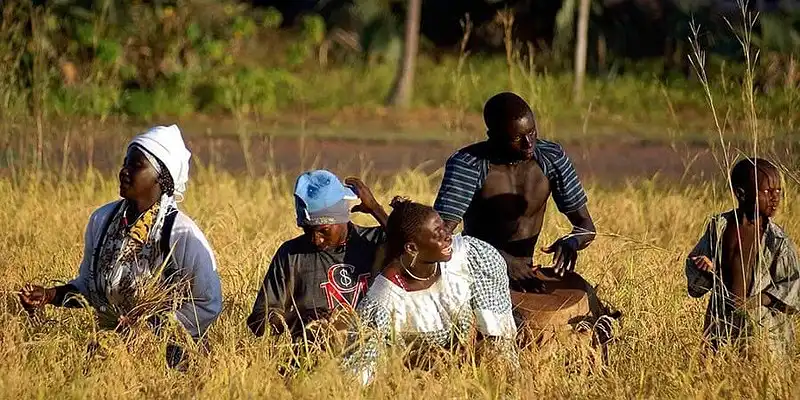 Niomoune and the Karone Islands
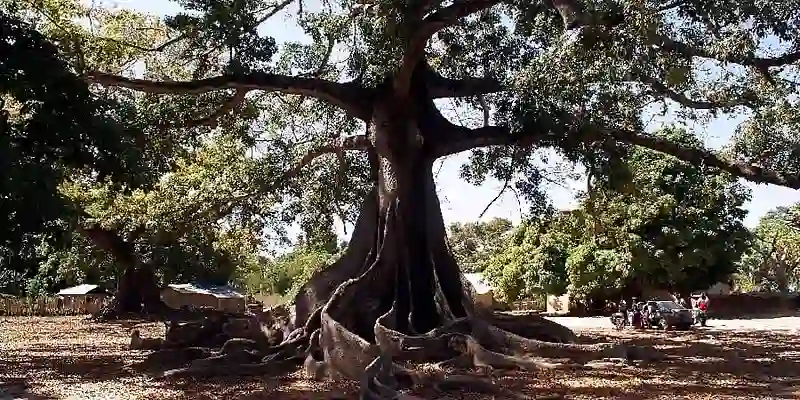 Diembéring and the giant of the savannah
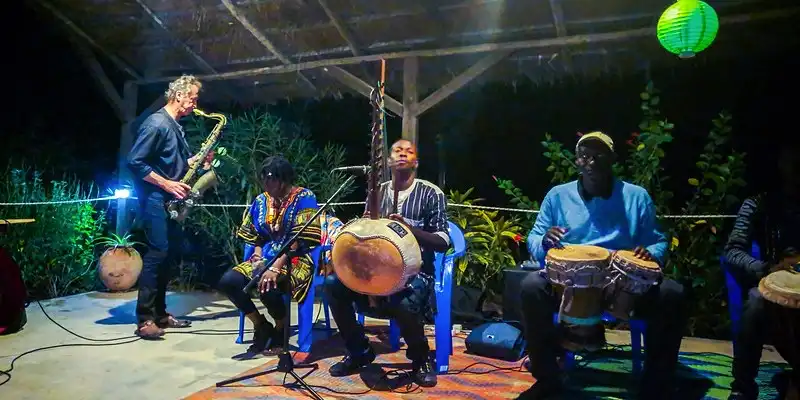 Cap Skirring, from market to nightfall
Going further: our features on Casamance
Understanding the region beyond the excursion — fishing, mangrove and forests.
Fishing in Casamance
Artisanal fishing and major centres, the fisheries crisis and marine protected areas.
The mangrove & the bolongs
Mangrove trees, fish nursery, threats and replanting of this vital ecosystem.
Forests & wood species
Exceptional flora, protected forests and sustainable management of forest resources.
When to visit Casamance?
Climate, sea and wind month by month in Cap Skirring: pick the season that suits you
Discover the Papayer Ecolodge Forest in Casamance
In Cap Skirring, discover the Papayer Ecolodge Forest, its one-hectare seaside grounds and its planting area. Plant a virtual tree or flower and explore our approach to protecting nature and biodiversity in Casamance.
DISCOVER THE PAPAYER ECOLODGE FOREST