Forests and wood species of Casamance: flora, management and vernacular engineering
Located in the south of Senegal and enjoying a Sudano-Guinean climate, Casamance is home to the densest forest ecosystems in the country. While primary forest — untouched by human hands — is becoming increasingly rare, the region still holds vast stretches of dry forest, gallery forest and protected forest, which form the last rampart against desertification and the erosion of biodiversity. This feature explores the richness of that flora, the status of the protected massifs and the challenges, both technical and human, of managing them.
This exceptional botanical heritage is just one of the many facets that define the identity of southern Senegal. To broaden your horizons and discover other natural and cultural treasures surrounding Cap Skirring, feel free to browse our comprehensive guide to Casamance. It is an invitation to explore the region with an observant eye and respect for its environment.
 Plan your tripWhen to visit Casamance?Climate, sea and wind month by month in Cap Skirring: pick the season that suits youSee the monthly guide →
An exceptional flora
The Casamance forest is built around noble, massive species, adapted to the heavy rains of the rainy season and essential to the balance of the soils.
The kapok tree (Ceiba pentandra)
A giant and often sacred tree, it can exceed 50 metres. Its huge buttress roots stabilise the forest floor, and its trunk has traditionally been used to carve pirogues.
Two of our excursions bring you close to these giants: the climb into the sacred kapok tree of Kanoufa at Pointe Saint-Georges, and the visit to the giant kapok tree of Diembéring, on the village square.
The Kaïcédrat, or African mahogany (Khaya senegalensis)
Highly prized in cabinetmaking for its dense red wood, it is an emblematic species of the protected forests. Extremely resistant to tropical humidity and to wood-boring insects, it shows remarkable dimensional stability after drying, which makes it a material of choice for the framing of durable, off-grid structures.
The Dim (Cordyla pinnata)
It provides an extremely hard and heavy wood, sought after for robust construction — load-bearing posts, thresholds, joinery pieces — and produces an edible fruit. Like the Kaïcédrat, its longevity in a humid tropical environment makes it an ally of durable buildings, provided harvesting is kept under control.
The Vène (Pterocarpus erinaceus)
Known for « vène wood », a highly prized rosewood, it plays a key role in fixing nitrogen in the soil. It is also one of the trees most threatened today by illegal logging and international trafficking.
Protected forests: status and management
The concept of the « protected forest » is inherited from the colonial period (decrees of 1935): the aim was to withdraw certain massifs — such as the forests of Kalounayes, Diantène or Pata in Upper Casamance — from farming use in order to protect them from deforestation. The law protects the area and strictly regulates any exploitation within it.
But faced with population growth, the need for fuelwood and the appetite of international traffickers, the model of strict prohibition has shown its limits. Today, management aims to be community-based and participatory: programmes supported by the state and its partners (such as PROGEDE) entrust the safeguarding of these massifs to Village Management Committees. The villagers living around the forest become its guardians: in exchange for protecting it against bush fires and abusive cutting, they are allowed to carry out sustainable activities there — gathering honey and wild fruit, regulated collection of dead wood.
This shared responsibility has given rise to genuine citizen oversight: reporting illegal cutting has become commonplace, since living wood now has more value, for the resilience of the region, than processed timber.
The Water and Forests administration (DEFCCS)
The Directorate of Water, Forests, Hunting and Soil Conservation (DEFCCS) is the Senegalese state's operational arm for protecting plant cover. In Casamance, its role is as crucial as it is complex.
Enforcing the Forestry Code
Water and Forests officers — the « foresters » — patrol to track down clandestine loggers, seize illegally cut timber (notably the cross-border trafficking of vène wood towards the Gambia) and dismantle clandestine sawmills. Some highly sought-after species, such as teak, are found only in limited quantities and their sale is strictly controlled.
Quotas, permits and prevention
It is this administration that grants or refuses logging permits and sets cutting quotas according to the regeneration capacity of each massif. It also coordinates the fight against bush fires — through the technique of early burning and the creation of firebreaks — and oversees replanting campaigns.
Immense challenges
Despite a clear commitment, foresters have to cover vast territories, sometimes remote or made dangerous. The fight against illegal deforestation now runs through greater decentralisation: the state relies increasingly on local authorities and gives responsibility to communities whose survival depends directly on the health of the forest. Mangrove wood, long harvested for the frames and ceilings of houses, illustrates these trade-offs: its ecological role is now such that cutting it is banned — an issue set out in our feature on the mangrove and bolongs of Casamance.
Wood in vernacular engineering: the impluvium houses
Thermal management and rainwater harvesting
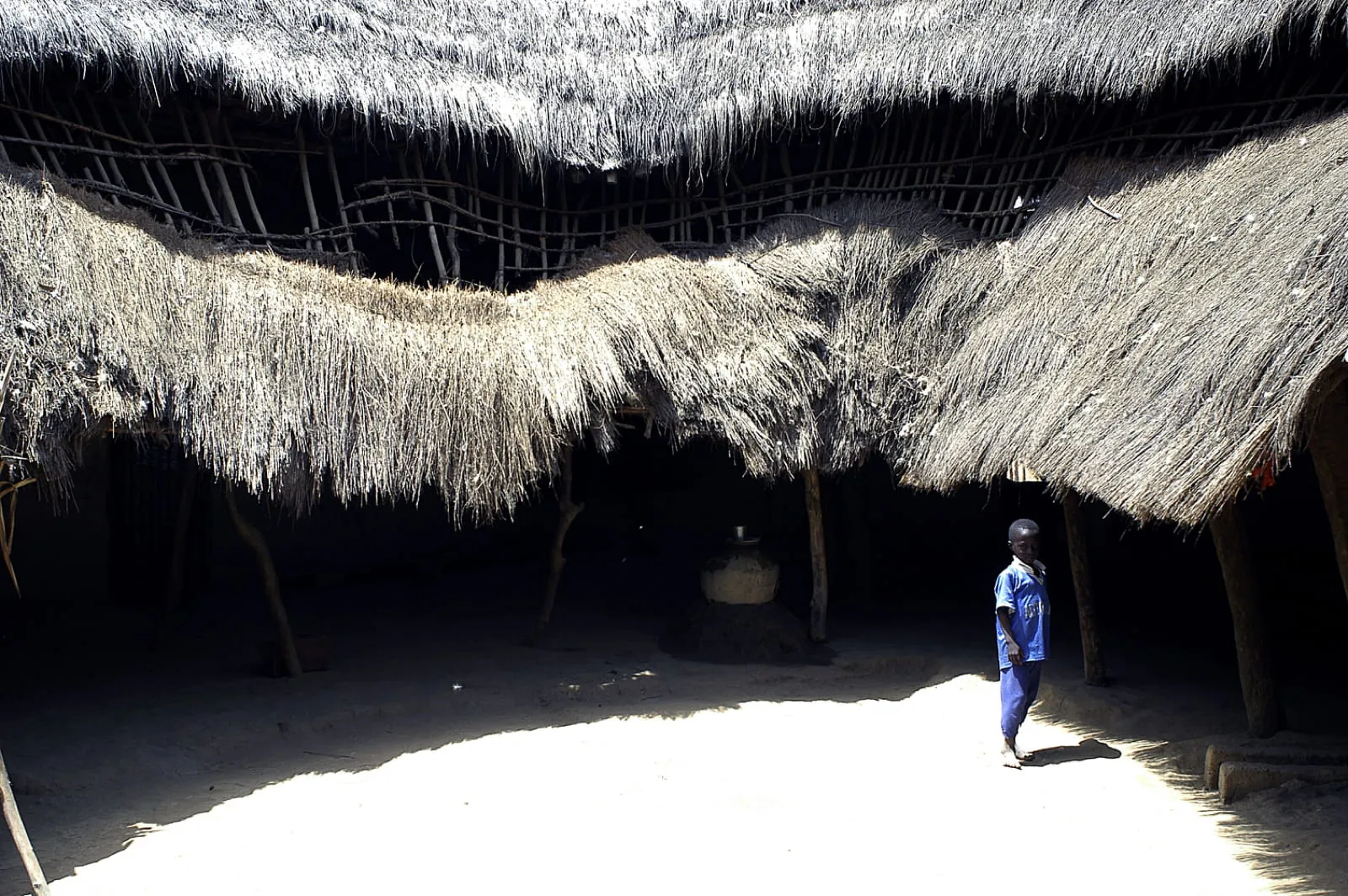
The traditional architecture of impluvium houses is not a mere aesthetic curiosity; it is an effective climate-engineering system. The circular structure and the central opening allow natural air circulation, creating a Venturi effect that cools the interior despite high temperatures. This design also enables optimised collection of rainwater into a central cistern, an exemplary illustration of circular water management.
Adapting to environmental constraints
The ability of these structures to withstand climatic assault — wind, torrential rain and high humidity — rests on a rigorous selection of materials. Framing assembled from local timber and a covering of bush thatch offer a structural flexibility that rigid materials (concrete, metal) cannot match. Understanding this resilience is essential for anyone wishing to build a lasting structure in the Casamance habitat without spoiling the landscape.
You can see these houses on our excursions to Enampore and Affiniam, where you visit a Jola impluvium house.
The sacred wood: when destroying the forest means erasing a culture
In Casamance, the forest is not merely a resource: it is inhabited. Among the Jola, certain woods are sacred — they may be entered only after precise rites, and the spirits that dwell there underpin the spiritual and social organisation of the villages. Before entering the sacred wood, the women hold an animist ceremony punctuated by traditional dances. This invisible dimension is a reminder of something the protection laws only half express: felling these forests does not merely mean losing rare species, it means erasing the very culture of the peoples who live there.
The sacred wood of Oussouye, where the king lives, can only be visited by invitation: our excursion audience with the King of Oussouye lets you meet this animist sovereign, with respect for local custom. Find more footage from Casamance in our excursion videos in Casamance.
Documentation and technical itineraries in Casamance
These challenges are part of the wider picture of ecological protection in Casamance. The Casamance forest stands at a crossroads: preserving giants such as the kapok tree or the mahogany no longer depends on enforcement alone, but on integrated land governance combining the technical and legal expertise of the forestry administration with the vital commitment of local communities. To deepen your knowledge of these environments, their flora and the building know-how attached to them, we have documented several Casamance discovery itineraries, designed as respectful immersions, far from the standards of mass tourism.
🌿 The Botanical Calendar of Casamance
The cycle of trees, vines and crops in Casamance
From November to January in Casamance
After the rainy season, the vegetation still retains part of its lushness while the first weeks of the dry season gradually reshape the landscapes. In the rice paddies, this is the time for harvesting African rice (Oryza glaberrima / Emon) and for the post-harvest work that follows.
In the forests and farmlands of Casamance, several fruit trees are still bearing. The ditakh (Detarium senegalense / Kabitak) provides its tangy-pulped fruit, while the baobab (Adansonia digitata / Buki) bears the famous fruits known as monkey bread. Its dry, nutrient-rich pulp is traditionally used in many preparations.
The roselle or bissap (Hibiscus sabdariffa) yields its red calyces, used for infusions and drinks. In the wetter areas, the mangrove trees of the bolongs, notably Rhizophora and Avicennia, retain their essential role as the structuring vegetation of the banks.
The touloucouna (Carapa procera) is also among the forest trees traditionally exploited for its seeds and the oil extracted from them. The botanical diversity of Casamance is thus revealed in a landscape where forests, palm groves, rice paddies and mangroves stand side by side.
From February to April in Casamance
The dry season sets in for the long term and the vegetation begins to suffer from the heat and the water deficit. The landscapes gradually take on drier hues, while some species keep their foliage thanks to their adaptation to local conditions.
In the orchards and family plantations, the cashew trees (Anacardium occidentale / Kankara) prepare their seasonal crop of cashew nuts and cashew apples. In the forest lands, the tamarind (Tamarindus indica) and the velvet tamarind or solom (Dialium guineense / Esel) are among the fruit trees characteristic of Sudano-Guinean landscapes.
The rônier palms (Borassus aethiopum / Ebe) punctuate the landscapes of Casamance and contribute to the identity of the region. The oil palm (Elaeis guineensis / Eten) also remains a major component of the natural and cultivated palm groves, its fruit being used in particular for the traditional production of palm oil.
As the dry season advances, some deciduous species shed their leaves to limit water loss. The forest vegetation then gradually changes in appearance, before the return of the rains and the restart of the growing cycle.
From May to June in Casamance
The heat reaches its peak before the rainy season sets in, and the vegetation prepares for the return of the rains. In the orchards of Casamance, the mango trees (Mangifera indica / Manga) enter their main production period. The mango season extends over several months in Senegal, with a particularly marked abundance at the height of summer.
The madd (Saba senegalensis / Kuguissai) is also one of the great emblematic wild fruits of Casamance. This woody vine winds around forest trees and produces a much-sought-after orange fruit. Its harvest is an important traditional activity in the rural communities of Casamance.
As the first rains approach, some trees begin to renew their foliage. The baobab (Adansonia digitata / Buki) is a remarkable example of this seasonal transition: in Senegal, its flowering is linked to the onset of the rainy season and can begin around June, while the leafing accompanies the return of the rains. Its large white, pendulous and ephemeral flowers open mainly in the evening and at night.
The kapok tree (Ceiba pentandra / Hupun) is also one of the great trees characteristic of the region. The first rains herald the restart of plant activity and the rapid transformation of the landscapes.
In the palm groves, the traditional harvesting of palm wine (Bounouk) remains an important cultural practice. The oil palm (Elaeis guineensis / Eten) is thus at once a major food, economic and cultural resource of Casamance.
From July to October in Casamance
The rainy season (Wanaye) profoundly transforms Casamance. The rains awaken the vegetation and the landscapes quickly shift from the dry tones of the late dry season to vegetation of an intense green. In the rice paddies, farm work is in full swing: ploughing, sowing, transplanting and the growth of the rice gradually shape the great cultivated plains.
The fields also host maize, groundnut (Arachis hypogaea) and various food crops. In the orchards, the main mango season continues and generally peaks between July and September. Casamance then enters one of its most generous periods for fruit.
It is also the main season for Casamance madd (Saba senegalensis / Kuguissai). The vines wind around the large forest trees and their orange fruits are harvested traditionally by hand or with long poles. This wild fruit, emblematic of the region, now benefits from a geographical indication enshrining its Casamance identity.
The baobab (Adansonia digitata / Buki) also accompanies the change of season: its leafing develops with the rains and its flowers appear during the wet season. The fruits then form during the rainy season, while their ripening extends towards the end of the year and the dry season.
In the undergrowth and the humid forest areas, ferns, herbaceous plants and many species of vines undergo strong growth. Mushrooms also appear with the humidity. Spontaneous vegetation then reaches its peak of activity and the Casamance forest recovers all its density.
The kinkeliba (Combretum micranthum) and many other medicinal plants also benefit from the renewed plant growth. As the rains decrease in October, the crops gradually reach maturity and the vegetation begins to prepare for the return of the dry season. The botanical cycle of Casamance then comes to a close, before beginning again with the next rains.
🌳 The timber species and forest dwellers of Casamance, Senegal
The forests of Casamance, Senegal are home to a remarkable diversity of trees, shrubs, vines and plants, as well as a fauna adapted to the various forest environments. These woodlands are essential reservoirs of biodiversity and play a major role in protecting soils, storing carbon and maintaining natural corridors. Yet deforestation, agricultural clearing, bush fires and the illegal exploitation of certain precious species are gradually weakening these habitats. Among the main forest species one may encounter are notably:
- The kapok tree (Ceiba pentandra), a majestic tree recognisable by its immense trunk and buttress roots, an iconic feature of the forest landscapes of Casamance.
- The African mahogany or kaïcédrat (Khaya senegalensis), a large forest tree prized for its wood and particularly important in natural stands.
- The vène or African rosewood (Pterocarpus erinaceus), a precious species whose timber is highly sought after and which has come under strong pressure from logging.
- The African teak or iroko (Milicia excelsa), a large tropical forest tree whose wood is valued for its strength and durability.
- The rônier palm (Borassus aethiopum), a palm characteristic of the Casamance landscapes, whose various parts are traditionally used by local populations.
- The oil palm (Elaeis guineensis), an emblematic species of the region, closely tied to the rural landscapes and traditional uses of Casamance.
- The baobab (Adansonia digitata), a ‘tree of life’: fruit, leaves and fibres.
- The néré (Parkia biglobosa), whose fruit and seeds are an important traditional food resource in West Africa.
- The red-flowered silk cotton tree (Bombax costatum), a tree characteristic of certain Sudanian and Sudano-Guinean forest formations, remarkable in particular for its flowering.
- The ditakh (Detarium senegalense) and the solom (Dialium guineense), wild-harvested fruit trees that are highly prized.
These forests are also the habitat of a diverse fauna. Depending on the areas and the conservation status of the woodlands, one may notably encounter monkeys, warthogs, antelopes, duikers, civets, mongooses, monitor lizards and many species of birds. The forest areas near the bolongs also provide an ecological continuity between terrestrial environments, wetlands and mangroves.
- Monkeys, notably the green monkey (Chlorocebus sabaeus) and the patas monkey (Erythrocebus patas), take part in seed dispersal and the dynamics of forest ecosystems.
- Duikers, small forest antelopes, depend on the undergrowth and areas of dense vegetation to feed and take shelter.
- The warthog (Phacochoerus africanus) frequents wooded savannahs, forest edges and open spaces near the forests.
- Civets and mongooses occupy various forest habitats and contribute to the balance of the food chains.
- Monitor lizards, opportunistic reptiles, frequent wooded areas, banks and wetlands.
- Forest and migratory birds use the trees, undergrowth and forest edges as feeding, refuge and sometimes nesting sites.
Protecting the forests of Casamance, Senegal therefore means protecting the trees, the soils and all the biodiversity associated with them at the same time. Combating illegal logging, protecting classified forests, encouraging the natural regeneration of local species, restoring degraded areas and maintaining forest corridors are essential to conserving these ecosystems. Protecting large trees and natural stands also helps to preserve wildlife habitats and the resources on which local communities depend.
Discover these forests on our excursions
Sacred kapok trees, impluvium houses, Jola villages: these forests and the know-how they hold are discovered on our 11 excursions from Cap Skirring, reserved for guests of Le Papayer Ecolodge.
 Carabane, the car-free island
 The manatees of Pointe Saint-Georges
 Boudédiète, a wild Guinea-Bissau beach
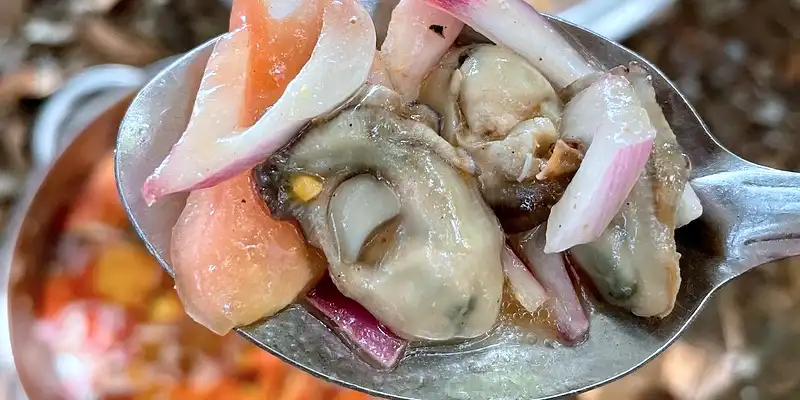 Essaout, the oyster village
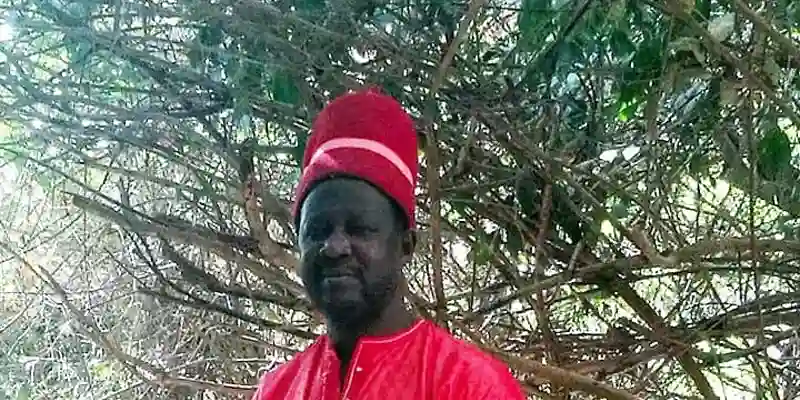 An audience with the King of Oussouye
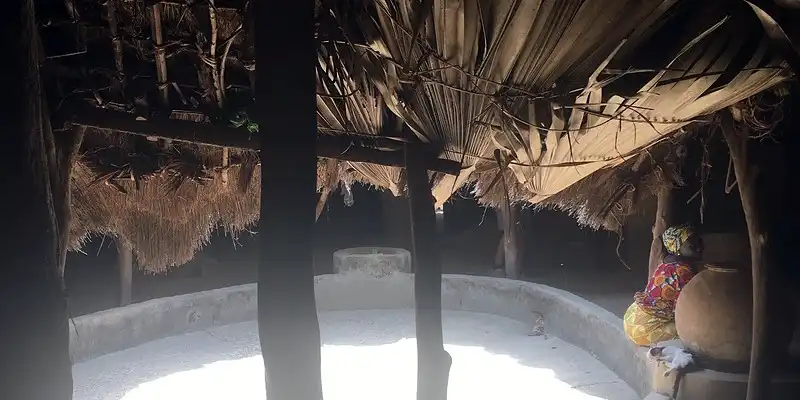 Enampore, Jola architecture
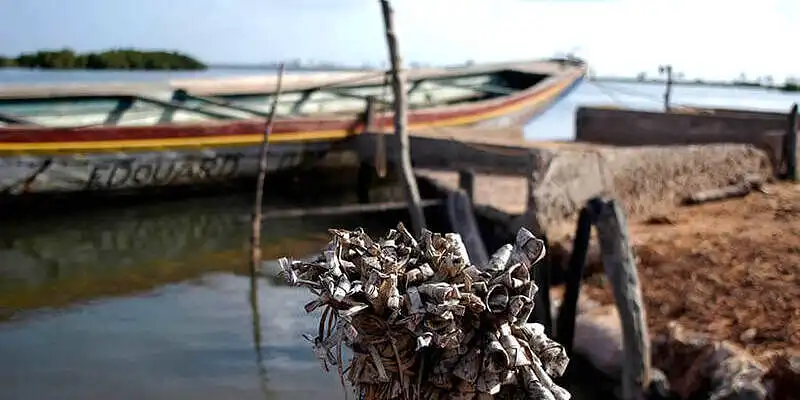 Affiniam and its bolong
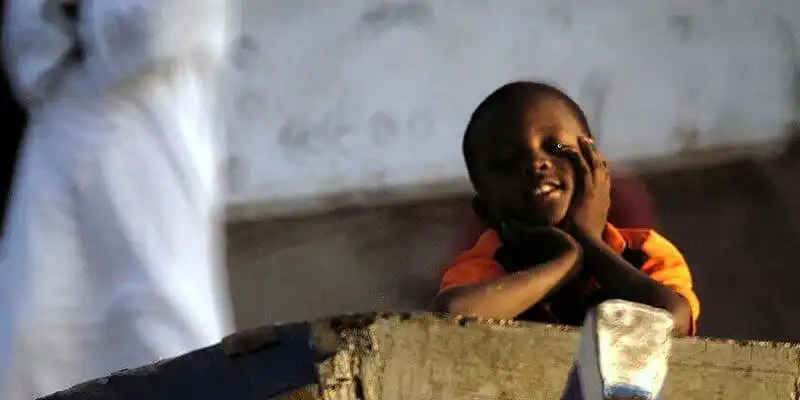 Ziguinchor, capital of the South
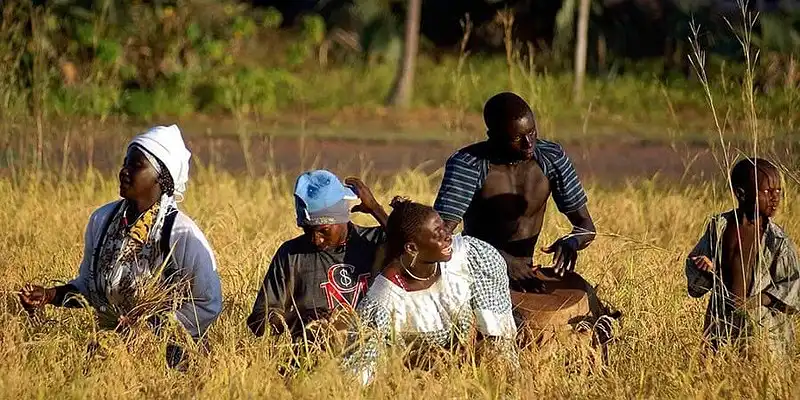 Niomoune and the Karone Islands
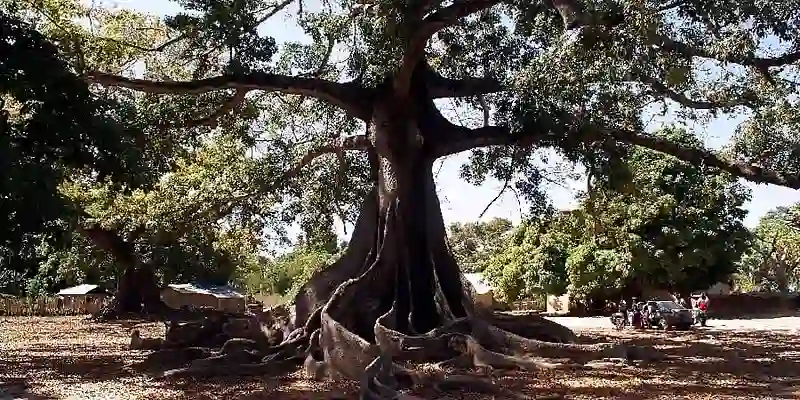 Diembéring and the giant of the savannah
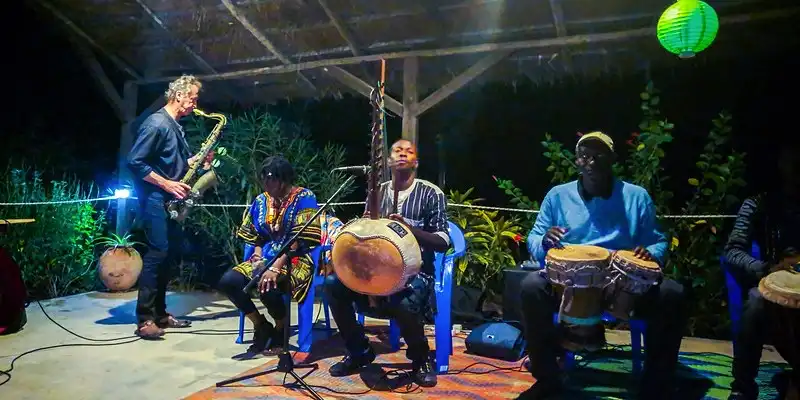 Cap Skirring, from market to nightfall
Going further: our features on Casamance
Understanding the region beyond the excursion — ecology, mangrove and fishing.
Fishing in Casamance
Artisanal fishing and major centres, the fisheries crisis and marine protected areas.
The mangrove & the bolongs
Mangrove trees, fish nursery, threats and replanting of this vital ecosystem.
Ecological protection & biodiversity
Ecosystems, protected areas and conservation strategies for a biodiversity unique to Casamance.
When to visit Casamance?
Climate, sea and wind month by month in Cap Skirring: pick the season that suits you
Discover the Papayer Ecolodge Forest in Casamance
In Cap Skirring, discover the Papayer Ecolodge Forest, its one-hectare seaside grounds and its planting area. Plant a virtual tree or flower and explore our approach to protecting nature and biodiversity in Casamance.
DISCOVER THE PAPAYER ECOLODGE FOREST