Ziguinchor Excursion from Cap Skirring: Markets, the Joola Memorial and a Swim
Casamance's capital, Ziguinchor can be explored in a single day from Cap Skirring: 72 km of road through the mangrove, crossing two bridges, then breakfast on the jetty of a hotel on the riverbank. You then visit the markets, the Joola memorial and the Alliance franco-sénégalaise, before a break at the pool and a return in the evening, before nightfall.
This page presents the excursion, the route, the markets, the memorial, the places to eat and relax, and our practical advice. It is part of our excursions in Casamance; if you are planning a longer trip, our complete guide to Casamance will help you put your stops together.
The excursion at a glance
- Format
- Full day by 4x4, returning in the evening before nightfall
- Route
- Cap Skirring to Ziguinchor: 72 km, 1 h 30 at most, through the mangrove and over two bridges
- On the way
- The village of Djibélor and its crocodile farm, with tasting possible
- Breakfast
- On the jetty of Hotel Kadiandoumagne, on the bank of the Casamance River
- To visit
- The Escale market and the Joola memorial, the Saint-Maur market, the crafts market, the districts of the town, the Djignabo and Charles Lwanga high schools, place Jean-Paul II, the Alliance franco-sénégalaise
- Lunch
- Your choice: at Hotel Kadiandoumagne, at the Alliance franco-sénégalaise or at the Auberge Le Croco in Djibélor
- Shopping
- Wax and bazin fabrics at the Saint-Maur market and in the shops around it, gifts at the crafts market
- Indicative price
- About 70,000 FCFA for the 4x4 with driver and fuel, depending on the number of participants
- Depending on the season
- The Kankourangs: the Djambadon festival, at the end of the rainy season
- Relaxing
- The pool at Hotel Néma Kadior, the finest in Ziguinchor, open to all with a purchase
- Reserved for our guests
- For guests staying at Le Papayer Ecolodge
Like all our excursions in Casamance, this one is reserved for our guests, that is, people staying at Le Papayer Ecolodge: we do not run excursions for outside visitors. To prepare the day, request a call back or request your quote online.
The route: from Cap Skirring to Ziguinchor
You leave in the morning by 4x4 from Le Papayer Ecolodge. The road runs along Lower Casamance for 72 kilometres to Ziguinchor: allow 1 h 30 at most. On arrival, you have breakfast on the riverbank, then explore the town on foot, before taking the road back at the end of the day.
The day is entirely by 4x4 and on foot, with no pirogue. For a day on the water starting from Ziguinchor, see our Affiniam excursion, which sets off from this same town.
Indicative map: landmarks and a simplified line, which does not show the exact route.
What you discover during the day
A day of road, river and town, mixing scenery and culture. Here are the highlights:
- The road through the mangrove Seventy-two kilometres of magnificent scenery and the crossing of two bridges.
- The Djibélor crocodile farm An unusual visit before Ziguinchor, with the chance to have lunch and taste crocodile.
- The Kadiandoumagne jetty Breakfast on the bank of the Casamance River.
- The markets and shopping The Escale market, the Saint-Maur market and its wax fabrics, the crafts market for gifts to take home.
- The Joola memorial A place of remembrance, worth a visit, near the Escale market.
- The Kankourangs Mandinka masks made of red bark fibres, to be seen at the end of the rainy season.
- Djignabo, the high schools and the universities The history of Jola resistance, one of the largest high schools in Senegal, the Charles Lwanga high school and place Jean-Paul II.
- The Alliance franco-sénégalaise A building with remarkable architecture, where you can have lunch.
- The Néma Kadior pool A cooling break before the return, at the finest pool in town.
The road: mangrove and two bridges
The road between Cap Skirring and Ziguinchor is not in very good condition, but the scenery is magnificent: rice fields, villages, palm trees and above all the mangrove, which the road crosses at times. You cross two bridges, first the Katakalousse bridge, then the Niambalang bridge, over the bolongs, those tidal channels lined with mangroves. To understand this environment, read our guide to the mangrove and bolongs of Casamance.
Allow 1 h 30 at most for the 72 kilometres. Bring water, a hat and a camera: there are frequent stops.
Djibélor and the crocodile farm
Before reaching Ziguinchor, on the road from Cap Skirring, you pass through the village of Djibélor, at the gates of the town. It is home to a curiosity: the crocodile farm, founded in 1977. Around 500 crocodiles live there in enclosures, in the middle of an orchard of some twenty hectares; you learn how they reproduce, from egg-laying to the growth of the young. The farm, which holds a CITES permit for the sale of meat, skins and live animals, is described by its founder as one of only two crocodile-breeding farms in French-speaking Africa. It is open from 7:30 am to 6 pm: allow three quarters of an hour if you take your time. There is no fixed fee for the visit, and everyone leaves what they wish; only the restaurant is paid.
It is also a chance to have lunch on site, at the Auberge Le Croco, at the entrance to the farm: you can taste farmed crocodile, but also fish, meat and pizzas. The inn is small (about 30 to 35 seats), which is one more reason to book in advance.
Ziguinchor: the capital of Casamance
Ziguinchor is the capital of Casamance, on the bank of the river of the same name, about 70 kilometres from the ocean. The Portuguese founded a trading post here in 1645; France took possession in 1888, and the town prospered on the groundnut trade. It has about 160,000 inhabitants according to the 2007 estimate, and it is the birthplace of the filmmaker Ousmane Sembène.
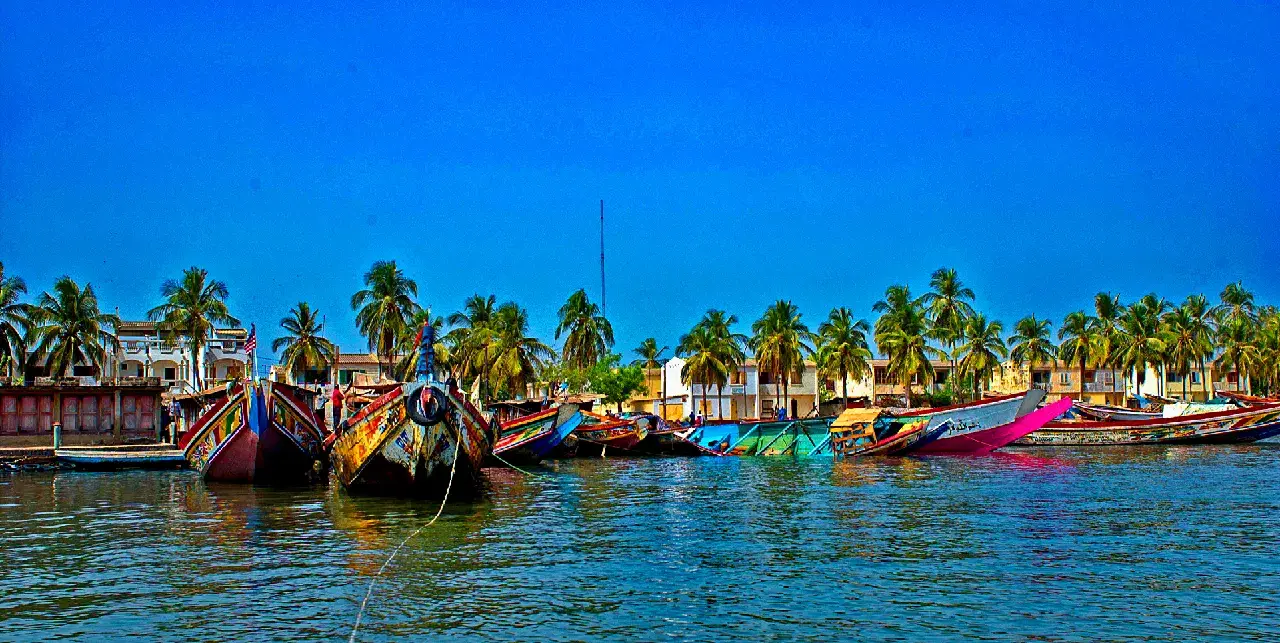
The town has kept the charm of a river port: you can see the Cathedral of Saint Anthony of Padua, the pirogues and boatyards on the water's edge, and faded colonial buildings. It has been twinned with Saint-Maur-des-Fossés, in the Val-de-Marne department, since 1966, and with Viana do Castelo, in Portugal.
The districts of Ziguinchor
Ziguinchor is a big town, divided into many districts: the municipality officially has 38, whereas it had only five in the early 1950s. The oldest are Escale, Santhiaba, Boudody, Goumel-Kantata and Boucotte; others were added as the town expanded westwards, notably Peyrissac, Grand-Dakar, Tilène, Néma, Alwar, Kandialang, Diéfaye, Coboda and Colobane. Lindiane is known as one of the most traditional districts, and Djibélor, on the outskirts, still feels like a village.
- Escale: the colonial centre, with its administrative buildings, hotels and restaurants, and the Joola memorial.
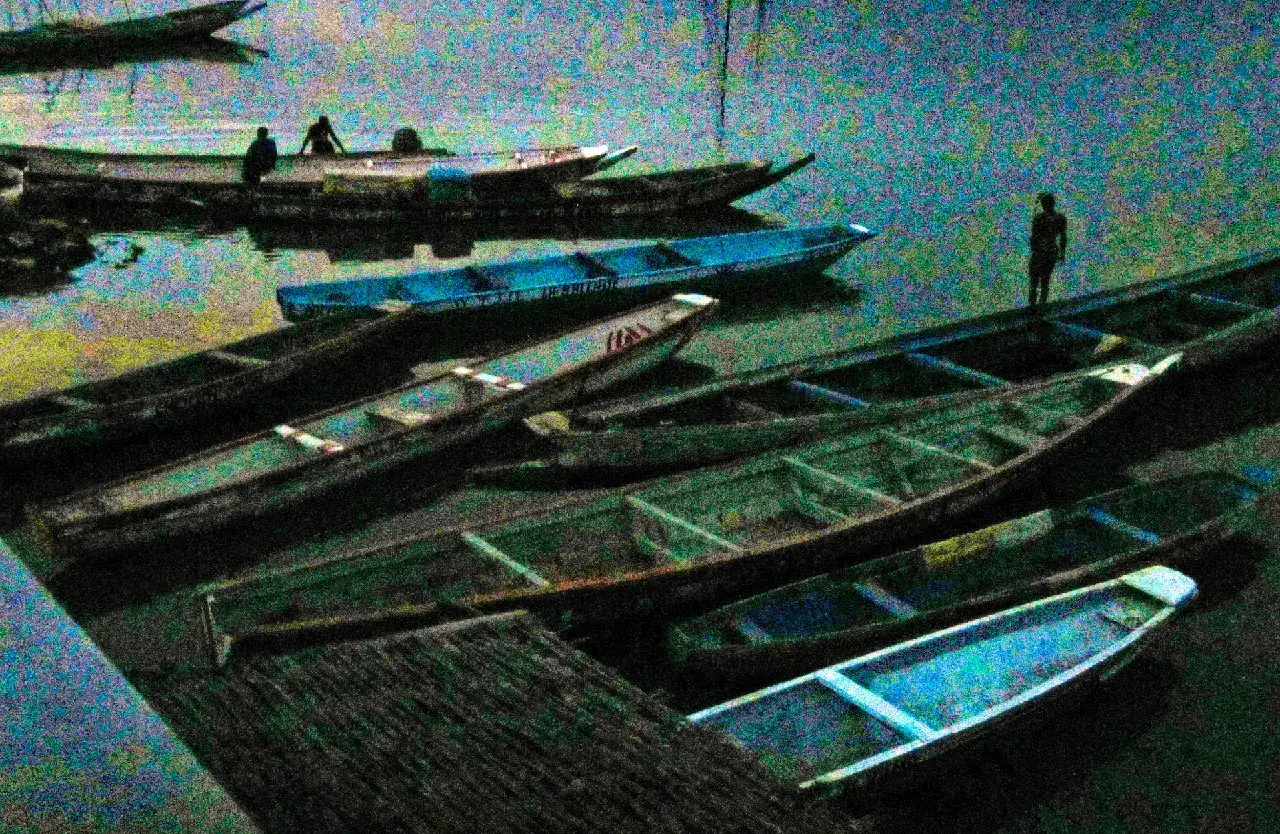
- Boudody: the district of the fishing port and the landing stage, where the colourful pirogues seen at the top of the page come alongside.
- Santhiaba: the gateway to the town, near the bus station.
- Boucotte: the largest district, of mixed style, from mud-brick to concrete houses.
- Néma: a modern shopping district, with the post office, a high school and a market.
- Lindiane: sandy lanes beneath the mango trees, with a village atmosphere.
This list is not exhaustive: it gives the landmarks you need to find your bearings during the visit, and your driver guides you from one to the next.
The Kankourangs: Mandinka mysticism in town
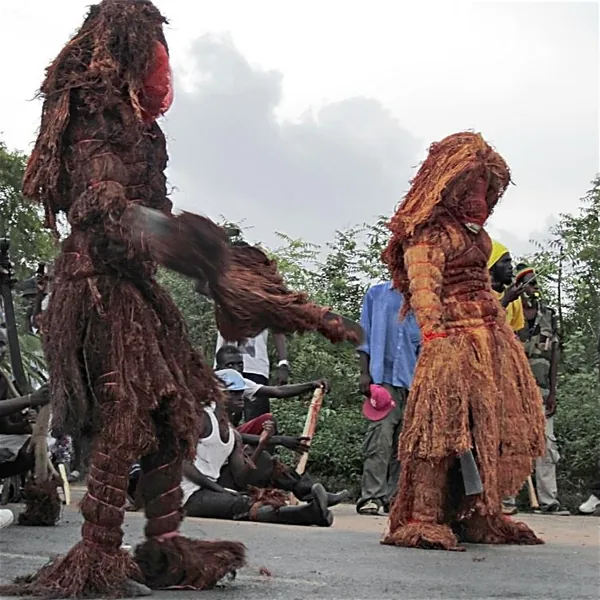
If there is one thing not to miss in Ziguinchor, when the calendar allows, it is the Kankourangs. Casamance is a mosaic of ethnic groups, each with its own rites and beliefs; the Kankourang is both a mask and a ritual, linked to circumcision among the Mandinka of Senegambia (Senegal and Gambia), and notably in Casamance. It is said to originate from the old kingdom of Gaabu. This mystical figure, covered in fibres taken from the bark of a red tree, guarantees order and social values: how to behave in society and in the family, and rights and duties towards one's ethnic group and elders. The rite is inscribed by UNESCO on the Representative List of the Intangible Cultural Heritage of Humanity (proclaimed in 2005, inscribed in 2008).
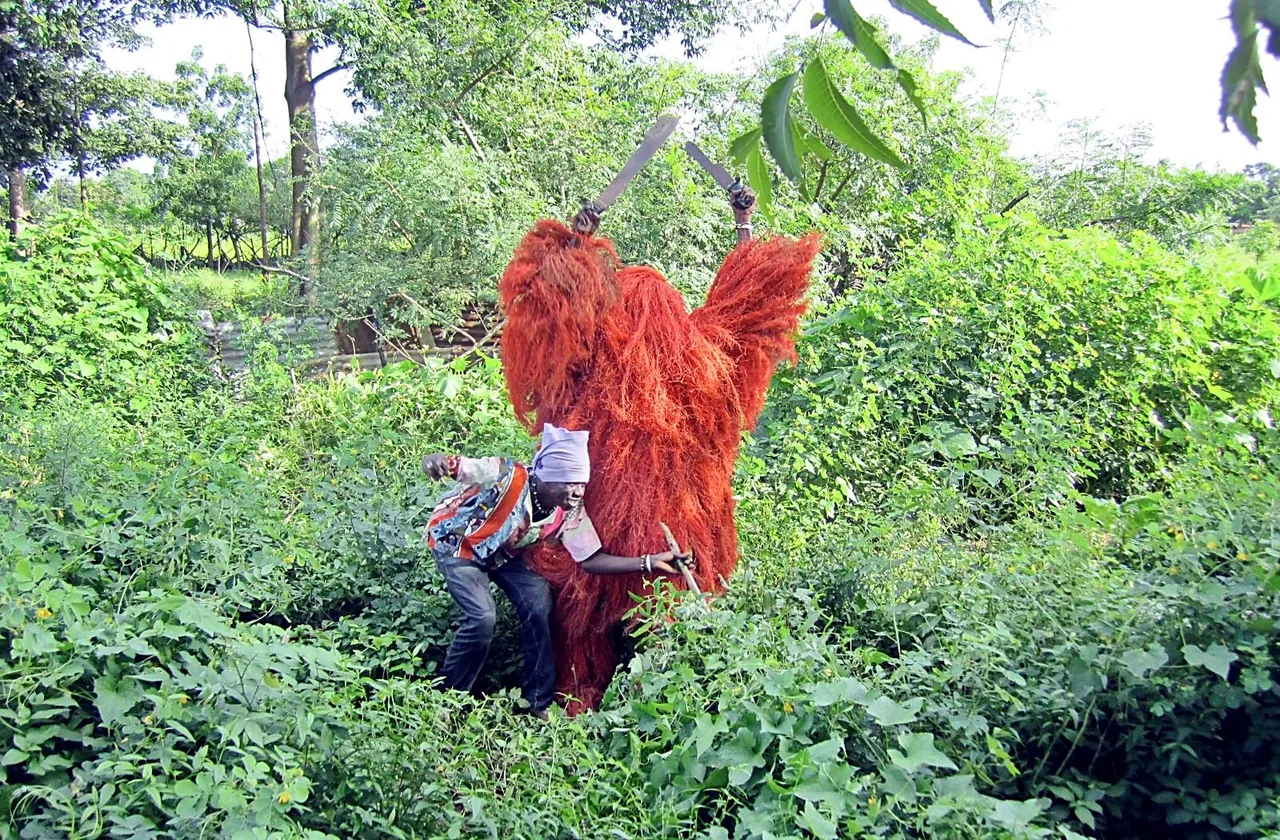
Every year, at the end of the rainy season, the "Djambadon" festival lasts about thirty days, with four successive Sundays. The Kankourangs, greatly feared, then roam the streets to protect the newly circumcised boys before their initiation in the sacred woods. In town, mysticism gives way to festivity: neighbourhoods freeze to the sound of machetes being sharpened on the tarmac, traffic is blocked, children and women take fright, and the most eccentric costumes parade past: men dressed as women and vice versa, doctors and their assistants, hunters, gardeners, lumberjacks with their chainsaws, golfers with their clubs. For a while, people show off and defy the taboos. In the bush and on the islands, animist villages look on this spectacle differently: no one jokes with the spirits.
It is an impressive spectacle, but to be experienced with caution and respect: keep your distance from the masks, do not touch them, ask permission before taking photos and let your driver guide you. The dates vary from year to year and from district to district: ask us before you come.
Breakfast on the Kadiandoumagne jetty
On arrival in Ziguinchor, you have breakfast on the jetty of Hotel Kadiandoumagne, on the bank of the Casamance River, at the Boudody landing stage. The hotel is one of the finest in town: 45 rooms with river views, a panoramic restaurant and a pool. It is also one of the places in town where you can choose to have lunch.
The markets, shopping and the Joola memorial
The Escale market is by the river, next to the Joola memorial. It is a lively market, where you come across fish, fruit, vegetables, fabrics and everyday objects. The Saint-Maur market is the town's big market; its name recalls Ziguinchor's twinning with Saint-Maur-des-Fossés, in France. It is also the shopping stop of the day: at the Saint-Maur market and in the shops around it, you find fabrics, notably wax, those printed cottons in colourful patterns that the town's seamstresses and tailors turn into dresses, shirts and boubous, as well as bazin, soaps, shea butter and bissap. The crafts market, for its part, lets you choose gifts to bring back for the family: carved wooden objects, basketry, jewellery, fabrics. In every case, keep an eye on your belongings, bargain with a smile (the starting price is negotiable) and ask permission before taking photos.
The Joola memorial is worth a visit. On 26 September 2002, the ship Le Joola, which ran between Ziguinchor and Dakar, capsized off the coast of the Gambia: the sinking claimed 1,863 lives and left 64 survivors. The memorial, set on the riverbank near the Escale district, from where the ship had set sail, displays objects recovered from the wreck, testimonies from survivors and two monumental propellers. It is a place of remembrance: visit it with respect.
Djignabo Bassène, the high schools, the universities and place Jean-Paul II
Ziguinchor is also a town of history and learning, and two names come up again and again. The first is Djignabo Bassène, a great figure of Jola resistance to French colonisation. A charismatic chief of the kingdom of Bandial and guardian of the sacred rites, he was reputed to be invulnerable. He died on 17 May 1906, in a clash with French troops near Séléki; the exact circumstances of his death are still debated by historians. His memory has remained very much alive: a play in the Jola language, "Bigolo", was performed as early as 1940, and Ousmane Sembène gave his name to a resistance fighter in his film Emitaï (1971).
The second is the Djignabo high school, which has borne his name since 1964. Founded in 1957, it was for a long time the only school of its level in the whole of Casamance. It is now one of the largest high schools in Senegal in terms of area and enrolment: it has had more than 5,000 pupils at certain times, and more than 3,300 are currently enrolled according to a recent report by the Sonatel Foundation, which funded its refurbishment.
The other major school in town is the Charles Lwanga high school and college, a Catholic school opened in October 1970 on the initiative of Bishop Augustin Sagna, Bishop of Ziguinchor, as a high school with a social mission for young people from the countryside and from modest families. Canadian Jesuits launched it before handing over to the diocesan clergy. It welcomes Catholic and Muslim pupils alike, and about a third of its teachers are Muslim: a fine example of the dialogue between religions that characterises Casamance.
Ziguinchor is also a university town: the University of Ziguinchor, created in 2007, welcomes students from all over Casamance and beyond. Finally, the Christian presence is very strong here, around the Cathedral of Saint Anthony of Padua and place Jean-Paul II, which owes its name to the Pope's visit in February 1992, while Casamance was going through a conflict: a monument topped with a dove, a symbol of peace, was erected there in 2009. In a region where animism, Christianity and Islam live side by side, it is one of the faces of Casamance.
Lunch: Kadiandoumagne, Alliance franco-sénégalaise or Djibélor
For lunch, you choose between three places: the restaurant of Hotel Kadiandoumagne, that of the Alliance franco-sénégalaise (the Franco-Senegalese cultural centre), on avenue Djignabo, or the Auberge Le Croco at the Djibélor farm, to taste crocodile. The Alliance is a cultural association that offers French courses, exhibitions, meetings and talks in its building and gardens. As for the Alliance, its architecture is worth the detour: the building is inspired by the impluvium houses of Casamance, and it was designed by Patrick Dujarric, founder of the school of architecture in Dakar.
The pool at Hotel Néma Kadior
After lunch, you take a break at the pool of Hotel Néma Kadior, which we consider the finest in Ziguinchor. The hotel is set in a large garden, on the road to Kandé, with a big pool: a chance to cool off before the 72 kilometres back. The pool is open to all, provided you buy something on site.
A typical day in Ziguinchor
Times are indicative: they adjust to your pace and to the condition of the road.
- Departure: in the morning, by 4x4 from Le Papayer Ecolodge.
- Road: 72 km, 1 h 30 at most, through the mangrove, with the Katakalousse bridge then the Niambalang bridge.
- On the way: possible stop at Djibélor to visit the crocodile farm (about 45 minutes).
- Breakfast: on the jetty of Hotel Kadiandoumagne, on the riverbank.
- Markets: the Escale market, the Joola memorial, then the Saint-Maur market and the crafts market, with shopping for wax fabrics and gifts.
- History: the districts of the town, the Djignabo and Charles Lwanga high schools, place Jean-Paul II in front of the cathedral.
- Lunch: your choice of Hotel Kadiandoumagne, the Alliance franco-sénégalaise or the Auberge Le Croco in Djibélor (crocodile on the menu).
- Relaxing: the pool at Hotel Néma Kadior, open to all with a purchase.
- Return: in the evening, before nightfall.
Practical advice for your excursion
- Plan for a full day: 1 h 30 on the road each way.
- The return is in the evening, before nightfall: the night road is very dangerous.
- To have lunch at the Djibélor farm, let us know in advance: the inn has about thirty seats.
- If you come at the time of the Kankourangs, keep your distance from the masks, do not touch them and ask permission before taking photos.
- Bring a hat, sunscreen, water and a swimsuit for the pool.
- Wear light clothing and comfortable shoes for walking around the markets.
- Keep cash in small notes for the markets and meals.
- For shopping, leave room in your bag: wax fabrics fold easily and make lovely gifts; the price is always negotiated.
- In the markets, keep an eye on your belongings and ask permission before taking photos.
- At the Joola memorial, behave respectfully: it is a place of mourning.
- The dry season (November to May) is the most comfortable; in the rainy season, we adapt the programme to the weather and the condition of the road.
Frequently asked questions about the Ziguinchor excursion
How do you get to Ziguinchor from Cap Skirring?
By 4x4, along a 72 km road that crosses the mangrove and two bridges, the Katakalousse bridge and then the Niambalang bridge. Allow 1 h 30 at most.
What condition is the road in?
It is not in very good condition, but the scenery is magnificent, with mangrove, rice fields and villages. A 4x4 handles it well.
What do you visit in Ziguinchor?
The Djibélor crocodile farm on the way, then the Escale market, the Joola memorial, the Saint-Maur market and the crafts market, the Alliance franco-sénégalaise and the riverbank. You can also see the Cathedral of Saint Anthony of Padua.
Can you go shopping in Ziguinchor?
Yes. The Saint-Maur market and the shops around it offer fabrics, notably wax, as well as bazin, shea butter and bissap, and the crafts market lets you choose gifts for the family. Prices are negotiated with a smile.
How much does the Ziguinchor excursion cost?
The price depends on the number of visitors. As a guide, allow about 70,000 FCFA for the 4x4 with driver and fuel, to be shared among the participants. Meals and purchases are extra.
What is the Joola memorial?
It commemorates the sinking of the ship Le Joola on 26 September 2002, which claimed 1,863 lives and left 64 survivors. It stands on the riverbank, near the Escale district. It is a place of remembrance, to be visited with respect.
Why is the market called Saint-Maur?
Because Ziguinchor has been twinned since 1966 with the French town of Saint-Maur, in the Val-de-Marne department. The Saint-Maur market is the town's big market.
Can you visit the crocodile farm and taste crocodile?
Yes. The Djibélor farm, in the village of Djibélor at the gates of Ziguinchor, is open from 7:30 am to 6 pm; allow three quarters of an hour. There is no entrance fee: everyone leaves what they wish. You can have lunch at the Auberge Le Croco, which serves farmed crocodile; the inn has about thirty seats, so it helps to let us know.
Where do you have breakfast?
On the jetty of Hotel Kadiandoumagne, on the bank of the Casamance River, at the Boudody landing stage.
Where do you have lunch?
Your choice: at the restaurant of Hotel Kadiandoumagne, at the Alliance franco-sénégalaise (avenue Djignabo) or at the Auberge Le Croco at the Djibélor farm, where you can taste crocodile.
What is the Kankourang?
It is both a mask and a circumcision ritual among the Mandinka of Senegambia, notably in Casamance. The figure, covered in red bark fibres, watches over social order and protects the newly circumcised boys before their initiation. The rite is inscribed by UNESCO on the Representative List of the Intangible Cultural Heritage of Humanity (proclaimed in 2005, inscribed in 2008).
When can you see the Kankourangs in Ziguinchor?
At the end of the rainy season, during the Djambadon festival, which lasts about thirty days, with four successive Sundays. The dates vary from year to year: ask us before you come.
Who was Djignabo Bassène?
A Jola chief of the kingdom of Bandial, guardian of the sacred rites and a great figure of resistance to French colonisation. He died on 17 May 1906 in a clash with French troops near Séléki. The high school in Ziguinchor has borne his name since 1964.
What do we know about the Djignabo high school?
Founded in 1957, it was for a long time the only high school in Casamance and remains one of the largest in Senegal, with more than 5,000 pupils at certain times.
Is Ziguinchor a university and Christian town?
Yes. The University of Ziguinchor was created in 2007, and the Christian presence is strong, around the Cathedral of Saint Anthony of Padua and place Jean-Paul II, named in memory of the Pope's visit in 1992. The Charles Lwanga high school and college, a Catholic school, welcomes Catholic and Muslim pupils.
How many districts does Ziguinchor have?
The municipality officially has 38 districts. Among the best known: Escale (the colonial centre), Boudody (the port), Santhiaba, Boucotte, Néma, Lindiane and Colobane.
Why visit the Alliance franco-sénégalaise?
For its architecture: the building is inspired by the impluvium houses of Casamance and was designed by Patrick Dujarric, founder of the school of architecture in Dakar. It also hosts exhibitions and meetings.
Where can you swim?
At the pool of Hotel Néma Kadior, which we consider the finest in Ziguinchor, set in a large garden. The pool is open to all, provided you buy something on site. Bring a swimsuit.
Why do you return before nightfall?
Because the night road is very dangerous. We arrange the return in the evening, before night falls.
What is the difference from the Affiniam excursion?
The day in Ziguinchor is by 4x4 and on foot, and focuses on the town, its markets, the Joola memorial and the Alliance franco-sénégalaise. The Affiniam excursion also starts from Ziguinchor, but it devotes the day to the pirogue, fishing and the impluvium house.
Is the excursion open to people who are not staying at the lodge?
No. All our excursions in Casamance are reserved for guests staying at Le Papayer Ecolodge: we do not run excursions for outside visitors.
Going further: other excursions and features
Our other excursions from Cap Skirring: islands, bolongs, Jola villages and markets.
Carabane, the car-free island
A former colonial trading post at the mouth of the river: sandy lanes, a Breton-style church and lunch with your feet in the water.
The manatees of Pointe Saint-Georges
We go up the river to meet the manatees, and sometimes dolphins, before climbing a giant kapok tree.
The wild bolongs of Boudédiète
By pirogue, through the best-preserved arms of mangrove in the region.
Essaout, the oyster village
Trolling for fish, then a picnic of mangrove oysters picked from the roots.
An audience with the King of Oussouye
A rare meeting with the King of Oussouye, guardian of Jola traditions, then a small cashew nut workshop.
Énampor, Jola architecture
The famous impluvium house: a huge round house of clay and thatch, designed to collect rainwater.
Affiniam and its bolong
Sailing and fishing in the bolong, then lunch in the village's great impluvium house.
Niomoune and the Karone Islands
An island immersion by pirogue, far from everything, in the Karone archipelago.
Djembering and the giant of the savannah
The biggest kapok tree in Senegal, a place of gathering and stories, close to the lodge.
Cap Skirring, from market to nightfall
The village, its craft market, its colourful pirogues; and in the evening, dinner show and live music.
Our immersive excursions in Casamance on video
Come aboard in pictures: pirogues, bolongs, Jola villages and encounters, filmed during our excursions.
See all our excursions in Casamance
Understanding the region: our features on Casamance.
Fishing in Casamance
Artisanal fishing and major centres, the fisheries crisis and marine protected areas.
The mangrove & the bolongs
Mangrove trees, fish nursery, threats and replanting of this vital ecosystem.
Ecological protection & biodiversity
Ecosystems, protected areas and conservation strategies for a biodiversity unique to Casamance.
Forests & wood species
Exceptional flora, protected forests and sustainable management of forest resources.
Discover the Papayer Ecolodge Forest in Casamance
In Cap Skirring, discover the Papayer Ecolodge Forest, its one-hectare seaside grounds and its planting area. Plant a virtual tree or flower and explore our approach to protecting nature and biodiversity in Casamance.
DISCOVER THE PAPAYER ECOLODGE FOREST