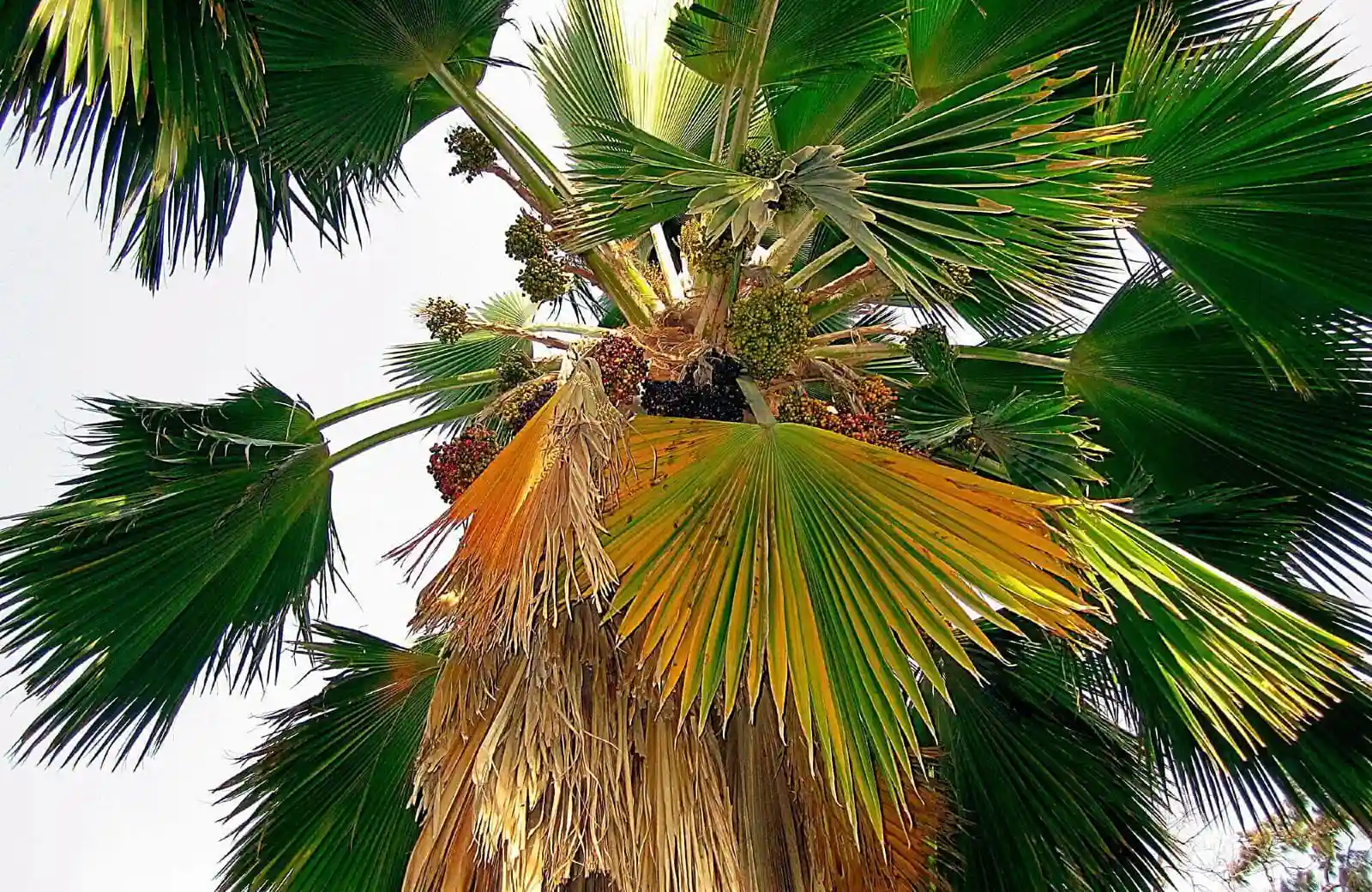
The ultimate guide to excursions in Casamance: 7 unusual and authentic experiences
Casamance is without doubt the most mystical and best-preserved region of Senegal. Between wild beaches, endless mangroves and centuries-old traditions, it offers exceptional ground for exploration. To help you plan your trip, the team at Le Papayer Ecolodge invites you to discover these wonders in pictures: seven experiences filmed during our outings, from the best-kept secret of Lower Casamance to the aerial ballet of the pelicans.
To help you plan your trip, discover our comprehensive guide to Casamance. You will find all the essential information for exploring the area around Cap Skirring with Le Papayer Ecolodge.
Find all our immersive videos on our official YouTube channel: Le Papayer Ecolodge beach hotel Cap Skirring.
1. The ghost hotel of Djiromait: the most unusual secret of Lower Casamance
Deep in Basse-Casamance, far off the beaten track, lies one of Senegal's most fascinating mysteries: the ghost hotel of Djiromait. Built between 1994 and 2000 by a Senegalese businessman, this vast upmarket hotel complex was meant to become the flagship of luxury tourism in Casamance. Yet it never opened its doors and never welcomed a single guest. The authorities of the day had promised a proper access road, but it only arrived in 2012 — far too late. Without access, the project went bankrupt before it was ever inaugurated.
Completely abandoned today, this concrete liner has become a true « ghost hotel »: the tropical jungle has reclaimed its rights, creeping between the columns, inner courtyards and empty rooms in a post-apocalyptic setting worthy of a filmmaker. Regarded as the best-kept secret of Basse-Casamance, this stop opens our video guide, in two parts devoted to urban exploration. If you are planning future excursions in Casamance, it is an absolute must for lovers of Urbex and offbeat travel: easily reached by pirogue through the bolongs from Niomoune or Cap Skirring, a visit to the Djiromait ruins guarantees spectacular shots and a truly unusual experience.
Discover the site in pictures:
2. The rainy season and its storms: the wild face of the region
From June to October, southern Senegal enters its most mystical time of year: the rainy season. This wet season transforms the landscape into a tropical Eden of an almost unreal green, punctuated by the spectacular rumble of the elements.
Beyond its atmosphere, the rainy season is the true ecological engine of Casamance. Running from July to October, with rainfall of 1,200 to 1,500 mm that makes it the wettest region in Senegal, this massive water recharge triggers an explosion of plant life: the dense forest and the mangrove regenerate, the bolongs turn into vital spawning grounds for fish, and the region becomes a genuine sanctuary of abundance for birdlife. It is the season when life, in all its forms, takes over again.
While the storms impress with their ink-black skies streaked with lightning, they bring a welcome freshness and awaken a sleeping land. For travellers in search of poetry and raw authenticity, planning excursions in Casamance during this season offers a matchless experience. It is a unique chance to watch the traditional transplanting in the shimmering rice paddies, to glide by pirogue along bolongs lined with an insolently vibrant mangrove, and to experience Senegal from within.
Insiders' tip: this rainfall generosity has its flip side. Under the effect of climate variability, the rains readily fall in sudden storm episodes: waterlogged soils, fast-rising bolongs and sometimes cut-off tracks call for flexibility and for adapting outings to the weather. But the reward is immense: a vibrant, exclusive Casamance of unforgettable wild beauty.
Experience the mood of the rainy season:
3. Cap Skirring: the secret ballet of the sea turtles
In these early days of the rainy season, as the first tropical showers awaken nature and turn the coast green, an air of gentle anticipation settles over the shore. On the unspoilt beach of Le Papayer Ecolodge, at Cap Skirring, time seems to stand still.
It is here, in this wild, environmentally respectful haven in Senegal, that we quietly await the return of the first sea turtles coming to carry out their age-old nesting ritual.
Three species in particular frequent the coasts and bolongs of Casamance: the green turtle (Chelonia mydas), the leatherback turtle (Dermochelys coriacea) and the hawksbill turtle (Eretmochelys imbricata). All are fully protected by the Senegalese Wildlife Code and the international CITES convention, and all appear on the IUCN Red List — the hawksbill even classified as « critically endangered ».
These populations remain fragile: bycatch in fishing nets, poaching of meat and eggs on the nesting beaches, coastal erosion nibbling away at breeding sites, plastic ingestion… so many pressures that make the few preserved shorelines like that of Le Papayer Ecolodge all the more precious, where every nesting is watched over with care. Seeing a turtle climb back up the sand here is no longer a mere spectacle: it is the living sign of an ecosystem we strive to protect.
For travellers seeking authenticity and sustainable tourism, planning excursions in Casamance at this pivotal time offers an extraordinary experience. Far from the crowds, you discover a vibrant natural world and take part in witnessing a fragile ecological miracle, protected here with passion.
Follow this magical moment:
4. The rice harvest at Itou: a sacred immersion in animist country
Deep in Basse-Casamance, the island village of Itou is about to live its strongest and most sacred moment of the year: the traditional rice harvest. In this stronghold of Jola culture, rice growing is not merely about producing food — it is the very essence of the community's social organisation and spirituality. Here, working the land is a ritual in its own right, paced by respect for the ancestors and the spirits of the forest.
This rice cultivation is, first and foremost, a genuine technical feat, passed down from generation to generation. To tame a mangrove environment, the Jola build earthen dykes that protect the plots from the salt tides coming in from the ocean while retaining the fresh rainwater the rice needs. The emblematic tool of this know-how is the kadiandou, a long wooden spade with a narrow iron blade with which the men turn over the heavy, clayey soils to form perfect ridges.
The work rests on village solidarity and a very precise division of roles. To the men fall the heavy tasks — clearing, maintaining the dykes and the initial ploughing with the kadiandou; to the women, an equally crucial role: transplanting the young shoots, weeding by hand and harvesting the ripened ears.
For travellers curious to discover the authentic soul of Senegal, adding this stage to your excursions in Casamance offers an immersion of rare intensity. Between golden rice paddies as far as the eye can see and the fervour of collective harvest songs, Itou invites you to share a moment of human communion and village solidarity, far from the usual tourist trails.
Did you know? For the people of Itou, rice is a gift from the spirits, honoured in sacred structures called « Bukin ». It is, moreover, not meant to be sold: stored in family granaries for the household's consumption and for ceremonies, selling it would profane its sacred character. From sowing to harvest, every stage is accompanied by prayers, offerings and libations of palm wine to thank the Earth and seek the ancestors' protection — an unbreakable bond between the Jola people and their nourishing land.
Discover this ancestral ritual:
5. Jola rituals and dances: at the heart of the female mystery
Beneath the canopy of the great kapok trees whispers one of Senegal's best-kept secrets: Jola spirituality. In Casamance, ceremonies and traditional dances are not folkloric shows for tourists, but major sacred rituals that pace the social and religious — animist — life of the Jola people. The women's sacred forest embodies its pillar: a mystical place forbidden to men and to the uninitiated, where the rites of initiation and protection of the community are passed down from generation to generation.
Among the highlights of this immersion, the video often features the famous Kumpo, a mystical creature entirely covered in palm leaves, a stick planted on its head, dancing to the frenetic rhythm of the tam-tams: according to belief, it is not a man in disguise but a protective spirit come out of the sacred forest to call the village to order and drive away evil spells. Then comes the gathering around the Bombolong, the traditional wooden slit drum: dressed in wax pagnes, women and men perform energetic, synchronised dances, miming in turn scenes of war, hunting or farm work.
At the edge of the sacred forest — the most mystical place in Casamance, where the initiations of the Boukout take place — the heart of the rite remains strictly forbidden to the uninitiated; but the excursion lets you grasp its importance and attend the public festivities surrounding these great rituals. Because these events touch the sacred, Le Papayer Ecolodge never organises such outings lightly: thanks to its close ties with village chiefs and local communities, notably around Itou and Oussouye, it takes you to share in genuine village celebrations when they occur. Adding these celebrations to your excursions in Casamance is a human experience of rare intensity, as close as possible to a culture that has remained proudly itself.
Let the rhythm carry you away:
6. The Kanoufa platform: a balcony over the canopy of Pointe Saint-Georges
Fancy a dizzying and utterly unusual experience? At the edge of the village of Pointe Saint-Georges, a giant of nature invites you to change your perspective: a kapok tree many times over a century old, more than 35 metres tall and close to two centuries in age. A powerful symbol of Jola history and traditions, it has weathered the ages — and it is nestled in its branches that the Kanoufa platform rises, a spectacular vantage point perched more than 25 metres up.
The climb, the site's main attraction, involves ascending some 25 metres inside the tree itself. Access is by ladders and built-in steps, an entirely secured ascent supervised by the village eco-guides. Once on the wooden platform, the sight is breathtaking: a 360° panorama — unique in Senegal — opens onto the canopy. On one side, the immensity of the dense Kanoufa forest; on the other, the bolongs, the mangroves and the majestic Casamance River as far as the eye can see, where you may sometimes glimpse the discreet surfacing of a manatee come to greet the coast.
Adding this micro-adventure to your excursions in Casamance is the perfect way to grasp the wild grandeur of this forest region. A moment suspended between earth and sky, quite literally out of time.
Rise above it all with us:
7. The pelican ballet: a celestial show above the mangrove
Gliding silently by pirogue along the brackish channels, deep in a maze of mangroves… and suddenly, looking up. In the clear Senegalese sky, a squadron of white pelicans cuts through the air in perfect formation, flying over the majestic Casamance mangrove.
This natural spectacle, of absolute grace, is one of the finest wild treasures the region has to offer. The mangrove, a true sanctuary of biodiversity, serves as refuge, roost and fishing ground for these great, majestic birds that soar and dive towards the water in perfect synchrony.
But Casamance's ornithological story does not stop at pelicans. The region is regarded as one of the richest areas in West Africa for birdwatching: the unique meeting of the Atlantic Ocean, the Casamance River, dense tropical forests and salt mangroves brings together several hundred species, mixing resident African birds and Palearctic migrants that come from Europe to overwinter, from October to April.
In the mangrove and the bolongs, the region's nourishing heart, reigns the African fish eagle, whose powerful, nostalgic cry is inseparable from Casamance landscapes. Here too you will surprise the kingfishers — the malachite kingfisher, electric blue and orange, and the pied kingfisher, famous for its hovering « Holy Spirit » flight before diving — as well as a host of waders: the majestic Goliath heron (the largest heron in the world), the cattle egret, the little egret and the strange hamerkop, builder of monumental dome-shaped nests.
As you head inland towards the forests of kapok trees and palms, the birdlife takes on dazzling colours. The green turaco reveals, in flight only, its bright red wing feathers; the Abyssinian roller lights up the sky with its turquoise hues, while the red-throated bee-eaters hunt insects in an endless ballet. Heavier, the hornbills — red-billed and piping — are recognisable by their noisy wingbeats and their large beak topped with a casque.
Finally, on the beaches and sandy estuaries of Cap Skirring, crucial resting and feeding grounds for European migrants, you can observe the osprey — a raptor that comes to spend the winter in Casamance —, large colonies of royal and Caspian terns, grey-headed gulls gathered on the sandbanks at low tide, and the whimbrel tirelessly probing the wet sand with its long down-curved bill in search of small crabs.
For birdwatching enthusiasts and lovers of wide-open spaces, including this sighting in your excursions in Casamance is a must. To the lapping rhythm of the water, you witness an unforgettable aerial ballet, a symbol of preserved and sovereign nature.
Depending on the outing, you may see these big water birds on our pirogue excursions to Carabane, Affiniam or Boudédiète.
Admire this majestic flight:
Going further
These seven experiences are only a glimpse of what the region holds. Explore all our excursions in Casamance from Cap Skirring, destination by destination, along with our in-depth features to understand the region: the mangrove and the bolongs, the forests and wood species, fishing and the ecological protection of biodiversity.
Our 11 excursions from Cap Skirring
All our excursions are reserved for guests staying at Le Papayer Ecolodge.
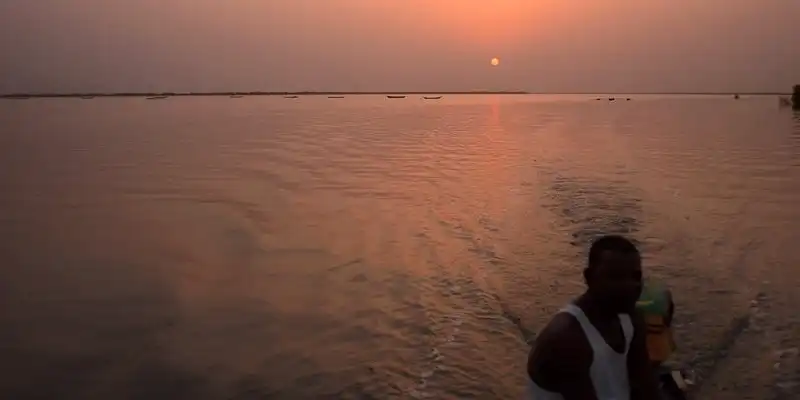 Carabane, the car-free island
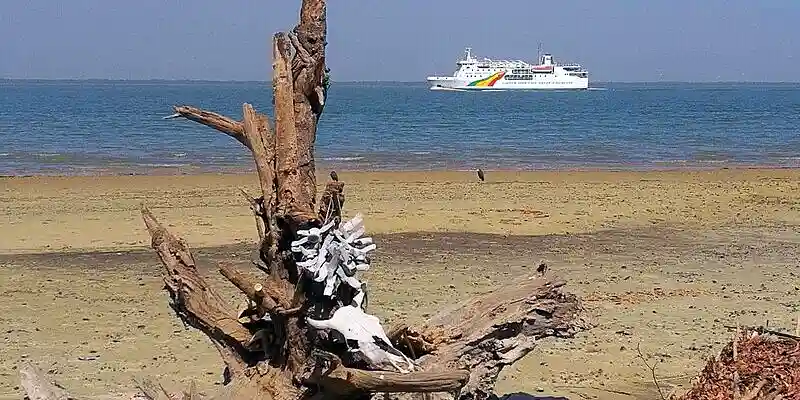 The manatees of Pointe Saint-Georges
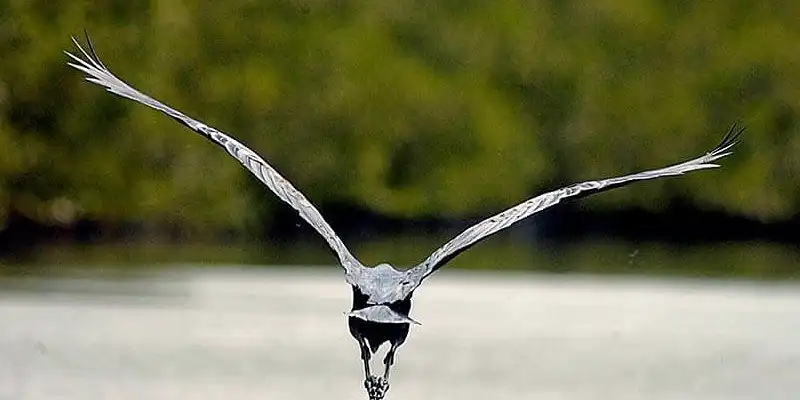 Boudédiète, a wild Guinea-Bissau beach
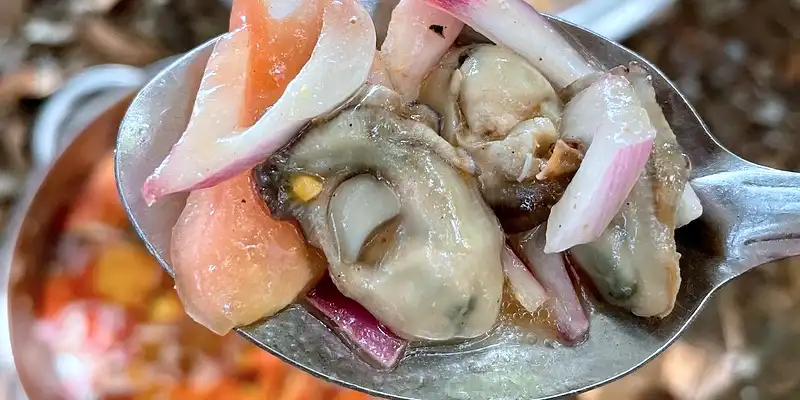 Essaout, the oyster village
 An audience with the King of Oussouye
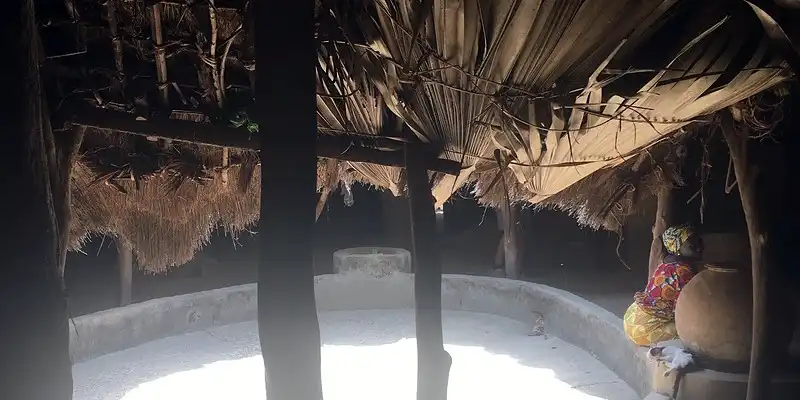 Enampore, Jola architecture
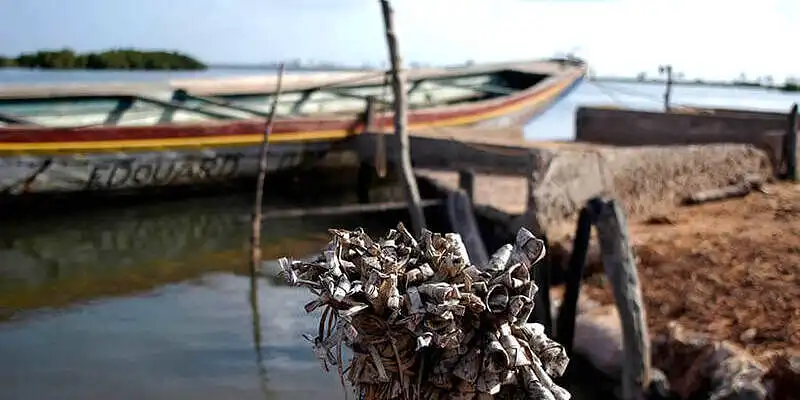 Affiniam and its bolong
 Ziguinchor, capital of the South
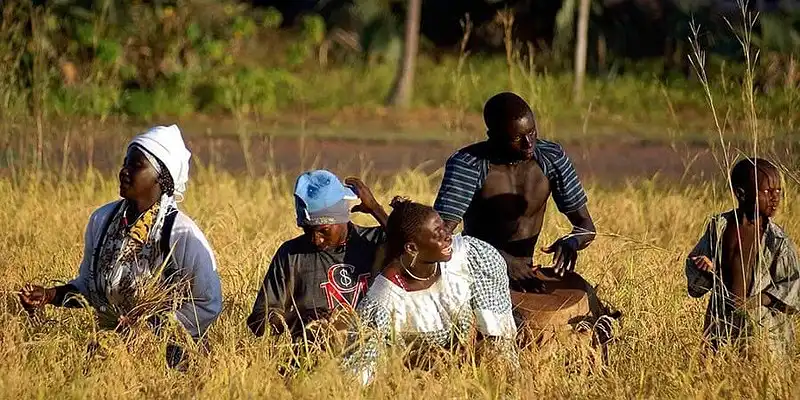 Niomoune and the Karone Islands
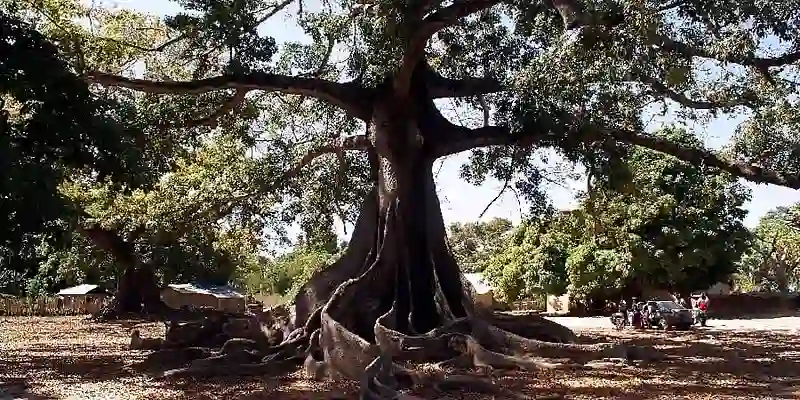 Diembéring and the giant of the savannah
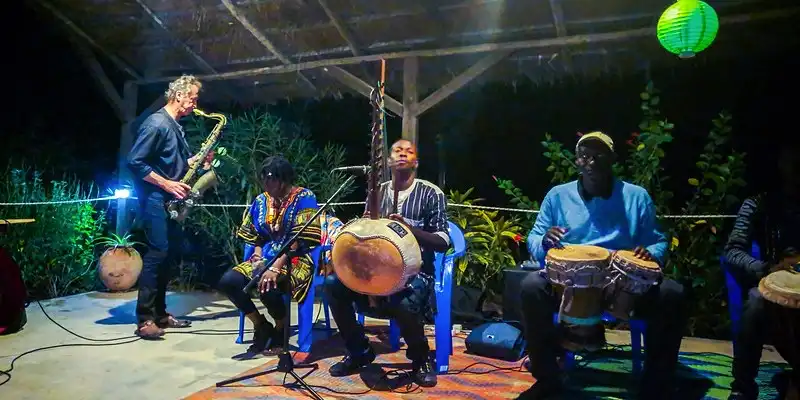 Cap Skirring, from market to nightfall