Read the — honest — story of this off-grid adventure, its mistakes and its lessons
Solar, wind, groundwater: how an ecolodge learned to live off the grid, with its successes and its mistakes.
The world before
A burnt-out luxury, a horizon of concrete, roads you pass along without ever stopping, an empty neighbourhood at dusk: these four images speak of the same unease, that of a world saturated with fumes, noise and dust. Breathing an ever-thicker air in a world that moves too fast, we end up cut off from reality and from nature, without even noticing.


↓ leave all this behind ↓
Leaving all that behind means finding serenity, the luxury of silence and the purity of a nature within a few steps: the sea air, a home that lives on sun and wind, a table that comes from the garden and the ocean, a Casamance to live in rather than look at. This is what awaits you at Le Papayer Ecolodge, in Cap Skirring.
There are places one visits, and others one enters. Le Papayer Ecolodge is of the second kind. What follows is not a brochure : it is a doorway. Five thresholds into a world we built with our own hands, in Cap Skirring, in the south of Senegal, where the land meets the ocean and something vaster begins — silence, the ocean, and a certain idea of what travelling really means.
Five thresholds await you. Take them at your own pace: a house that lives without leaving a trace, a silence that has become a luxury, a table that comes from the garden and the ocean, then Casamance itself, with its bolongs, its villages and its excursions, and finally a people and a culture to be discovered with respect.

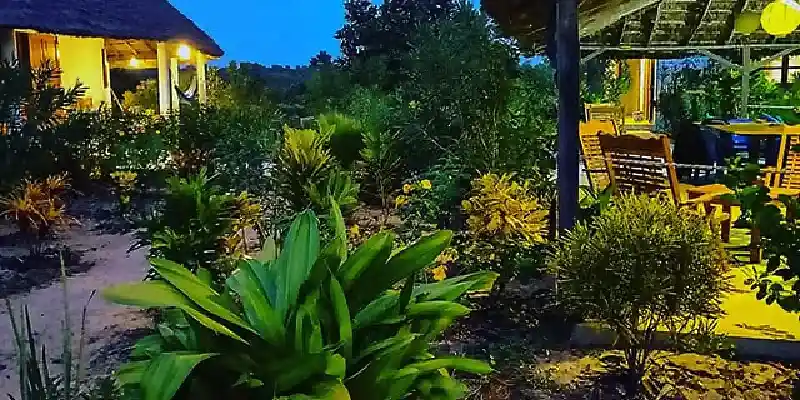
Here, electricity comes from no wire. It is born of sun and wind, stored at night, counted in the morning. We wanted to prove nothing : in this part of Casamance, there simply was no grid. Autonomy was not a slogan — it was the very condition for living here. Water is drawn from a pure aquifer beneath the sand ; the sun heats the showers ; no chemical ever reaches the soil. We came to understand that taking nothing from the place was the only way to truly live here — like this strangler fig that does not damage the stone, but inhabits it.
From the garden to the forest, this same logic guides our approach to permaculture : working with the living world rather than against it.
Solar, wind, groundwater: how an ecolodge learned to live off the grid, with its successes and its mistakes.

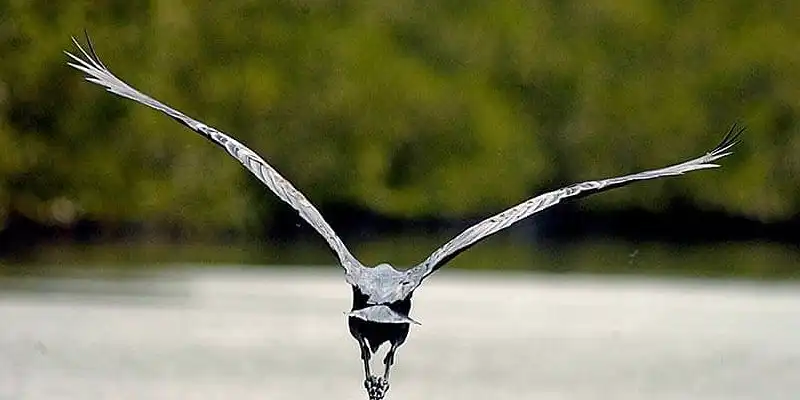
We think we seek comfort ; what we truly seek is calm. True luxury, here, is not measured in stars : it is the absence of engine noise, the shifting light over the tropical garden, the slow roar of the ocean a few steps away. A stork crosses the river, a twig in its beak — it too is building its home. The lodges have melted into the vegetation rather than imposing upon it. Here one disconnects for good — not through deprivation, but because there is suddenly nothing left to flee. Time regains its true length.
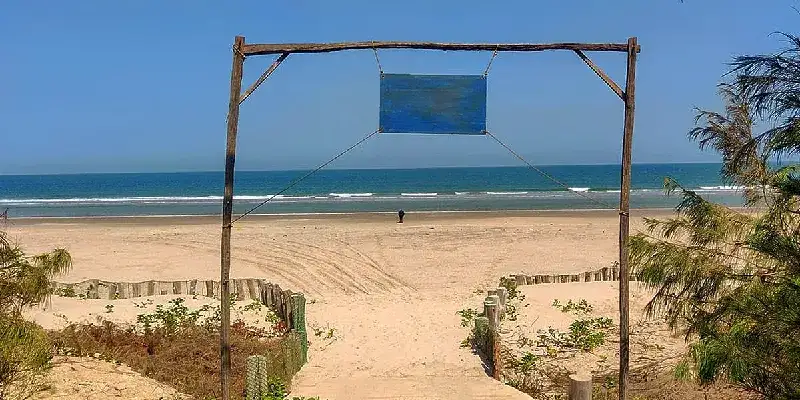
The large traditional hut in a tropical garden, the ocean a few steps away: discover the accommodation and the art of living at the ecolodge.

Casamance feeds those who listen to it. What reaches the plate has not travelled : oysters are gathered from the mangrove roots, lobsters come from the ocean, fish from the bolongs that very morning, fruit falls from the garden. Nothing spectacular — only the rightness of produce that has lied to no one, seared over the embers and shared on the great terrace as the heat softens. Eating local, here, is not a trend : it is what the place demands, and so much the better.
Oysters, lobster, fish from the bolongs and fruit from the garden: local cuisine at the bar-restaurant, on the big terrace.

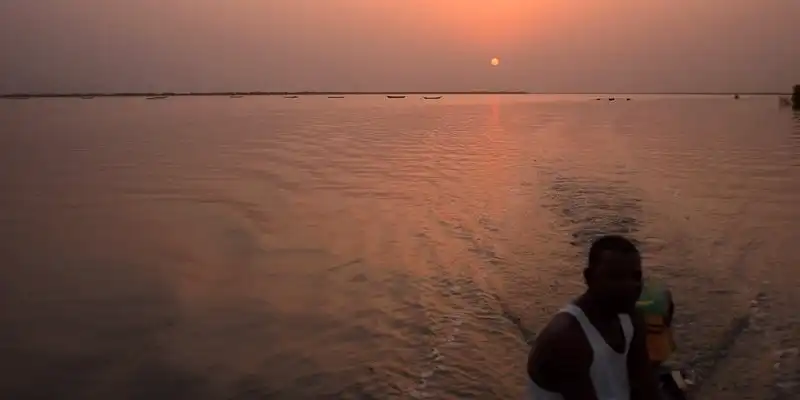
Behind the beach begins a maze of water and mangrove — the bolongs, those sea channels that reach deep inland and close the silence behind the pirogue. We glide close to the mangroves, among the herons, the kingfishers and, at dusk, the flamingos resting on the mudflats. We pass fishermen casting their nets, women smoking fish, villages set upon the water. This is not a backdrop : it is a world that works, that prays, that lives. One does not come here to consume a landscape, but to vanish into it for a while.
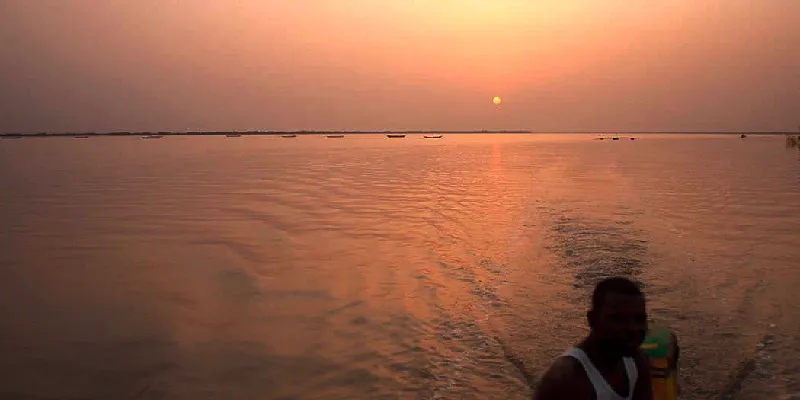
Pirogue trips through the bolongs, Diola villages, islands and markets: guided days, shaped with you.
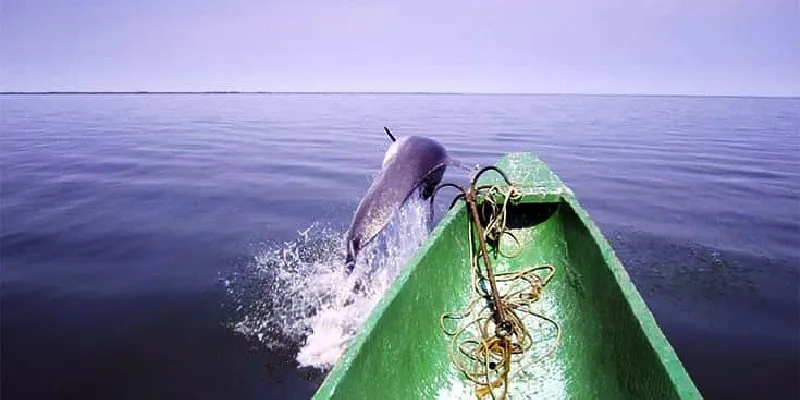
Ghost hotel, Cap Skirring turtles, rice at Itou, Diola dances: our excursions on film.
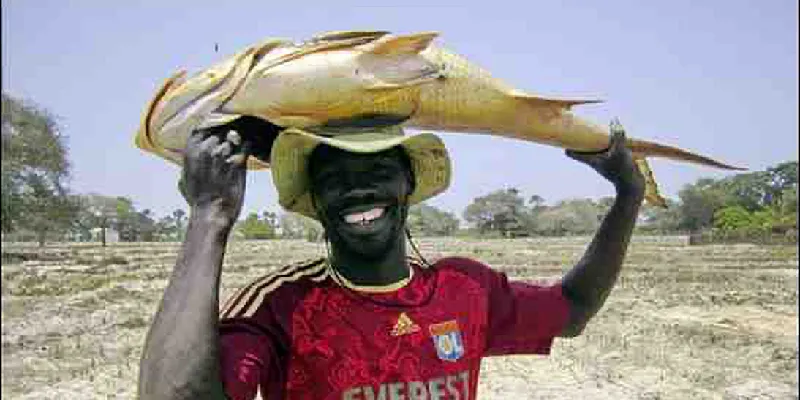
From traditional coastal fishing to the fisheries crisis: the role of women and marine protected areas.
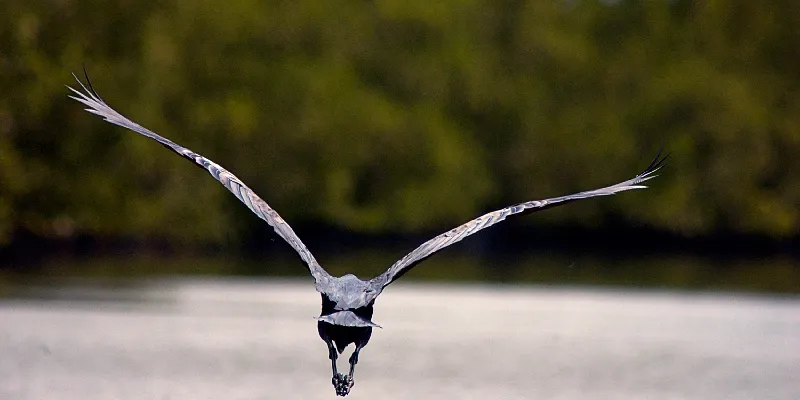
Mangrove species, threats and replanting: the full guide to the ecosystem that makes Casamance.
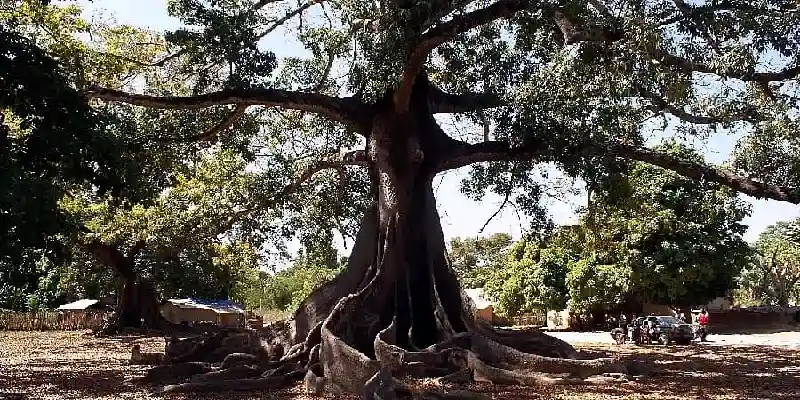
Noble species (kapok, khaya, vène), classified forests and impluvium huts: the guide to the forests of Casamance.
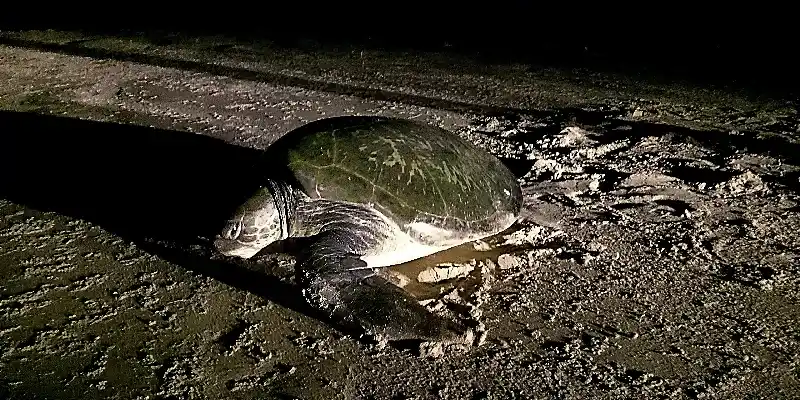
Mangrove, classified forests, marine protected areas and responsible ecotourism: how to protect the living world.
 🏝️
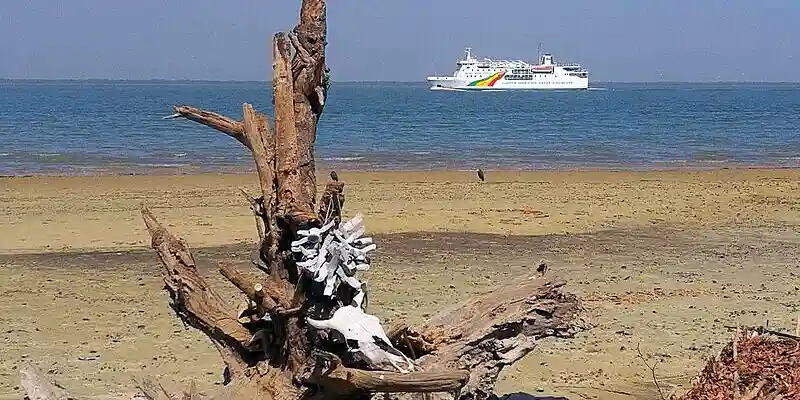
A former colonial trading post set at the mouth of the river, Carabane is reached by pirogue. Sandy lanes, an old church, deserted beaches and lunch with your feet in the water: a timeless escape.
 🐋
We head up the river to meet the manatees — and sometimes dolphins. On site, climbing the great kapok tree offers a dizzying view over Casamance, before lunch facing the water.
 🏖️
At the end of a rough track, we travel by pirogue down the wild Boudédiète bolong to the open sea, for a picnic of grilled oysters, spiny lobsters and crabs on a wild beach in Guinea-Bissau.
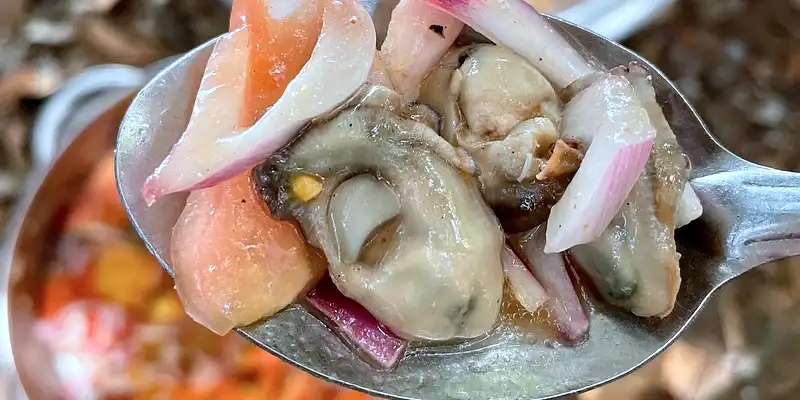 🥪
Trolling for barracuda along the water, then arriving at the mangrove-oyster village: a picnic of fresh oysters gathered from the mangrove roots, like nowhere else.
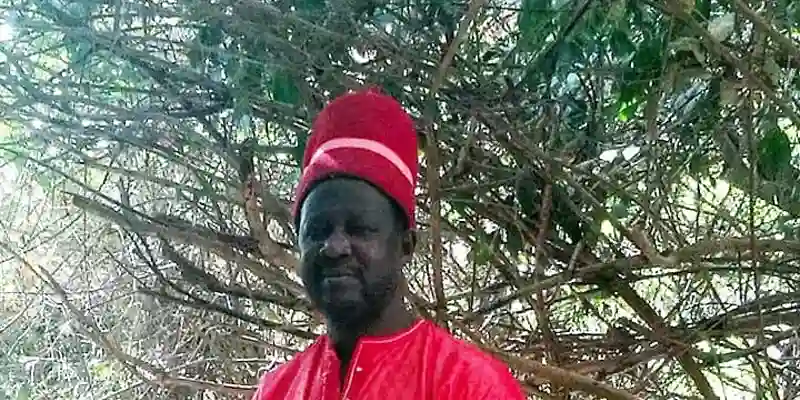 👑
A rare encounter with the King of Oussouye, guardian of Jola traditions (prepare your questions). The day continues at an artisanal cashew workshop and on to the mysterious village of Djiromaïte.
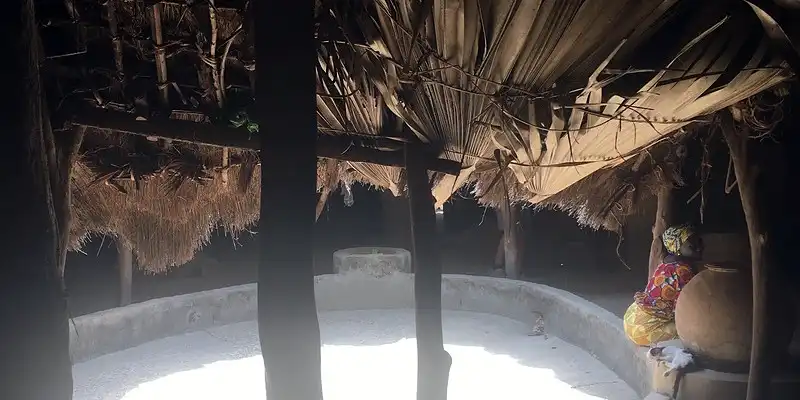 🏠
The famous impluvium house: a huge round dwelling of earth and thatch, designed to collect rainwater at its heart. Lunch under its roof, in the cool, in a Jola village that has stayed authentic.
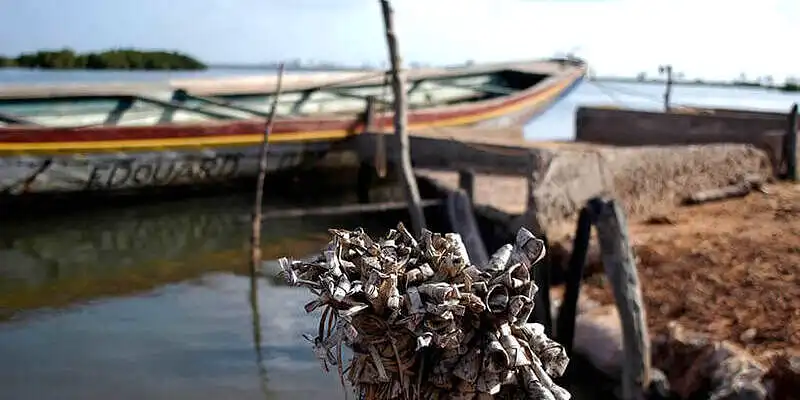 🚤
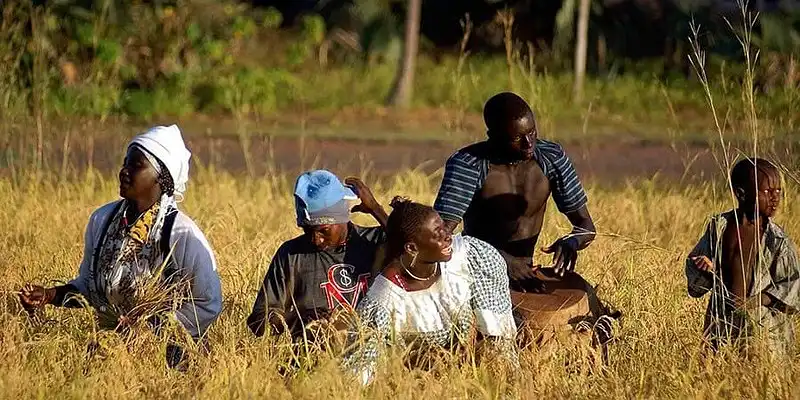
Boating and fishing in the Affiniam bolong, then lunch in the village's great impluvium house. A day along the water, between rice paddies, mangrove and Jola hospitality.
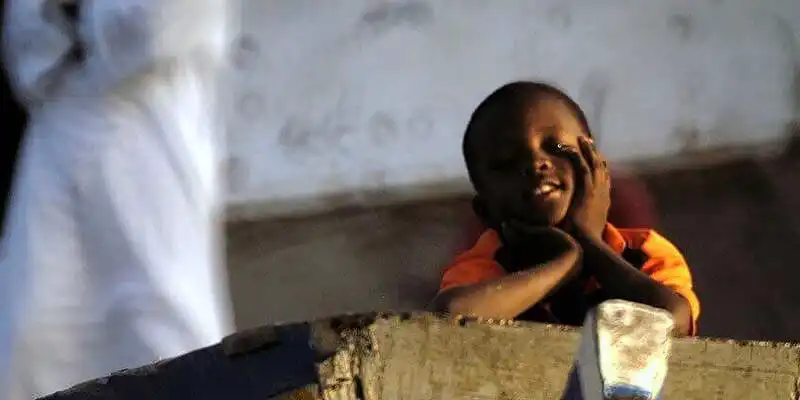 🎉
The big city of Casamance, its markets overflowing with colour and fruit, its crafts, and the calm of the Alliance Française for lunch. The vibrant pulse of the region.
 🏞️
Setting course for the Karone archipelago by pirogue. Niomoune and its four districts, its mystical atmosphere, its fishermen: an island immersion far from everything, with lunch in a village camp.
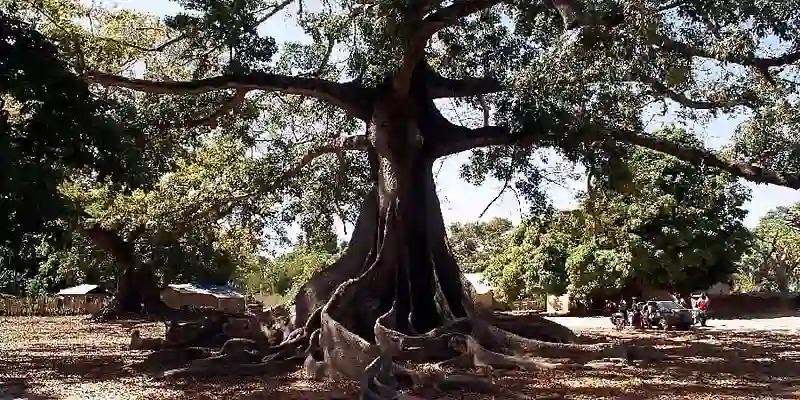 🌲
At the heart of the village stands the largest kapok tree in Senegal — a colossal silk-cotton tree, a gathering place full of stories. The visit continues at the nearby Ecoparc, right by the lodge.
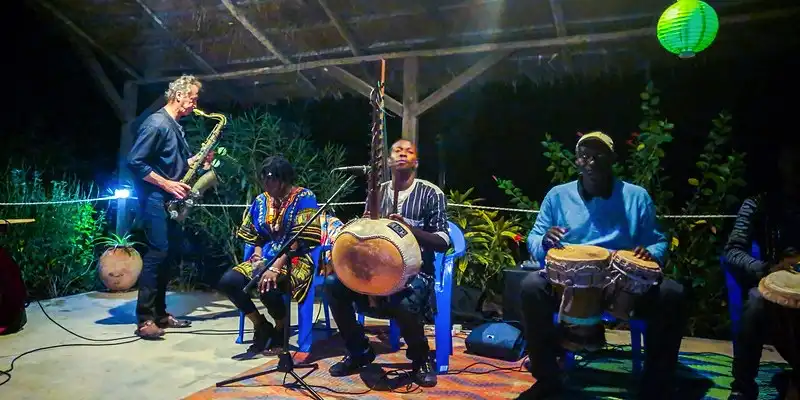 🎵
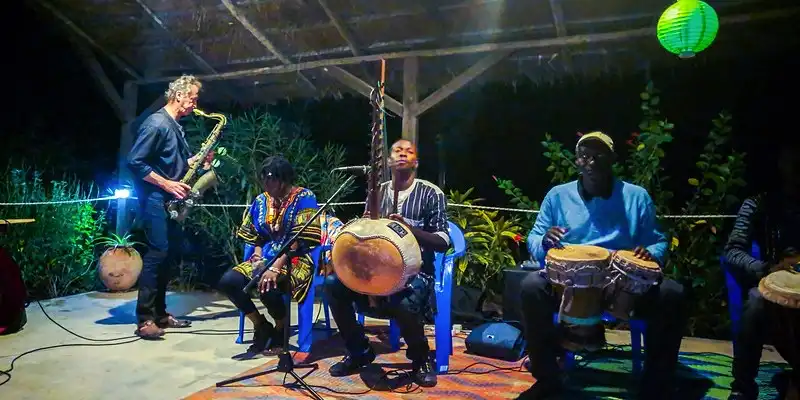
The village, its craft market, its colourful pirogues; and come evening, a dinner-show and live music that keep locals and travellers dancing late. The Casamance that celebrates.

Casamance is not told in leaflets: it is earned. It is a land where the invisible still holds its place, where sacred groves shelter rites that are not shown. The Kankourang, a Manding initiation rite deeply rooted in the region's history, speaks of the richness and diversity of its traditions. We spent years photographing it without ever exhausting it. What we brought back is not a collection of exotic images — it is respect for the communities that make Casamance, the Diola among them, and for a way of inhabiting the world that has much to teach us about living with little.
Casamance is first of all water, trees and rice: the bolongs winding between the mangroves, forests where the kapok tree rises above everything, rice paddies running alongside the villages, and then the ocean. This blend, far from the dry Senegal people imagine, gives the region its face. To understand this ecosystem, read our guide to the mangrove and the bolongs and the one on Casamance forests and their trees.
In Lower Casamance, many Diola communities keep a deep bond with the land, rice farming and village life, with their impluvium houses and shared rules of life. This culture is discovered on foot, taking your time, alongside those who live there, as during an audience with the King of Oussouye or when looking at the Diola architecture of Enampore.
Here, people eat what the river, the ocean and the land provide: fish smoked by the women, mangrove oysters, rice, garden produce. Artisanal fishing sustains entire villages; our guide to the world of fishing in Casamance explains how it works. At the Papayer table, the same short-supply-chain logic.
Sacred groves are not attractions, and rites are not shows. Some are shared, others are kept. Travelling here means accepting that you will not see everything and will not photograph everything.
Protecting the mangrove, leaving nothing behind, buying local, meeting people without imposing: these are simple gestures. At the Papayer, they take the form of a self-sufficient lodge and of the Papayer Forest, where every tree planted extends the stay. Our guide to the protection of biodiversity details what is being done in Casamance.
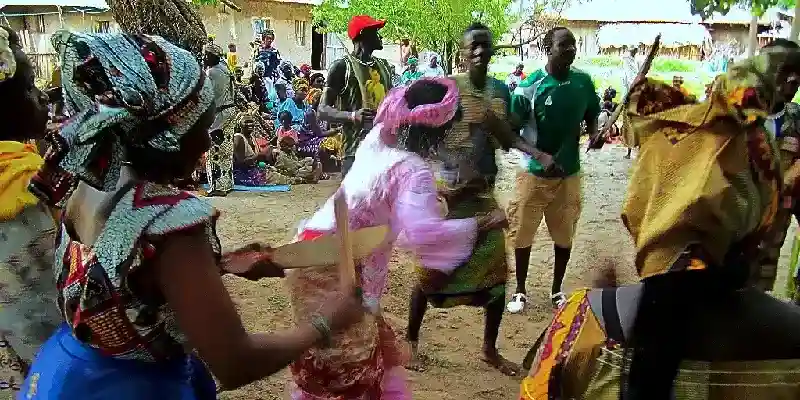
Diola culture, mangrove, bolongs and the beaches of Cap Skirring: the soul of southern Senegal.
Here, we tame nothing. We learn to compose — with the salt, the rainy season, the slowness, the beauty. Far from the usual crowds, Le Papayer Ecolodge stands as a confidential retreat, deeply rooted in its environment, in Casamance, in the south of Senegal. Our ecolodge in Senegal is meant to be lived as a refuge, not a backdrop.
You arrive with full suitcases, you leave lighter — with the unsettling intuition that the superfluous, perhaps, was on our side. Casamance will not give you what you came looking for : it will take from you what you did not need. And that is infinitely more.
Request a call back to plan your stay Booking – request your quote
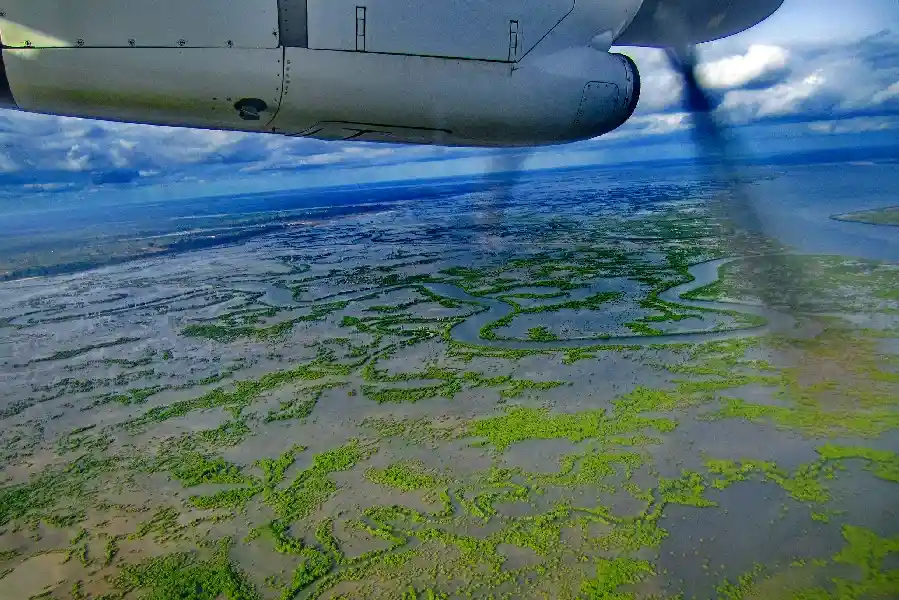 The travel guideDiscover CasamanceNature, mangroves, Jola culture, traditions and tips to prepare your stayRead the full guide →
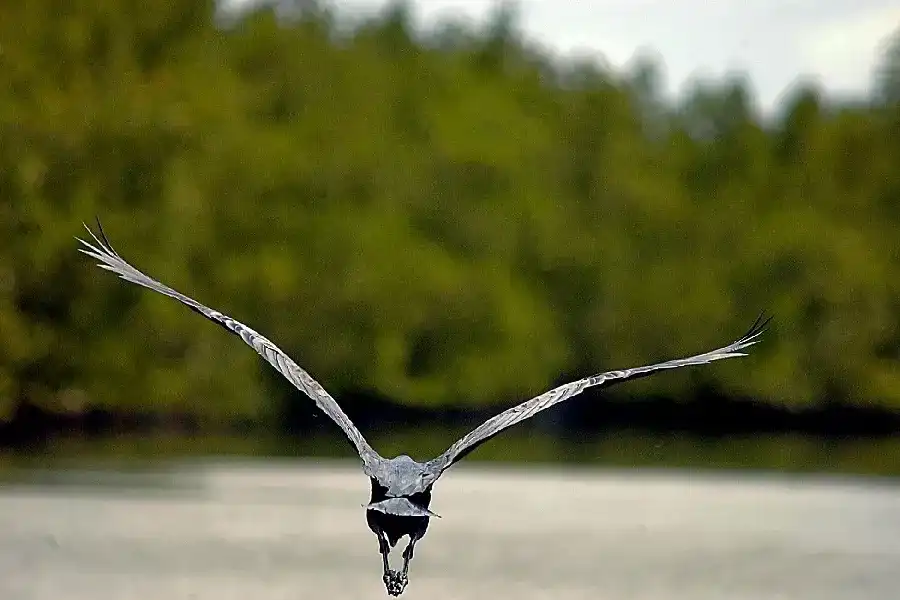 Plan your tripWhen to visit Casamance?Climate, sea, wind, wildlife and crowds: find the ideal time for the trip you have in mindFind my time to go →